If you’ve ever called about a rubber injection molding machine—one of the most frequent questions I get at Rubber Machinery Industry, after “how do I maintain a barrel”?—I can tell you the answer almost never fits on a quote sheet. A few years back, a customer in Ohio called and asked for a number, straight up, no fine print. I said, “Well, my basic model is $12k, but the one that’s going to make your custom automotive gaskets without flash is $28k, and if you need it to run 24/7 for three years straight with zero downtime, that’s $45k plus installation.” He laughed, but that’s exactly the problem no one talks about when they first start shopping for these machines: the cost isn’t a single number—it’s a formula, and every variable in that formula hits your bottom line before you even uncrating the thing. Rubber Machinery Industry
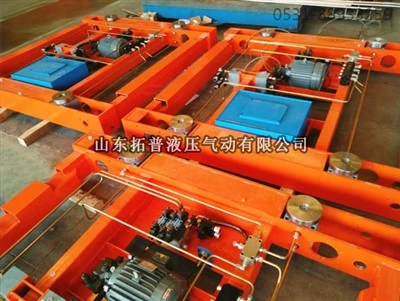
Let’s start with the basics. Rubber injection molding machines aren’t like a home printer you can grab for $100 and replace when it breaks. These are heavy-duty, precision-built tools that melt silicone, EPDM, natural rubber, or any of the 20+ specialty rubbers we work with here, inject them into a mold at 1,500 to 10,000 psi, and cure them into parts that go under the hood of a truck, inside a medical pump, or on a playground swing set. Every part matters, so every specification matters.
The smallest machines we sell are bench-top units, for small batches or lab testing. These typically range from $8,000 to $15,000. They’re compact, run on 220V power, and can handle parts up to 100 grams in shot size. A customer in a small machine shop in Michigan bought one last year to make custom rubber seals for agricultural equipment, and he told me it was perfect for his $500-a-batch test runs. But here’s the catch: if he suddenly lands a $100,000 order, that bench-top unit can’t keep up. It cycles every 12 minutes, while our mid-sized hydraulic machines cycle every 45 seconds. That’s 12x more parts per hour, and a big difference in overall cost per part.
Mid-range machines are the workhorses for most small to medium manufacturers, and this is where most buyers spend the bulk of their time. Prices here start at $20,000 and go up to $60,000. What changes the price in this range? First, clamp force. Clamp force is measured in tons, and it’s how tightly the machine holds the mold closed while the rubber cures. Too little, and the rubber flash out around the edges—wasting material and adding time for trimming. Too much, and you warp the mold or damage the machine. For small parts like O-rings, you need 50 to 100 tons of clamp force, which pushes that $20,000 number up to $30,000. For larger parts, like weatherstripping for semi-trucks, you need 200 to 300 tons, which puts you at $45,000 to $60,000.
Next is automation. The cheapest machines are manual: you load the rubber into the hopper, pull a lever, and remove the cured part by hand. That’s fine if you’re making 100 parts a day, but if you’re making 10,000, manual labor eats into profits fast. Adding an automated part extractor, which pulls the part out of the mold and drops it into a bin, adds $3,000 to $8,000 to the machine’s cost. Even bigger is adding a robotic arm that moves the whole mold in and out of the curing chamber, or a conveyor system that takes parts to a trimming station. That can add $15,000 to $25,000, but for buyers making high-volume parts, that investment pays for itself in six months to a year.
Then there’s the material type. If you’re working with general-purpose rubber, most mid-range machines will work just fine. But if you’re working with specialty rubbers like liquid silicone rubber (LSR), which is used in medical devices and food-grade parts, you need a machine that’s specifically built for that. LSR has to be kept at a precise temperature, often below 80 degrees, and injected at very low pressure. A standard rubber injection machine can’t do that—its heating elements will degrade the LSR, or its pressure system will mix in air bubbles that ruin parts. We build LSR-specific machines, and those start at $35,000, which is 20 to 30% more than a standard mid-range machine. A customer in Texas who makes baby bottle nipples bought one last year, and he said the higher upfront cost was worth it because he doesn’t have to scrap parts for air bubbles anymore.
Now, let’s talk about the premium end. For large manufacturers running 24/7 production, with high-volume parts like automotive gaskets or construction seals, we sell large, fully automated machines that range from $70,000 to $200,000 (and even higher for custom builds). These machines have 500 to 1,000 tons of clamp force, fully integrated robotic systems, temperature control within 0.5 degrees, and data logging that tracks every shot, every part, and every cycle. They’re built to run 8,000 hours a year, which is the equivalent of almost a full year of non-stop work. The initial cost is high, but when you factor in production speed, labor savings, and low scrap rates, they save customers way more than a smaller machine would over five years.
But here’s the thing: the base price of the machine is only part of the total cost. You have to add installation, training, and accessories. Installation for a mid-sized machine can be $2,000 to $5,000, and it takes a certified technician a day or two to hook up the power, test the hydraulics, and calibrate the mold. If you go for a large, automated machine, installation can take a week or more, and cost $10,000 to $20,000. Training is another cost—most companies charge $500 to $1,500 per operator, and you need at least two operators to run most machines. And then there’s the accessories: molds themselves cost $2,000 to $20,000, depending on how many cavities they have. A mold that makes 100 O-rings at once is way more expensive than a mold that makes one. You also need spare parts: barrels, screws, heating elements, and seals. Spare parts for a mid-sized machine can run $1,000 to $3,000 per year, depending on how often you run the machine.
I’ve had customers come to me thinking they can get a good deal by buying a used machine. That’s an option, but it’s not always cheaper. A used mid-sized machine from five years ago might cost $10,000 to $20,000, half the price of a new one. But the catch is: used machines wear out. The barrel and screw get worn down over time, which means the rubber isn’t melted evenly, leading to more scrap parts. Hydraulic systems can leak, leading to downtime. And used machines rarely have the latest safety features, which are required by OSHA and other regulatory bodies now. Last year, a customer in Florida bought a used machine to save money, and three months later, the barrel split, ruining $5,000 worth of rubber parts and costing him $8,000 to repair. When he called me, he ended up buying a new mid-sized machine, and told me the used one cost him more in the long run.
That’s why we always tell customers to look at the total cost of ownership, not just the upfront price. A $20,000 machine that runs for 10 years with $1,000 a year in maintenance is way cheaper than a $15,000 machine that breaks down every six months and costs $3,000 a year in repairs. We offer service plans here at Rubber Machinery Industry, where we send a technician to calibrate your machine every six months, replace parts proactively, and fix any issues before they stop production. Those plans cost $1,500 to $3,000 a year, but they eliminate most downtime and extend the life of the machine by 5 to 10 years.
Another thing to consider is customization. Not all parts are the same, so not all machines are the same. A customer in Canada called last year, needing a machine to make large rubber seals for wind turbine blades. The seal is 6 feet long, so the mold has to be 7 feet across, which is bigger than our standard 5-foot molds. We had to build a custom machine with a wider platen, higher clamp force, and a cooling system that can handle the large mold. That custom machine cost him $120,000, which was twice the price of our standard large machine, but it was the only way to make the seal correctly. Custom builds take longer, too—usually 8 to 12 weeks, compared to 2 to 4 weeks for our standard machines.
So, to circle back to the original question: how much does a rubber injection molding machine cost? It depends on what you need it for. If you’re a small business making custom parts in small batches, a bench-top machine might be $8,000 to $15,000. If you’re a medium manufacturer making high-volume parts, a mid-range machine runs $20,000 to $60,000. If you’re a large manufacturer running 24/7, a premium machine is $70,000 to $200,000. And if you need something custom for a unique part, the price goes up from there.
But the number one mistake I see buyers make is focusing only on the upfront cost. They see a lower price from a competitor, so they go with that, only to realize a few months later that the machine is too slow, has too many breakdowns, or can’t make the parts they need. That’s why we always start with a conversation first, not a quote. We ask about your production volume, the types of parts you make, the rubber materials you use, your power supply, and how many hours a day you plan to run the machine. From there, we can give you a real number, not a vague range, and show you how the machine will fit your needs, not ours.
Last month, a customer from Georgia told me he got a quote for a mid-sized machine that was $10,000 lower than ours. When we talked, he mentioned he makes medical parts that need to be 100% free of contaminants. The competitor’s quote didn’t include any safety features—no sealed hoppers to keep dust out, no stainless steel barrels that are easy to sanitize. Those features add $5,000 to our machine, but they’re required for his industry. A few weeks later, he called back and said the $10,000 cheaper machine would have cost him $50,000 in lost business if he’d tried to use it for medical parts. He ended up buying our machine.
That’s the part of the job I love: helping customers cut through the noise and find a machine that works for their business, not just their budget. I’ve been in the rubber machinery industry for 12 years, and I’ve seen hundreds of customers make that same mistake of focusing on price over value. A machine is a long-term investment—you’re going to use it for 10, 15, even 20 years. So take the time to get the details right, talk to someone who knows the business, and don’t be afraid to ask questions.
If you’re ready to stop guessing and get a real quote for a rubber injection molding machine, or if you just have questions about cost, maintenance, or which machine is right for your needs, we’re here to help. We’ll walk you through every variable, explain the total cost of ownership, and make sure you leave with a machine that fits your production goals, your budget, and your long-term plans.
Paper Machinery Industry References
Rubber and Plastics News. (2022). Global Rubber Injection Molding Machine Market Report.
International Organization for Standardization. (2021). ISO 10993: Biological Evaluation of Medical Devices.
American Welding Society. (2020). Hydraulic System Maintenance Guidelines for Industrial Machinery.
US Occupational Safety and Health Administration. (2023). Safety Standards for Industrial Manufacturing Equipment.
Rubber Machinery Manufacturers Association. (2022). Total Cost of Ownership for Rubber Processing Equipment.
Shandong Huate Tuojiang Intelligent Equipment Co., Ltd.
As one of the leading manufacturers and suppliers of rubber machinery industry system in China, we’re featured by quality products and good price. Please rest assured to buy advanced rubber machinery industry system for sale here from our factory. Welcome to view our website for more information.
Address: Sino-German Cooperation Industrial Park, Licheng District, Jinan City, Shandong Province
E-mail: sdhttj01@163.com
WebSite: https://www.httjznzb.com/
