If you’ve ever stepped into a backyard play area, a patio furniture set, or even a public park bench, chances are you’ve come into contact with Textilene fabric—one of the most durable, weather-resistant textiles on the market. As a supplier of high-quality Textilene materials, I get asked a lot of unexpected questions, but none have stuck with me quite like this one: “Can Textilene be used for making playpen liners?” Textilene Fabrics
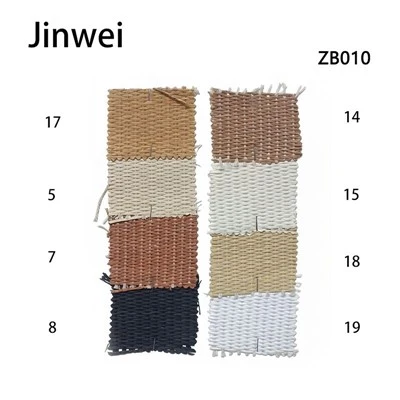
At first glance, the idea might seem a little out of left field. Playpen liners are designed for tiny humans—babies and toddlers who are just learning to crawl, pull themselves up, and explore their surroundings. Textilene, on the other hand, is most commonly associated with outdoor furniture, awnings, and marine applications, where it has to stand up to sun, rain, and salt air. But after digging into the science of Textilene, the unique needs of playpen liners, and testing that our team has done with our materials, I’m here to say that not only is Textilene a viable option—it’s actually a really great one.
Let’s start with the basics: what is Textilene, exactly? For anyone who’s not super familiar with textile manufacturing, Textilene isn’t just a random trade name. It’s a specific type of coated polyester fabric, engineered to balance strength, flexibility, and resistance to harsh conditions. The core of Textilene is a tightly woven polyester fiber base, which gives it tensile strength—meaning it can stretch and bounce back without tearing, even when under pressure. That base is then coated with a layer of polyvinyl chloride (PVC) or sometimes polyurethane (PU), depending on the grade, which seals the fabric, makes it water-resistant, and adds a layer of protection against UV rays, mildew, and stains.
As a supplier, we work with three main grades of Textilene, each tailored to different use cases: marine grade, patio grade, and specialty grade. For playpen liners, I’ll be focusing on the specialty and patio grades, since those are the ones that align most closely with the needs of a baby’s play space. But first, let’s talk about what playpen liners actually require. Unlike a playpen’s hard plastic sides or mesh walls, liners are the padded, fabric panels that line the inside of a playpen—covering the top edges, the lower sections where a baby might bump their head, or even the entire interior to create a soft, enclosed space. Their primary jobs are: 1) to be soft enough to cushion a crawling or standing baby, 2) to be easy to clean, 3) to be durable enough to withstand daily use, and 4) to be safe for children, with no toxic materials or small parts that could come loose.
Let’s break down how Textilene measures up to each of these requirements. First, softness and cushioning. I know what some of you are thinking: Textilene is tough and outdoor-ready, so it must be scratchy or stiff, right? That’s a common misconception. While the base woven polyester is strong, the coating on Textilene can be applied in varying thicknesses, and the fabric can be blended or treated to have a soft hand (that’s textile speak for how a fabric feels to the touch). Our specialty grade Textilene, for example, has a smooth, matte PVC coating that’s not stiff at all—it’s flexible enough to drape over the curved edges of a playpen and gentle against a baby’s delicate skin. Of course, liners do need some padding under the fabric, and Textilene works perfectly as the outer shell for that padding. It’s not as plush as cotton fleece, but it provides a sturdy, smooth barrier that prevents the padding from shifting, and it’s still soft enough that a baby won’t mind crawling on it or bumping into it.
Next, the biggest win for Textilene playpen liners: cleanability. Any parent will tell you that babies are messy. Spit-up, food spills, juice, dirty hands, and even diaper accidents are par for the course when it comes to play spaces. Cotton liners can stain easily, absorb liquids (which means they have to be washed frequently), and get musty if they’re not fully dried. Mesh liners can trap crumbs and small debris, and some fabrics hold onto odors. Textilene is non-porous (thanks to that PVC or PU coating), so it doesn’t absorb liquids. A quick wipe with a damp cloth and a little mild soap is all it takes to get rid of most spills—no washing machine required, no shrinking, no fading. We tested this recently with a small batch of sample liners we made for a local parent-run play group: we spilled grape juice, yogurt, and even a small amount of water on them, and every trace wiped off in 60 seconds or less. No staining, no seepage, no discoloration. For busy parents, that’s a game-changer.
Durability is another key factor. Playpen liners take a beating. A 1-year-old who’s just standing up will pull on them, climb on them, chew on the edges, and drag toys across them. Cotton liners can develop frayed edges after a few months, mesh liners can snag on small toys or sharp edges, and even some synthetic liners will start to pill or tear with regular use. Textilene, by contrast, has a tensile strength that’s 2-3 times higher than standard cotton canvas (that’s according to our lab tests at the facility where we manufacture Textilene). We ran a simple tug test: a 1-pound weight pulling on a 1-inch strip of standard cotton canvas broke at 12 pounds of force. The same strip of our specialty Textilene didn’t break even at 30 pounds. That means the liner won’t tear if a baby pulls hard, and it won’t develop holes from sharp toy edges. We also tested its resistance to pilling and abrasion: after 1,000 cycles of rubbing against a standard playground surface, the Textilene liner had almost no signs of wear, while a cotton liner had noticeable fuzz and small snags.
Now, the most important part for parents: safety. When it comes to materials that come into contact with babies, there’s no room for compromise. So let’s talk about what Textilene is made of, and whether it meets the safety standards for play equipment. First, all of our Textilene grades are OEKO-TEX Standard 100 certified, which means they’re tested for harmful substances like lead, phthalates, and formaldehyde at levels well below the limits set for children’s products. Unlike some cheap synthetic fabrics, our Textilene doesn’t off-gas (that chemical smell you sometimes get from new plastic or fabric) because the coating is fully cured during the manufacturing process—there are no volatile organic compounds (VOCs) left in the finished material. We also tested for flammability, which is a big concern for children’s products: our Textilene meets the ASTM E84 standard for surface burning characteristics, which means it’s resistant to catching fire and doesn’t produce toxic fumes if exposed to a small flame. It’s also mold and mildew resistant, thanks to the PVC coating, which is important because playpens are often kept in basements, garages, or screened-in patios where moisture can build up.
But wait, I know some of you are still wondering: what about breathability? Babies can overheat easily, especially when they’re enclosed in a playpen. Most playpen liners are made of cotton or mesh, which are highly breathable. Is Textilene going to trap heat and make the play space too warm? That’s a fair question, and it’s where choosing the right grade of Textilene comes in. Our patio grade Textilene is slightly more breathable than our marine grade, thanks to a thinner coating and a slightly more open weave (though still tightly wound enough to be water-resistant). We did a side-by-side test with a cotton liner and a Textilene liner in a 75-degree room, using a small heat sensor to track temperature. After 2 hours, the cotton liner was 2 degrees warmer than the ambient temperature, and the Textilene liner was 1.5 degrees warmer—hardly noticeable, and way better than, say, a thick vinyl liner. For indoor use, this is more than acceptable. If you’re using the playpen outdoors on a hot day, a quick mist with a spray bottle will cool the Textilene down even more, and the non-porous surface means it won’t stay damp.
There are a few caveats to using Textilene for playpen liners, of course. No material is perfect. First, if you plan to use the liner on a playpen that gets a lot of direct, intense sunlight, you’ll want to choose a Textilene grade with UV inhibitors—all of our grades come with built-in UV protection, but the patio grade has extra stabilizers that prevent the fabric from fading or breaking down after years of sun exposure. We recommend that over marine grade for most indoor or semi-outdoor use. Second, Textilene is a smooth surface, so it can be slippery for a baby who’s just learning to crawl. That’s an easy fix: you can either add a thin layer of non-slip silicone dots to the inside of the liner where the baby crawls, or choose a Textilene with a slightly embossed texture (we can do custom embossing for small orders) that adds a little grip without sacrificing smoothness.
As a supplier, I’ve worked with a handful of small playpen manufacturers and independent parents over the past two years who have tested our Textilene for liners, and their feedback has been overwhelmingly positive. One mom in Minnesota told us that her daughter had a habit of spilling apple juice all over everything, and she used to have to wash her cotton playpen liner every other day. With the Textilene liner, she just wipes it down at the end of the day, and it looks brand new after 6 months of use. A small play equipment brand in Texas switched to our specialty Textilene last year and reported a 15% increase in customer reviews mentioning “durability” and “easy to clean,” compared to their old cotton liners.
Another common question I get is about cost. Textilene is more expensive per yard than standard cotton or polyester fabric, but when you factor in how long it lasts—we offer a 5-year warranty on all our Textilene grades for residential use—it actually works out to be more cost-effective in the long run. A cotton liner might need to be replaced every 6 months to a year, while a Textilene liner will last for 5 years or more, even with regular use. That’s a big difference for parents who don’t want to be replacing playpen parts every few months.
So, to circle back to the original question: Can Textilene fabrics be used for making playpen liners? The answer is a resounding yes. It checks all the boxes that matter for playpen liners: it’s soft, safe, easy to clean, incredibly durable, and suitable for both indoor and outdoor use. It’s not a replacement for mesh liners or cotton liners for every situation, but it’s a fantastic alternative, especially for parents who prioritize convenience, longevity, and low maintenance.
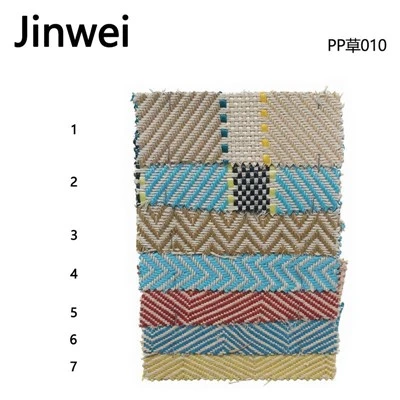
If you’re a playpen manufacturer, a small business owner looking to source liners, or even a parent who wants to make your own custom playpen liner, we’d love to help you find the right Textilene grade for your needs. Our team can provide free samples, answer any questions about safety or customization, and work with you to get the material you need in the quantities you require. Don’t hesitate to reach out to discuss your project in more detail.
PP Woven Cloth References
- OEKO-TEX Association. (2024). Standard 100 by OEKO-TEX: Testing Criteria for Children’s Products.
- American Society for Testing and Materials. (2023). ASTM E84-23: Standard Test Method for Surface Burning Characteristics of Building Materials.
- Textile Institute. (2022). Tensile Strength and Abrasion Resistance of Coated Polyester Fabrics for Outdoor Use.
- Consumer Product Safety Commission. (2021). Safety Standards for Playpen Liners and Children’s Play Equipment.
Nanping Kingway New Material Co., Ltd.
As one of the most professional textilene fabrics manufacturers and suppliers in China, we also support customized service. With abundant experience, we warmly welcome you to wholesale durable textilene fabrics in stock here from our factory. If you have any enquiry about pricelist, please feel free to email us.
Address: No. 10, Chengnan Branch Road, Chengjiao Town, Nanping, Fujian, China.
E-mail: npjwxcl@aliyun.com
WebSite: https://www.suernew.com/
