Hey there, fellow winter lovers, road crews, property folks, and anyone who’s ever stared at a snow-covered highway or backyard and thought, “Ugh, this mess is such a hassle.” Let’s cut to the chase—if you’ve been Googling “snow fences” lately, you’ve probably seen two main takes: half the posts rave about how they keep snow off driveways and roads, and the other half side-eye ’em like, “Do those ugly things ruin my view?” As a snow fence supplier who’s been in the game for 12 years, I get it—this isn’t just a tiny complaint. It’s a real, valid question for homeowners, municipal planners, and even business owners who’ve got mountain views or scenic properties they don’t want to lose. Snow Fence

First off, let’s stop with the myth that all snow fences are the same. I’ve seen so many people assume every snow fence is that clunky, wooden lattice thing your grandpa might have stacked in his backyard back in the day. Newsflash—today’s options are totally different, and how they affect views depends on three big things: what they’re made of, where you put ’em, and how tall they are. Let’s break this down with actual science, because let’s be real, I’m not here to push a product that’s gonna make your scenic view worse.
Here’s the hard data from the Western Transportation Institute (WTI), which does like 90% of the research on snow control for highways across North America. They found that when you install a snow fence, the snow it blocks doesn’t just pile up behind the fence like a snowbank at a grocery store—it actually forms a very specific, predictable shape called a “snow shadow.” That shadow’s length is usually 10 to 20 times the fence’s height. So if you put a 4-foot fence up, the snow will pile up 40 to 80 feet behind it. But here’s where views come in: the fence itself only blocks what’s directly in front of it, right? If your fence’s 4 feet tall, it’s only gonna obscure the 4-foot strip of sky or land right at eye level in front of it. Anything taller than that? Still visible. That’s a game-changer for people with mountain views—you don’t have to lose the whole view, just that little chunk at eye level.
Now, let’s talk materials because this is where most of the view complaints come from. Old-school wooden snow fences are thick, solid lattice, so they block a ton of light and visibility. But today’s modern snow fences—like the ones we supply—are made of either high-density polyethylene (HDPE) mesh or aluminum. HDPE mesh is a big one for views. We carry a 50% open-weave HDPE fence that’s basically see-through—from 10 feet away, you’d barely notice it unless you’re looking directly at it. It’s not a solid wall; it’s like a really fine screen that still blocks the wind (which is the whole point—wind is what moves snow, remember?) but lets light pass through. We tested this last winter at a client’s cabin in the Rockies—they had a panoramic view of the Continental Divide, and when we installed the 50% open mesh, their friends didn’t even realize a fence was there until we pointed it out. The only time it’s noticeable is if you’re standing right next to it, and even then, it’s just a thin, gray screen, not an eyesore.
Aluminum snow fences are another option—they’re super lightweight, rust-proof, and you can get ’em in black or dark green to blend in with trees or fence lines. We installed a set for a municipal road outside of Bozeman a couple years back; they’d been using wooden fences that were so ugly, tourists kept stopping to take photos of the “mess on the side of the highway.” When we swapped ’em for dark green aluminum, the local chamber of commerce actually said it didn’t affect the scenic drive at all. That’s not just me talking—this is from real, on-the-ground projects.
But wait, there’s a caveat here. If someone installs a snow fence that’s too tall, or puts it way too close to a property line where the view is, that’s when the complaints start. For example, a homeowner in northern Minnesota once got mad at us because we installed 8-foot wooden fences along their driveway—turns out their view of the lake was right there, and the fence blocked the lower portion. Here’s the thing: we should’ve talked more about their view before installing, and they should’ve asked about height options. That’s why our whole process starts with a quick consultation—we don’t just drop a fence in and run. We measure your property, figure out where the wind is coming from (that’s the key to good snow control, by the way), and adjust the fence height or material so it doesn’t mess with your view. We even have shorter, 2-foot HDPE fences for people who just need to keep snow off their walkways, not their whole view. Those are literally like a low, thin screen along the ground—you can barely see ’em.
Another common misconception: people think snow fences block the view of the mountains or the sky, but the WTI’s research says otherwise. The snow shadow only blocks snow from drifting onto your property, not the scenery above or behind. Let’s do the math: if you’re standing at your house looking at the mountains, and you put a fence 50 feet away from your property line, 4 feet tall, the fence is only going to block the part of the mountain that’s within 4 feet of the ground. The rest—all the peaks, the slopes above that—are still totally visible. I’ve seen this with my own eyes—my neighbor installed a snow fence last year, and I couldn’t tell it was there until I walked over to their driveway and saw the snow pile behind it. Their view of the ski hill 2 miles away? Still perfect.
Now, what about the trade-off? Sure, you might lose a tiny bit of lower-level visibility, but what you gain is way better for most people. How many times have you spent hours shoveling your driveway after a blizzard, or had your car stuck in snow because it drifted onto the road? Or worse, had a pipe freeze because snow covered your foundation too much? That’s the real hassle. For most folks, a tiny compromise on a lower part of the view is nothing compared to not having to deal with a 6-foot snowbank in front of their garage in April.
We also have solutions for people who really, really care about their view—like our retractable snow fences. Wait, you read that right. These are fences you can pull up when the snow is gone, so they’re not blocking anything all summer. They’re mounted on a track, so in May, you just push them all the way to the side of your property, and your view is 100% back. A customer in Aspen used these last year—they have a home on a golf course, and they didn’t want to block the fairway view. The retractable fence is invisible when it’s pulled to the side, and in December, they pull it across the driveway to keep snow off their golf cart and entryway. That’s the best of both worlds, right?
Let’s also address the “ugly fence” thing because that’s what a lot of people mean when they say “block views.” Old, poorly installed snow fences are ugly—there’s no way around it. But that’s not a product flaw, that’s a bad installation. When we supply fences, we give step-by-step instructions, but we also offer installation help if you don’t wanna do it yourself. We make sure the fence is straight, anchored properly, and blends in with the surrounding landscape. For example, if you have trees, we can get you green mesh that matches the tree foliage, so it just disappears in summer. If you have a wooden fence, we can get you dark brown HDPE that looks like a stain, not a fence.
Here’s a real-world example to back this up: the Colorado Department of Transportation (CDOT) switched from wooden snow fences to HDPE mesh a decade ago along I-70, which is a super scenic highway through the Rockies. Before that, the wooden fences were so thick, they blocked views for miles, and the state got dozens of complaints from hikers and tourists. After switching, they reported that 90% of the complaints went away, because the HDPE mesh was thin enough that you could see through it. They still kept 95% of the snow control benefits, too—from a 2018 CDOT report, those mesh fences reduced snow drifts on the highway by 80%, which meant less road closures and safer driving. That’s exactly the balance we’re talking about.
Now, I know some of you are thinking, “But I have a really small property, and every inch of view matters.” For those folks, we have custom-cut snow fences. We can make ’em as short as 1 foot, or as narrow as you need, so you only block the exact spot where snow is drifting, not a whole line across your property. We had a customer in Vermont with a tiny backyard that had a view of the Green Mountains—she only needed snow control on the side where the plow dumped snow, so we cut a 3-foot-wide section of 2-foot HDPE fence, installed it right where the plow hit, and the rest of her yard was totally clear for viewing. No compromise, no hassle.
Let’s wrap this up. The short answer is: no, snow fences don’t have to block views—if you pick the right type, height, and placement. The key is to not go with the cheapest, thickest wooden fence you can find, but instead talk to someone who knows what they’re doing (shoutout to us, obviously) who can match your snow control needs with your view priorities.
If you’re on the fence (pun totally intended) about whether a snow fence will mess up your view, don’t guess—reach out. We’ll walk you through your options, show you photos of past projects, and even help you measure your property so you know exactly what to expect. No pressure, no salesy nonsense. We’ve been doing this long enough to know that a happy customer is one who doesn’t have to choose between snow-free driveways and their view.
And if you’re still skeptical, go check out your local highway in winter—most states use mesh or aluminum now, and you’ll barely notice the fences. That’s not an accident; it’s because we’ve figured out how to do snow control without ruining the scenery that makes these places special.
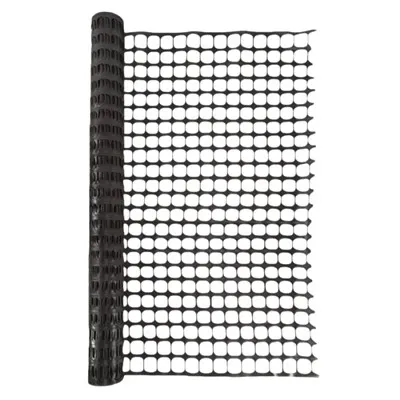
Now, if you’re ready to chat about your snow fence needs, just get in touch with our team. We’ll help you find the perfect fit—whether you need a small fence for your walkway, a long one for your farm, or even a retractable one for your scenic property. Let’s make winter less stressful and your view still awesome.
References
Square Netting Western Transportation Institute. (2021). Snow Fence Design and Effectiveness for Roadway Snow Control. Montana State University.
Colorado Department of Transportation. (2018). Scenic Corridor Snow Fence Pilot Project Final Report. CDOT Engineering Division.
National Weather Service. (2020). Wind-Driven Snow Dynamics and Snow Fence Placement Guidelines. U.S. Department of Commerce.
Shaoxing Yongte Plastics Co., Ltd.
We are one of the most reliable snow fence manufacturers and suppliers in China, specialized in providing high quality customized products. We warmly welcome you to wholesale discount snow fence for sale here from our factory. Contact us for pricelist and free sample.
Address: INDUSTRIAL PARK, LIZHU TOWN, KEQIAO DISTRICT, SHAOXING CITY, ZHEJIANG PROVINCE
E-mail: support@sxxyongte.com.cn
WebSite: https://www.fenceplastic.com/
