Hey everyone, it’s Jake here from the welded mesh team. If you’ve ever worked with welded mesh—whether you’re a contractor, a DIY homeowner, or even someone who messes around with fencing or garden projects—you know that one of the most annoying (and common) headaches is cutting it without bending those neat welds. I’ve lost count of how many times I’ve heard a customer call up frustrated, saying they tried using angle grinders or even regular pliers, only to have a whole section of mesh warp, the wires pull apart, and their whole project go sideways. Welded Mesh

Let’s be real: welded mesh isn’t just a bunch of loose wires twisted together—each intersection is actually fused by heat, right? So if you yank at it or use the wrong tool, you don’t just snip the wire; you mess up that weld, which weakens the whole panel. I’ve been in this game for 8 years now, running day-to-day with our production team and talking to folks who use our mesh for everything from chicken coops to retaining walls, and I’ve picked up some tricks that actually work. No fancy jargon, just real, tested methods that won’t leave your mesh looking like it survived a hurricane.
First off, let’s get one thing straight: the biggest mistake people make is rushing. You wouldn’t saw a piece of wood in half with a butter knife, so why treat welded mesh like it’s a paper towel roll? Before you even touch a tool, you need to prep the mesh properly. Most people just lay it flat on the ground and start cutting, but that’s a recipe for bending. Why? Because when the mesh isn’t secured tight, as soon as your blade hits the wire, the opposite side pops up or shifts, pulling the adjacent wires out of alignment.
Here’s my go-to prep step: clamp it down. Not just one clamp—at least two, maybe three, depending on how big your cut is. If you’re cutting a 4×8 panel, clamp the left edge, right edge, and a spot 6 inches from where you’re going to cut. Use heavy-duty bar clamps, not those tiny hand clamps you get at the dollar store. And clamp it to a flat, rigid surface—like a workbench, a sawhorse, even the flat bed of a pickup truck. If it’s wobbly, the mesh moves, you get bends. Simple as that. Another pro tip: mark your cut line with a pencil and a straight edge, not with a Sharpie. Sharpie bleeds if you use some cutting fluids later, and pencil rubs off easy if you’re careful, but it gives you a clear line to follow.
Now, let’s talk tools. This is where a lot of people go wrong. I’ve seen guys use angle grinders with a cutoff wheel—those work, but if you hold the grinder at the wrong angle, you’ll gouge the surrounding wires and warp the mesh. Or they use aviation snips, which are fine for thin mesh, but if you’re working with heavier 12-gauge or 10-gauge mesh, snips will just wear out and still bend the wires. Let’s break down the best tools, based on the thickness of your mesh, because that’s a big factor here.
First, for thin to medium mesh (16-gauge to 12-gauge, usually used for garden fencing, small animal enclosures): manual bolt cutters? No, wait—wire shears, specifically ones with hardened steel blades and a compound leverage design. Wait, let me clarify: compound leverage wire cutters, not the tiny ones for electrical wire. The ones with two handles that fold out, so you get more power without squeezing super hard. I recommend brands like Klein or Irwin, but honestly, as long as they’re labeled for “welded wire mesh” or “1/4-inch wire capacity,” they’ll work. Why are these better than bolt cutters? Bolt cutters apply pressure on the sides of the wire, which can cause it to flatten and pull adjacent welds. Wire shears cut straight through the center of the wire, so the force is split evenly, no side pressure. Just line up the cut right on the wire (not on the weld intersection), squeeze slow and steady, and boom—clean cut, no bend. I’ve had a customer who uses these for 16-gauge mesh for chicken runs say he cuts 50 panels a day without a single warped spot. That’s the test I trust.
For medium to heavy mesh (12-gauge to 8-gauge, used for deck skirting, concrete reinforcement): here’s where a power tool is necessary, but you have to use it right. A corded reciprocating saw with a metal-cutting blade—specifically a bi-metal or carbide-tipped blade with 18 to 24 teeth per inch. Wait, why reciprocating saw and not an angle grinder? Angle grinders spin super fast, which can cause the wire to heat up and warp the surrounding welds, plus they throw sparks everywhere and are way harder to control. A reciprocating saw moves back and forth, so you take smaller, cleaner cuts, less heat. The key here is to clamp the mesh even tighter, like I mentioned earlier, and hold the saw at a 90-degree angle, straight into the wire, not tilted. Don’t force the saw—let the blade do the work. If you push too hard, you’ll bend the mesh. Another trick: pull the saw backward a little between each stroke to clear the metal shavings, which keeps the blade from binding and heating up. I’ve seen guys use angle grinders and ruin $100 panels, but reciprocating saws with the right blade cut through 8-gauge mesh like butter, no bends.
Wait, what if you’re cutting mesh that’s super thick, like 6-gauge, used for industrial projects? That’s where a plasma cutter or a oxy-acetylene torch comes in, but only if you’re experienced with those. The downside here is heat, so you have to keep the cut as clean and fast as possible, and use a spray bottle with water to cool the adjacent wires right after cutting. If you let the welds heat up too much, they’ll soften and bend, so cooling immediately is non-negotiable. But for 99% of the people I talk to, that heavy mesh is rare, so stick to the first two tools.
Now, let’s get into the common mistakes I see all the time that cause bending, even when you use the right tools. First, cutting on a weld intersection. Wait, why is that a problem? The weld is a thicker, fused point, so when you cut through it, the tool has to apply more pressure, which can pull the adjacent wires out of alignment. Always cut right in the middle of the open space between two welds, not on the weld itself. I can’t stress that enough—this is the #1 mistake that leads to warped mesh. If you mark your cut line, make sure each individual wire you’re cutting is a half-inch or so away from the weld, not on it.
Another mistake: not supporting the edges of the cut. When you make a cut, the two sides of the mesh want to separate, but if the edge is hanging over the surface you’re clamping to, it will droop and bend. So if you’re cutting a section that’s, say, 2 feet long, clamp the mesh along the whole cut line and also support the part that will be cut off, plus the part that stays, so neither edge is hanging in mid-air. I once had a guy call me panicking because his cut mesh looked like a banana, and when I asked him what he did, he said he only clamped the left side and let the right side hang over the table. Duh—that’s exactly what happened.
What about if you’re making notches or cuts at angles, not straight lines? Same rules apply, but you might need to use a jigsaw with a metal blade for curved or angled cuts, especially if they’re tight corners. Jigsaws give you more control than reciprocating saws for tight spaces, and again, make sure the mesh is clamped down, and you’re cutting between welds. Don’t try to freehand a tight curve—mark it with a straight edge first, and take small, slow cuts. Rushing here is going to ruin the whole panel.
Wait, let’s test this with a real example. Last month, a customer named Mike came to us because he was building a 10-foot fence for his backyard, and he kept cutting his 12-gauge welded mesh with an angle grinder, ending up with 30% of the panels bent so bad he had to throw them away. He tried two different angle grinders, different blades, nothing worked. I walked him through my steps: clamp the mesh to his workbench in three spots, mark the cut line half an inch away from the welds, use a compound wire shear instead of the grinder. He texted me an hour later with a pic of the cut panel—perfect, straight, no bends. He said he couldn’t believe how easy it was, and saved $80 on new panels. That’s the kind of win we love here.
Also, a quick tip about maintaining your tools. Dull blades or blunt cutters are going to make you push harder, which causes bending. Every few cuts, check your wire shears or saw blade—if they’re not cutting clean, replace them. It’s way cheaper than wasting mesh panels. For angle grinder blades, if you notice they’re getting worn, swap them out immediately, don’t keep using a dull blade because it’s “almost good.”
Now, let’s address a question I get all the time: can you use a water jet cutter for welded mesh? Yeah, if you’re doing industrial-scale cuts, but that’s overkill for most people. Unless you’re cutting hundreds of panels a week, you don’t need to drop thousands on a water jet. The manual and power tools we talked about work for 99% of residential and small business projects.
At the end of the day, the whole point of cutting welded mesh without bending is control. If you’re in control of the mesh (clamped down, supported) and in control of your tool (using the right one, cutting between welds, taking it slow), you won’t have those warped, useless panels. We’ve been supplying welded mesh for years, and we stand behind the quality of our product, but even the best mesh in the world will get ruined if you use the wrong method to cut it.
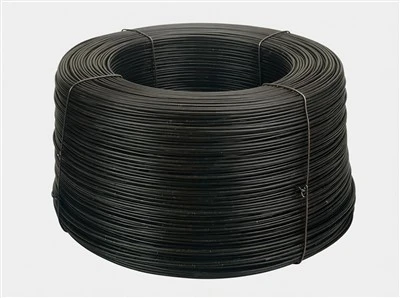
If you’re working on a project—whether it’s a small garden, a new fence, or a concrete job—and you need the right mesh, or you have questions about the best cutting method for your specific mesh thickness, hit us up. We’re not just a supplier, we’re here to help you get the job done right. Don’t waste time and money on bent panels—reach out to us to chat about your project, pick the right mesh, and get those cutting tips tailored to your needs.
Security Wire References:
- Welded Wire Mesh Fabrication and Installation Guidelines, American Wire Mesh Association, 2021
- Metal Cutting Tools Guide, Construction Equipment Association, 2022
- Best Practices for Cutting Reinforcing Mesh, Concrete Reinforcing Steel Institute, 2020
Firmstone (Tianjin) International Limited
Firmstone (Tianjin) International Limited is one of the most professional welded mesh manufacturers and suppliers in China, featured by quality products and good service. Please feel free to buy bulk advanced welded mesh made in China here from our factory. Welcome to contact us for quotation.
Address: 411, Prophet Valley, No.10, Meiyuan Road, Huayuan Industrial District, Xiqing District, Tianjin
E-mail: vivianjia@firmstonewire.com
WebSite: https://www.firmstonefactory.com/
