Hey everyone, let’s cut to the chase: if you’re a formulator, QA lead, or someone just deep in the weeds of injectable drug development, you’ve probably stared at a batch of excipients and asked, “Wait, do these even need to be sterile?” As a pharma excipients supplier—you know, the folks who hook up drug makers with the bulking agents, stabilizers, and buffers that make injectables actually work—this is one of the most common, and most confusing, questions we get. Spoiler: it’s not a yes/no answer, and messing this up can tank a batch, a regulatory filing, or even a patient’s safety. Let’s break this down like we chat with customers over coffee (or Slack, if that’s your vibe). Pharmaceutical Excipients
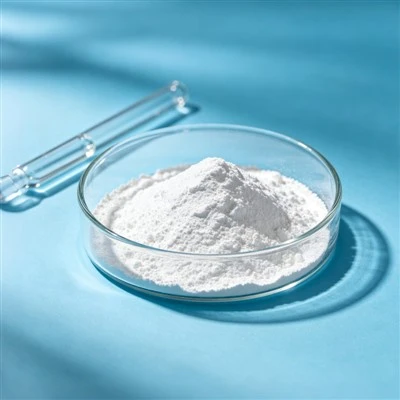
First, let’s ground this in what “injectable” actually means here. Injectables aren’t just your friend’s fancy pre-workout shot—we’re talking sterile products: IV infusions, injectable vaccines, ophthalmic drops (which are technically topical but have super strict microbial rules), even subcutaneous insulin pens. The core rule here is simple: any product that enters a patient’s body directly, bypassing skin/mucous membranes, can’t have random microbes. Excipients are the backbone of these products—if your active pharmaceutical ingredient (API) is the star, excipients are the set: they keep the API stable, make the solution flow right, prevent clumping, or add flavor (not that injectables need flavor, but you get the picture).
So why would someone even question if excipients need sterility? Let’s be real: manufacturing excipients is way different from making the API. A lot of traditional excipients (like mannitol, lactose, or polysorbate 80) are made via fermentation, crystallization, or chemical synthesis. Back in the day, some suppliers ran these processes with minimal microbial controls because they were “chemical grade” for other uses (like food, or even laundry detergent). But pharma excipients? No, that’s old news—wait, no, actually, some smaller manufacturers still do this, and that’s where the confusion starts. The line between “food grade” and “pharma grade” isn’t just a label; it’s microbial load. Food grade might let a few thousand microbes slip through, but injectable excipients can’t have more than a handful of non-pathogenic ones, and zero pathogens (like E. coli, Salmonella, or Pseudomonas aeruginosa).
Wait, let’s clarify sterile vs. microbial limit testing. “Sterile” means exactly zero viable microbes—full kill, 10^-6 probability of a non-sterile unit. But most injectable excipients don’t need to be 100% sterile? Wait, no—hold on, that’s where people mix up two categories: sterile excipients and non-sterile excipients for sterile products. Oh, right! The FDA and ICH split excipients into two buckets based on their final use. If the excipient is going to be used in a final injectable product that’s terminally sterilized (like autoclaved or gamma-irradiated), then the excipient just needs to meet microbial limits—usually <10^3 CFU/g for total aerobic microbes, <10^2 CFU/g for fungi, and no pathogens. That’s way easier (and cheaper) than full sterilization. But if the excipient is used in a product that can’t be terminally sterilized—like a biologic, which would denature if you heat it or blast it with gamma rays—then the excipient itself has to be sterile, because you can’t kill any microbes after mixing. That’s a big distinction, and it trips up so many new customers.
Let me throw out a real example from last year: a biotech startup was making a monoclonal antibody infusion, and they sourced a polysorbate 80 from a non-specialized supplier. They assumed it met microbial limits, but it had a hidden Pseudomonas load. Since they couldn’t terminal sterilize the antibody blend, those microbes multiplied in the vials during cold storage, leading to a regulatory hold. That cost them 6 months of timelines, and we ended up supplying their sterile-grade polysorbate to fix it. Story time: that’s why this isn’t just a “box to check” item.
Now, why would excipients NOT be sterile if they can be? Cost, mostly. Full terminal sterilization (autoclaving, gamma, E-beam) adds 20-30% to the excipient price, sometimes more. For products that CAN get terminal sterilization, cutting that cost without risking safety is a no-brainer. But wait—you can’t just skip microbial testing. ICH Q7A (the good manufacturing practice guide for APIs and excipients) has a whole section on this, and the FDA’s Sterile Drug Products Guidance explicitly states that excipients used in non-terminal sterilized injectables must be sterile, and those in terminal sterilized ones need to meet microbial limits. Also, regional regulators like the EMA have similar rules—so if you’re selling to Europe, you can’t cut corners here.
Another angle: extraneous microbes in excipients can cause product degradation, too. Even if they’re non-pathogenic, bacteria can break down polysorbate (a common surfactant) into fatty acids, which makes the injectable cloudy or breaks down the API. That’s not just a safety issue—it’s a quality issue. A friend in the vaccine space told me they once had a batch of flu shots that had to be scrapped because the mannitol excipient had microbial growth that made the vaccine inactive. Yep, that’s real.
Wait, let’s talk about common excipients and their typical status, just to make this concrete. Sugars (mannitol, lactose): usually non-sterile but with tight microbial limits, because they’re stable enough to survive terminal sterilization. Surfactants (polysorbate 80, Pluronic F68): often sterile for biologic use, since they’re more prone to microbial degradation. Buffers (phosphate, citrate): depending on use, sometimes sterile. Bulking agents for lyophilization: if the final lyophilized product is reconstituted and injected, again, depends on terminal sterilization.
Now, what are the common myths? 1) “If the API is sterile, the excipients don’t matter.” No—microbes in excipients can introduce pathogens, especially if the excipient is used early in the manufacturing process, before the final sterile filtration. 2) “Sterile excipients are always safer.” Not if you don’t need them—you’re wasting money, and sometimes sterilization can break down excipients (like some sugars can caramelize if autoclaved, which messes up their function). 3) “Microbial limits are the same across all injectables.” Nope—IV infusions (which go straight into the bloodstream) have way stricter limits than, say, a joint injection (which goes into synovial fluid, a bit more contained, but still strict).
As a supplier, we see this confusion every single day. That’s why we offer both grades: non-sterile excipients with full microbial testing reports for terminal sterilized products, and sterile-grade excipients with sterility test data (per USP <71>) for biologic and non-terminal sterilized products. We also work with customers to tailor it to their process—no one-size-fits-all, because your process is unique. For example, a small startup making a peptide injectable that’s terminal sterilized? We can get you non-sterile lactose with 10^2 CFU/g max, which cuts costs without risking compliance. A big pharma making a monoclonal antibody that can’t take heat? We ship sterile polysorbate that’s already been filtered and tested, so they don’t have to do it themselves.
Wait, let’s add a quick regulatory check: if you skip the right testing, you’re looking at regulatory refusals, batch recalls, or even patient harm. The FDA’s 483 observations (those are the inspection notes that come with a bad audit) regularly have findings about excipient microbial load or sterility. Last year, there were 12 major drug shortages linked to excipient issues, and 3 of them were because of microbial contamination in excipients that were supposed to have limits, not be sterile. That’s not a trivial problem.
What about newer excipients, like lipid nanoparticles (LNPs) for mRNA vaccines? Oh, that’s a hot topic right now. LNPs are the excipient that carries mRNA in COVID vaccines, right? Those have to be sterile, because they’re not terminal sterilized—you can’t heat an mRNA LNP without breaking the lipid structure. So when Pfizer and Moderna were scaling up, they had to switch suppliers for their LNP excipients because the original supplier couldn’t meet sterile standards. That’s a huge example of why this question matters even for the latest, biggest drugs.
Let’s wrap this up with what you actually need to do, if you’re on the buyer side: First, map your manufacturing process. Do you do terminal sterilization (autoclave, gamma) after adding excipients? If yes, microbial limits are enough. No? You need sterile excipients. Second, test your excipients yourself—don’t just take the supplier’s word for it. Ask for Certificates of Analysis (CoAs) that specify microbial load (for non-sterile) or sterility (for sterile). Third, work with a supplier who knows the difference, not just a general chemical supplier. We’re not just selling a powder—we’re providing a critical component that keeps your drug safe and compliant.
At the end of the day, this isn’t about being “strict” for strictness’s sake—it’s about patient safety. An injectable goes straight into a vein, muscle, or eye—there’s no skin barrier to stop microbes. If your excipients have even a tiny bit of E. coli, that could cause a sepsis, which is life-threatening. So the question isn’t “do excipients need to be sterile?” It’s “do I have a process that can handle non-sterile excipients, or do I need them sterile?” That’s the nuance we help our customers figure out every day.
If you’re dealing with excipients for an injectable, and you’re not sure which grade you need, or you just want to chat through microbial limits, testing, or regulatory requirements, hit us up. We’re here to help you avoid that costly regulatory hold, that scrapped batch, or worse. No jargon, no hoops—just straight talk about what your product needs, because that’s why we’re in this game.
Amphibians Extract References:
- U.S. Food and Drug Administration. (2004). Guideline on Sterile Drug Products Produced by Aseptic Processing.
- International Council for Harmonisation of Technical Requirements for Pharmaceuticals for Human Use. (2000). ICH Q7A Good Manufacturing Practice Guide for Active Pharmaceutical Ingredients.
- U.S. Pharmacopeia. (2023). <71> Sterility Tests, and <61> Microbial Limit Tests for Nonsterile Pharmaceutical Preparations.
- European Medicines Agency. (2017). Guideline on Excipients for Medicinal Products for Human Use.
- Center for Drug Evaluation and Research. (2022). Excipient-Related Drug Shortages: Root Causes and Mitigation Strategies.
Jiaxing Mingsheng Biological Technology Co., Ltd.
We are one of the most professional pharmaceutical excipients manufacturers and suppliers in China, featured by quality products and good price. Please rest assured to wholesale high-end pharmaceutical excipients for sale here from our factory. Contact us for more details.
Address: No.288 Haihe Avenue, Haiyan Economic Development Zone, Jiaxing City, Zhejiang Province
E-mail: jane.yang@ms-collagen.com
WebSite: https://www.ms-collagen.com/
