If you’ve ever wondered how your electric vehicle accelerates smoothly, or how your factory’s conveyor belts keep moving nonstop, there’s a good chance a drive motor is behind it all. As a drive motor supplier who’s spent years troubleshooting and refining these machines, I can tell you it’s not just a big metal box that spins—there’s a surprisingly clever, tightly controlled system at work. Let’s break it down in plain speak, no jargon overload, so you get exactly what’s happening inside when you hit “go.” Drive Motor

First, let’s start with the most common type of drive motor we work with: the AC induction motor. It’s the workhorse for everything from electric buses to industrial pumps, and it’s what most of our clients come to us for. The core principle here is magnetic induction—no brushes, no fancy electronics, just the magic of magnets working together. Here’s the basic gist: every induction motor has two main parts, a stator (the stationary outer ring) and a rotor (the inner spinning part that connects to your load). The stator is lined with copper coils, and when you feed AC power to those coils, they create a rotating magnetic field. Think of it like a wave that circles the inside of the stator, moving in one direction at a set speed.
Now, the rotor is made of metal bars lined up in a cage-like shape (that’s why you might hear it called a “squirrel cage rotor”). When the rotating magnetic field from the stator sweeps past those metal bars, it induces a current in them. And here’s the key: that current creates its own tiny magnetic field in the rotor. Since the stator’s magnetic field is moving, the rotor’s magnetic field wants to catch up—opposite magnetic fields attract, right? So the rotor starts spinning to follow the stator’s wave. The only reason it can’t spin at the exact same speed as the stator’s field is called “slip”—that’s the tiny difference that lets current keep being induced, which means the motor keeps spinning. If it ever matched the stator’s speed, there’d be no more induced current, and the motor would stop working. So slip is basically the motor’s way of keeping itself running. That simplicity is why it’s so reliable—we rarely have to do major repairs on induction motors, just regular checks on the bearings and coils.
But wait, what about if you need more control? Like, if your electric vehicle needs to speed up or slow down gradually, or if an industrial machine needs to adjust its torque for different jobs? That’s where we use permanent magnet synchronous motors (PMSMs), which are a bit different. Instead of the rotor being a squirrel cage, it has permanent magnets attached to it. So when the stator’s rotating magnetic field turns, the rotor’s magnets lock right onto that field—no slip needed. That makes PMSMs way more efficient, especially at lower speeds, which is why they’re popping up in more EVs and precision industrial equipment. The downside? They’re a bit pricier, and the magnets can get demagnetized if they get too hot, so we design our PMSMs with extra cooling systems to prevent that.
A lot of new clients ask us about how we control these motors, because none of it would work without the right power electronics. The old way was just connecting the motor directly to the grid, but modern drive motors use a variable frequency drive (VFD)—that’s the box you’ll see attached to most of our industrial motors. A VFD takes the incoming AC power, turns it into DC, then converts it back to AC with a adjustable frequency and voltage. So if you want the motor to spin faster, you crank up the frequency; slower, you lower it. That’s way more energy efficient than just throttling the motor mechanically, and it lets you dial in exactly the speed and torque you need. For example, if a conveyor belt only needs to move slowly when it’s carrying light parts, you can set the VFD to lower frequency, and the motor won’t waste energy spinning faster than necessary. We test every VFD we pair with our motors to make sure it’s calibrated just right—mess up the frequency, and the motor won’t spin, or it might overheat.
Now, let’s talk about what actually happens when a motor is under load, because that’s where most people get confused. If you attach a heavy load to the motor—say, a full truck on an incline— the slip in an induction motor increases. That means the rotor spins a bit slower than the stator’s field, which induces more current in the rotor. More current means more torque, which is exactly what you need to move that heavy load. It’s a self-regulating system, which is why induction motors are so great for applications where loads can change suddenly. I’ve seen it a hundred times on construction sites: a crane motor will spin slower when lifting a steel beam, but the extra torque lets it move the weight without stalling. When the beam is set down, the load lightens, slip decreases, and the motor runs at a faster, more efficient speed.
I should also mention that not all drive motors are AC. We also work with DC motors for some niche applications, like electric forklifts and small robotics. DC motors use brushes and a commutator to switch current to the rotor as it spins, which creates the magnetic field that drives the rotor. They’re simpler to control at low speeds, but the brushes wear out over time, so they need more maintenance than induction motors. That’s why most of our clients opt for AC motors for long-term use, even if the initial cost is a bit higher.
A common misconception we run into is that a drive motor’s power is all about its size. Sure, a bigger motor can move more weight, but it’s also about efficiency and the type of load it’s designed for. For example, a motor that’s perfect for an electric golf cart won’t work for a 100-ton mining truck, because the mining truck needs way more torque to get moving from a dead stop. That’s why we always ask our clients a bunch of questions upfront: what’s the load? What speed do you need? How often will it run? That’s the only way to get the right motor, not just the biggest one.
As a drive motor supplier, our job isn’t just to sell a motor—it’s to make sure it works seamlessly with whatever our clients are powering. That means testing every motor before it leaves our warehouse, because even a tiny flaw in the coil winding can cause the motor to overheat or fail. We also offer support to help our clients pick the right VFD, or troubleshoot if their motor starts acting up. Last quarter, a manufacturing client had a conveyor motor that kept stalling, and we found out their VFD was set to the wrong frequency—they’d had it modified, and the calibration was off. We fixed it in an hour, and they were back up and running, no downtime. That’s the kind of service we pride ourselves on, not just selling parts.
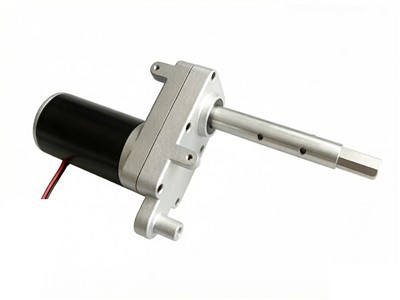
If you’re here because you need a drive motor for EVs, industrial equipment, robotics, or anything else that needs reliable power, don’t just go for the cheapest option. A good drive motor is an investment— it’ll save you money on energy bills, reduce maintenance, and keep your operations running smoothly for years. We’ve got a range of models, from small low-torque motors for robots to high-voltage, high-torque motors for heavy-duty applications. Whether you’re a small business owner with a conveyor system or a large manufacturer building electric buses, we can help you find what you need.
Servo Motor References
- Bose, B. K. (2006). Modern Power Electronics and AC Drives. Prentice-Hall.
- Boldea, I., & Nasar, S. A. (2002). The Induction Motor Handbook. CRC Press.
- Electric Power Research Institute (EPRI). (2018). Motor Systems Energy Efficiency Handbook.
Zibo Auric Mechanical and Electrical Technology Co., Ltd.
Address: B419, High-tech Entrepreneurship Park, High-tech Zone, Zibo City
E-mail: cui@auricmotor.com
WebSite: https://www.auricmotor.com/
