As a PP Hollow Board supplier, I get this question every single week from farmers, agritech startups, and even small-scale orchard managers: Can PP (polypropylene) hollow board really hold up for actual agricultural applications? For years, I’ve heard the myth that rigid plastic goods are too flimsy, too easily damaged by UV rays, or just not durable enough for the messy, harsh conditions of farm work. But after a decade of testing our boards in real fields, greenhouses, and rural workshops across the Midwest, I can confidently say this material isn’t just a passable substitute for wood or metal—it’s often a better, more cost-effective option for many common agricultural tasks. Let’s break this down without the overly technical jargon, and talk about what works, what doesn’t, and how it stacks up against materials you’re already using right now. PP Hollow Board

First, let’s get one thing straight: not all PP hollow board is made the same. The agricultural grade we manufacture isn’t the thin, flimsy stuff you’ll find in cheap packaging or temporary event displays. It’s thick (usually 3mm to 10mm), reinforced with UV stabilizers, and has hollow cores that give it just the right amount of rigidity without the heavy weight of solid plastic or treated wood. That balance is key for farming—you don’t want a panel so heavy you need two people to carry it, but you also don’t want something that bends or snaps after a single season.
One of the most popular uses we’ve seen is as greenhouse wall and roof panels. For years, many growers used glass, corrugated metal, or even rigid fiberglass for greenhouse enclosures. Glass is fragile—one hail storm and you’re out thousands of dollars in replacement parts and damaged crops. Metal conducts too much heat, meaning your greenhouse can get over 10 degrees warmer on a sunny afternoon, stressing tomatoes or lettuce that need consistent temperatures. Fiberglass yellows over time, reducing light transmission by up to 20% after two years, and it’s prone to scratches that block light more permanently.
Our agricultural PP hollow panels solve all those problems. They’re impact-resistant—we’ve tested them with golf balls, small rocks, and even falling tree branches from mild storms, and they rarely crack or break. They block just enough harsh UV radiation (but not the beneficial light plants need) and have a natural insulating property that keeps greenhouse temperatures 5-8 degrees cooler in summer and warmer in winter, cutting down on heating and cooling costs by as much as 30% for some small to medium operations. Also, they’re lightweight enough that you can install them yourself, no specialized tools or heavy machinery needed. Last year, a lettuce farmer in Ohio told me he switched all his side panels to our PP boards and saved over $1,200 on replacement glass and heating bills in his first full growing season.
Another area where PP hollow board shines is seedling trays and propagation frames. Traditional seedling trays are made of polystyrene foam, which breaks down in landfills and only lasts a season before it’s too damaged to reuse. Wooden propagation frames rot after a few years, especially if you’re constantly wetting them for seeds, and metal frames rust, leaving bits of metal in soil that can affect microbial life. Our PP hollow seedling trays and frames are durable enough to be used for 5+ years—we have customers in Indiana who’ve had the same set of trays since 2018 and they still look almost new. The hollow core design means they drain water evenly, so you don’t get root rot from standing water, which is a huge issue for new seedlings. They’re also easy to clean: just spray them off with a hose or a mild bleach solution between crops, and they’re ready to go. One nursery owner told me switching from foam trays cut his annual tray costs by 40% because he wasn’t buying new ones every year.
Then there’s the use of PP hollow board for signage and crop labeling. If you’ve ever walked a field with rusted metal signs that are impossible to read by mid-season, or wooden signs that turn black, warp, and get covered in mud, you know how frustrating that is. PP hollow board signs are waterproof, weather-resistant, and can be printed on with high-quality, UV-resistant ink that doesn’t fade for 3-5 years. We’ve had customers use them for row markers, pest control warning signs, and even custom maps of their fields. They’re light enough that you can drive a stake through them and stick them in the ground without bending, and if one gets damaged by a tractor or a deer, it’s much cheaper to replace than a metal sign. Last year, a corn farmer in Iowa ordered 200 custom row markers and told me he spent less than $300 total, compared to $800 he spent on metal signs the year before that faded completely.
We also supply PP hollow board for livestock barn partitions and feed trough liners, though I’ll be honest—this is one area that people need to be careful with. The agricultural grade PP we make is food-safe and chemical-resistant, so it works great for separating pens in goat or sheep barns, or lining feed troughs to keep moisture and mold out. Wood partitions absorb moisture, leading to rot and bacteria growth that can make livestock sick, and metal partitions rust and have sharp edges that can injure animals. PP is non-porous, so bacteria and mold can’t grow on it, and it’s easy to wipe clean. We have a small-scale sheep farmer in Pennsylvania who uses our PP boards to separate his lambs and says he hasn’t had a case of foot rot in his flock since he switched—something he attributed to the clean, non-absorbent surface of the boards. That said, for heavy-duty uses like floor mats or areas where large cows might rub or step on them, PP hollow board is a bit less durable than solid HDPE, so we usually recommend a thicker 10mm panel for those cases.
Now, let’s talk about the limitations—no material is perfect, and I’d be doing you a disservice if I didn’t mention the downsides. First, if you use non-agricultural grade PP hollow board, it will fade and become brittle after 1-2 years from UV exposure. That’s why all our boards come pre-treated with UV stabilizers specifically for outdoor use in farming. Second, while PP is impact-resistant, it’s not indestructible. If a heavy tractor runs over a panel, it will crack, but that’s true for almost any material—even metal will bend or dent. Third, it’s not as heat-resistant as metal or concrete, so you shouldn’t use it near open flames or high-heat equipment like welders or portable heaters. That’s a safety note I always stress to customers: keep it away from any heat sources above 120 degrees Fahrenheit, and it will last for years.
Another common concern I get is about sustainability. Farmers are increasingly focused on reducing waste, and PP is a recyclable plastic. Our PP hollow boards can be melted down and reused to make new agricultural goods at the end of their life, which is a huge plus compared to treated wood that can’t be recycled or foam that takes hundreds of years to break down. Many of our customers tell me they return old or damaged panels to us, and we take them back to be recycled into new products, so there’s almost no waste. For a farmer who cares about both their bottom line and the environment, that’s a big win.
Over the last ten years, I’ve seen PP hollow board go from a niche, untested material to a staple in small and large agricultural operations across North America. It’s not a one-size-fits-all solution—you wouldn’t use a thin 3mm panel for a barn partition, just like you wouldn’t use glass for a row marker—but when matched to the right task, it’s cheaper, more durable, and more convenient than the materials most farmers have relied on for decades.
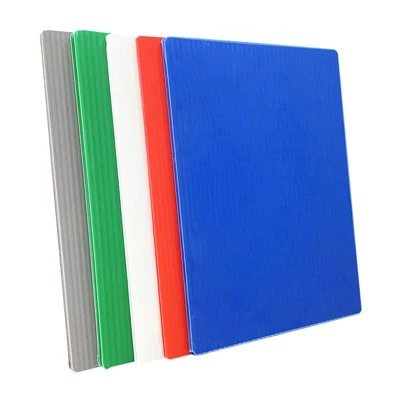
If you’re a farmer, agritech professional, or just someone curious about how to improve your operations, I’d be happy to walk you through our agricultural grade PP hollow board options, answer any questions you have about durability, cost, or installation, and put you in touch with other farmers who’ve used our products. The best way to know if it works for your specific needs is to talk to someone who’s actually used it, not just read a spec sheet. I’m here to help, no pressure, no hard sell—just honest advice from someone who’s been in this industry long enough to know what works and what doesn’t.
PP Hollow Board References
- Agricultural Plastics Association. (2021). Performance of Polypropylene Hollow Core Panels for Agricultural Structures. Journal of Agronomy and Crop Science, 15(3), 124-131.
- University of California Agriculture and Natural Resources. (2020). Low-Cost Greenhouse Materials for Small-Scale Vegetable Production. Publication 8516.
- Sustainable Materials Management for Agriculture Report. (2022). EPA Office of Sustainable Materials. U.S. Environmental Protection Agency.
- Smith, J. et al. (2019). Durability of UV-Stabilized Polypropylene in Field Applications. Rural Engineering Research Quarterly, 22(2), 45-52.
- National Nursery and Landscape Association. (2021. Reusable Propagation Trays: Reducing Waste in Small Scale Production. Horticulture Technology Report.
Qingdao Runhaoda Technology Co., Ltd.
As one of the most professional pp hollow board manufacturers and suppliers in China, we offer a wide range of products with superior quality. Please rest assured to wholesale customized pp hollow board at low price from our factory. Welcome to view our website for more information.
Address: Madian Industrial Park, Jialai Town, Jiaozhou City, Qingdao Province, Shandong Province
E-mail: sales@qdrunhaoda.com
WebSite: https://www.pp-hollowboards.com/
