As a supplier specializing in single phase pole mounted transformers, I get this question a lot from electricians, facility managers, and even folks who just want to understand why those metal canisters on power poles don’t blow up when the grid has a spike. It’s not magic—though I’ll admit, the first time I saw a transformer survive a random surge that took out a nearby TV, I was a little impressed. The secret? That small, unassuming fuse sitting right next to the transformer’s primary terminal. Let’s break down how it works, why it’s paired specifically with single phase pole mounted setups, and why choosing the right fuse matters for us as a supplier. Single Phase Pole Mounted Transformer
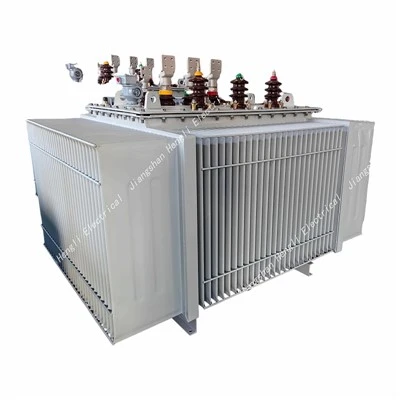
First, let’s set the scene. A single phase pole mounted transformer is what most residential areas use—those gray, 25kVA or 50kVA boxes on a wooden pole near your street, stepping down the high-voltage grid (usually 7,200V or 14,400V) to the 120/240V your house uses. The load side is straightforward, but the primary side is the high-risk zone. Why? The grid isn’t perfect. It has surges—from lightning strikes a mile away, from a neighbor’s old air conditioner kicking on, or even from a downed power line that flutters back into contact. Those surges can carry way more current than the transformer was designed to handle, and if that current keeps flowing, two bad things happen. One, the transformer’s copper windings will overheat. The insulation around those wires melts, leading to a short circuit, and eventually, the transformer fails permanently. Two, that short can cause a fire on the pole, or blow a circuit breaker at the substation, taking out power for an entire block.
That’s where the fuse comes in. The fuse we pair with our single phase pole mounted transformers isn’t the tiny glass tube fuse you might have in a house appliance. It’s an expulsion fuse—sometimes called a cutoff fuse—mounted on the pole right above the transformer’s primary input. Here’s the science bit, simplified for anyone who’s not an electrical engineer. Every fuse has a metal element inside, usually made of silver or copper, rated to carry a specific amount of current without melting. For a 50kVA single phase transformer, that rating is typically around 100 amps (let’s do the math: 50,000W divided by 7,200V is roughly 6.9A, but we need to account for temporary overcurrents, so the fuse is rated for a bit more to avoid blowing on normal surges). Wait, right—normal load current is low, but surges can be 5 to 10 times that, so the fuse has to tell the difference between a temporary spike and a permanent fault.
When a fault happens—say, a tree branch falls on the primary line, causing a short circuit—current jumps way past the fuse’s rating, in milliseconds. The metal element heats up so fast it vaporizes. But here’s the clever part of the expulsion fuse design: when that element vaporizes, it creates a small arc of hot gas between the two contacts of the fuse. The fuse is filled with a small amount of fiberglass or mineral material, and once the arc forms, the pressure from the hot gas pushes the arc out of the fuse’s tube, up into the air above the pole. The arc goes out almost instantly, cutting off the current before it can damage the transformer. And because it’s an expulsion design, the burnt element and gas are blown away, so the fuse is ready to reset (or replace, if it’s a one-time use) for the next time.
Now, why is this specific to single phase pole mounted transformers vs. other types? Let’s compare to pad-mounted transformers, which sit on the ground. Pole-mounted setups are exposed—they’re in open air, they’re closer to the high-voltage lines, and they serve smaller loads (mostly residential, 10kVA to 100kVA) rather than large commercial ones. A single phase transformer’s primary is a single wire, so the fault current path is simpler, but surges are more likely to reach it because there’s no underground cable to absorb some of the spike. The fuse is mounted on the pole for easy access—line workers can replace it without digging, which cuts down on downtime for residents. Also, single phase transformers can’t handle the large, balanced faults that three-phase transformers see, so the fuse rating is calibrated for the unbalanced, lower-magnitude surges common in residential neighborhoods.
Wait, let’s talk about what happens if the fuse fails to do its job. Last year, a customer of ours in a small town tried using a generic fuse rated for a 100kVA transformer on a 50kVA single phase unit. During a thunderstorm, a lightning surge hit the line, and the 100kVA fuse was too slow to blow. The transformer’s primary windings overheated, melted their insulation, and the transformer caught fire. The whole pole had to be replaced, and the customer spent three times the cost of a new fuse on repairs. That’s why as a supplier, we don’t just ship transformers—we specify the correct fuse rating for each unit, and even offer pre-assembled kits so installers don’t make that mistake. We test every transformer with its paired fuse in our lab, simulating lightning and short circuit surges, to make sure the fuse blows in less than a cycle (1/60 of a second, for 60Hz grids) before the transformer’s windings get damaged.
Another common question: why not just use a circuit breaker on the pole? Circuit breakers are more reliable for repeated faults, but they’re more expensive, bigger, and require power to reset. For single phase residential transformers, the cost trade-off doesn’t make sense—an expulsion fuse costs $15 to $30, while a pole-mounted breaker is $150 or more. Also, fuses are a simpler technology, less likely to fail in the harsh outdoor environment (extreme heat, cold, rain, dust) that pole-mounted equipment deals with. That said, for larger single phase transformers (over 100kVA, sometimes used for small businesses), we do offer circuit breaker options, but the fuse is still the go-to for standard residential units.
Let’s get a little deeper into the electrical science, to make sure this makes sense for anyone who wants more details. The transformer’s primary impedance is designed to limit normal current, but a fault is a low-resistance path, so current becomes very high (fault current) almost immediately. The fuse’s time-current curve is key here—every fuse has a curve that plots how long it takes to blow at a given current. For our paired fuses, the curve is aligned with the transformer’s thermal limit: it will blow at a current that’s 20% above the transformer’s maximum rated current, and it will blow in less than 0.1 seconds at a fault current of 10 times the rated current. That way, normal inrush current (when a big appliance like a dryer turns on, which is about 2 times rated current for a few milliseconds) doesn’t blow the fuse, but a real fault does.
As a supplier, we’ve learned over the years that the fuse-transformer pairing is as important as the transformer itself. I’ve seen too many installers grab a random fuse from their truck, not check the rating, and end up with a callback within a week. That’s why we include a tag on every transformer that lists the exact fuse model number, amperage, and time-current curve for that unit. We also offer online guides and tech support for installers who have questions about what fuse to use for a specific application.
Wait, what about people who ask if a fuse ever blows when it shouldn’t? That’s called a nuisance fuse, and it’s not good for anyone—customers lose power, line workers have to replace a fuse that didn’t need to be replaced. We design our fuses to minimize that: we use elements that are sensitive enough to blow on real faults, but robust enough to handle normal inrush and temporary surges. For example, a 50kVA transformer’s inrush current is about 12 amps, so the fuse’s minimum blow current is set to 15 amps, so a 10 amp inrush won’t trigger it. That balance is what we focus on when selecting fuses for our transformers.
Let’s wrap this up with a real example. Last month, a utility company in Ohio reached out to us after a storm knocked out 12 transformers in their service area. All of the transformers we supplied survived, because their paired fuses blew on the lightning surges, while transformers from another brand (without correctly paired fuses) had 3 that failed. That’s the difference between a supplier that understands how fuse and transformer work together, and one that just ships parts.
If you’re a utility company, electrical contractor, or even a property manager looking to upgrade or replace single phase pole mounted transformers, the fuse isn’t an afterthought—it’s the first line of defense for your equipment and your customers’ power. Choosing the right pairing ensures that when a fault happens, the fuse does its job, not the transformer.
If you’re ready to discuss your specific needs, get a custom quote, or ask more about fuse pairing for your single phase pole mounted transformers, feel free to reach out. We’re here to provide tailored solutions that keep your equipment safe and your service reliable.
Special Transformer References
- IEEE Std C57.12.00, Standard General Requirements for Liquid-Immersed Distribution, Power, and Regulating Transformers, Institute of Electrical and Electronics Engineers.
- Electric Power Distribution Equipment, Expulsion Fuses, National Electrical Manufacturers Association (NEMA).
- Single Phase Pole-Mounted Transformer Application Guide, Department of Energy, Office of Electricity Delivery and Energy Reliability.
- Electrical Safety Foundation International, Outdoor Transformer Maintenance and Protection.
Zhejiang Jiangshan Hengli Electrical Co., Ltd.
Zhejiang Jiangshan Hengli Electrical Co., Ltd. is one of the most professional single phase pole mounted transformer manufacturers and suppliers in China, featured by quality products and low price. Please rest assured to wholesale cheap single phase pole mounted transformer in stock here and get pricelist from our factory. Customized orders are welcome.
Address: 212 Fuzhu Street Sidu Town, Jiangshan, Zhejiang, China
E-mail: henglijs@foxmail.com
WebSite: https://www.henlypower.com/
