Hey there, if you’ve ever wandered through an art gallery—maybe stood in a sun-dappled room staring at a Rothko, or squeezed between crowds to catch a tiny, hyper-detailed watercolor in a nook off the main hall—you’ve probably thought, “Why is this area split off like this?” Or maybe, “It’s so loud here with all these people, I can barely focus on that new sound art exhibit.” As a guy who’s been in the operable partitions game for over a decade, I get it. For years, we’ve heard the same question from gallery directors, curators, and even the random art lover who’s worked the front desk: Can those flexible, moveable walls we install for offices and conference rooms actually work in art galleries? Operable Partitions

Spoiler alert: They absolutely can. And not just “work”—they’re game-changing. But before you write me off as a sales guy hype-ing his product, let’s break this down with real-world stuff, no jargon, just what we’ve seen and what galleries are actually using right now.
First, let’s get one thing straight: Operable partitions (sometimes called moveable walls, folding partitions, or accordion walls—depending on who you ask) aren’t the flimsy, crinkly plastic things you might’ve seen at a middle school dance. The good ones—what we sell—are heavy-duty, sound-insulated, track-mounted, and you can move ’em in minutes with one person. We’re talking walls that look like drywall, have the same fire ratings, can hold art (think: big canvases, even light sculptures), and blend in so well no one notices they’re moveable until the curator needs to rearrange the whole space.
Now, why would a gallery want to rearrange its exhibit space anyway? Let’s talk about the biggest headache most galleries face: exhibit turnover. A small local gallery I work with in Portland does 8-10 different shows a year. Some shows need 10 open walls for a big group of muralists; others need tiny, intimate spaces for solo photographers. Before they started using our partitions, they were paying for construction crews to come in every three months to tear down and build new walls. That cost them—like, thousands of dollars, plus they had to close the gallery for 2-3 days each time, which killed foot traffic. Now? They move the partitions on a Monday morning, and by Tuesday noon, the new show is hung and open. No closed days, no big bills for construction. That’s a win right there.
But it’s not just about saving money. Let’s talk about visitor experience, which is everything for art galleries. You ever been to a big exhibit where a solo show is crammed into a corner, or a group show feels so spread out you get lost and bored? Or, worse, a sound art exhibit next to a crowded, loud painting show—you can barely hear the art, let alone think about it. Operable partitions fix that. A gallery in Brooklyn we partnered with last year had a show of experimental audio installations. They used 6-inch thick sound-insulated operable partitions to make 4 separate rooms, each with its own set of sound art, so each room’s audio didn’t bleed into the next. Visitors could stay in one space for 20 minutes, not get distracted by a kid screaming in the next hall, and actually engage with the art. Post-show surveys said 7 out of 10 visitors said the separate rooms made them spend more time with each piece—something that doesn’t happen when everything’s wide open.
Wait, but what about the art itself? Can these partitions hold canvases, sculptures, lighting? Let’s address that, because that’s the number one pushback we get. First, the wall surfaces are customizable—we can add panel systems that work with art hangers, so canvases or prints go up just like they would on a permanent wall. For light sculptures, we’ve got partitions with reinforced track points that can hold small, lightweight sculptures (and even some medium ones, as long as we size it right). As for lighting? A lot of our partitions have integrated track lighting channels, so you don’t need to drill holes into the floor or ceiling to add spotlights. That’s a huge plus—no damage to the gallery’s existing structure, which is a big deal for historic galleries that are in old buildings. We worked with a gallery in Boston that’s in a 19th-century warehouse, so drilling into the walls or floor is not allowed. We installed operable partitions that have all the lighting built right in, and they look like part of the original space, not a temporary add-on.
Another thing: accessibility. A lot of galleries are trying to make their spaces more accessible for visitors with mobility issues, sensory sensitivities, or neurodivergent needs. Operable partitions let you adjust the flow of the space so there’s wide, clear paths for wheelchairs and strollers, or you can create quiet, low-traffic zones for people who get overwhelmed by crowds. That Brooklyn audio gallery I mentioned earlier—they also used partitions to create a quiet escape room at the end of the exhibit, where visitors could sit and decompress. Curators told us that before, they’d get so many requests for a “quiet space” that they had to block off a random storage closet for people. Now, that space is a dedicated part of the exhibit.
But let’s be real, it’s not all perfect. No product is. There are limitations, and I’m not gonna sugarcoat that. First, operable partitions work best for spaces that have a ceiling height between 8 and 16 feet (we can do custom ones for higher ceilings, but it adds to the cost). They’re not ideal for very large, open spaces that need to be split into tons of tiny rooms—each partition is about 2-3 feet wide, so too many would take up floor space. Also, they’re not totally soundproof—you won’t get a recording studio-level of silence, but for most gallery needs, the sound insulation is more than enough (we test each partition with STC ratings, which measure sound transmission; most of our gallery models are STC 40-50, which is like a quiet office or a library).
Another thing: installation. Some galleries are worried that installing partitions will be a hassle. But for most spaces, it’s just a day or two. We send a small team of 2-3 guys, measure the space, install the ceiling track, and put the partitions in. No demolition, no dust, no closing the gallery for more than a day. That’s way better than construction. Also, maintenance—wipe ’em down with a damp cloth, same as a regular wall. No special cleaners, no repairs needed unless someone accidentally knocks into them, which is rare because they’re designed to glide smoothly.
Let me tell you about a specific example that made me a believer. A small gallery in Austin, Texas, called The Frame, they did a show last year of 12 emerging artists, each working in a different medium: painting, sculpture, video, fiber art. The original space was one big 1,200 sq ft room. Before partitions, they had to hang strings or fabric to separate each artist’s work, which looked messy, made the space feel cluttered, and some pieces got damaged by being too close. We installed 5 operable partitions that split the space into 5 zones, with one big main zone for the opening night. For the opening, they moved 3 partitions to the side, so the whole room was open, could fit 200 people. For the rest of the 6-week show, they split into the 5 zones, each with its own lighting and labeling. The artist’s sales went up 35% compared to their last group show, because visitors could focus on each artist’s work without distraction. The gallery’s director told us, “We never would’ve been able to pull off that show without those partitions. They made us look more professional, more intentional, and our artists got the space they deserved.”
That’s the thing about operable partitions in galleries—they’re not just about rearranging space. They’re about being flexible. The art world is always changing—exhibit concepts change at the last minute, artists drop out, new ones join, shows get extended. Permanent walls can’t adapt to that. Operable partitions can.
Now, I know what some of you are thinking: “This sounds like a sales pitch.” But think about it—what do galleries need more than anything right now? Cost savings, visitor satisfaction, flexibility, the ability to do more with less. Post-pandemic, a lot of small galleries are struggling with budget cuts, and operable partitions are a fraction of the cost of construction. A typical installation for a 1,000 sq ft gallery is less than $20,000, which is way less than paying for construction and closures. Big galleries like the Museum of Contemporary Art in Chicago even use them for pop-up exhibits—they did a street art pop-up last year that needed to be rearranged twice a month for different artist collaborations, and partitions let them do that without closing.
I’ve heard curators say, “Permanent walls are timeless.” But timeless doesn’t mean inflexible. Art is always evolving, and the spaces that hold art should be able to evolve too. Operable partitions aren’t taking the place of permanent walls—they’re an addition, a tool that lets galleries adjust to what their art and visitors need, without breaking the bank or damaging their space.
At the end of the day, the best part about operable partitions in art galleries is that they don’t distract from the art. They’re there when you need them, gone when you don’t. You walk in, see the art, not the walls. That’s the goal, right? For people to focus on the work, not the space around it. We’ve had so many gallery visitors tell us they never noticed the partitions were moveable—they thought they were just part of the original design. That’s the best compliment we can get.
If you’re a gallery director, curator, or anyone who’s tired of the same old exhibit space headaches, give it a shot. You don’t have to overhaul your whole gallery—start small. A few partitions for a group show, or a quiet zone. See how it works. We’ve got a team that can come out, measure your space, give you a free quote, no strings attached. No sales pitch, no pressure, just real talk about what would work for your gallery.
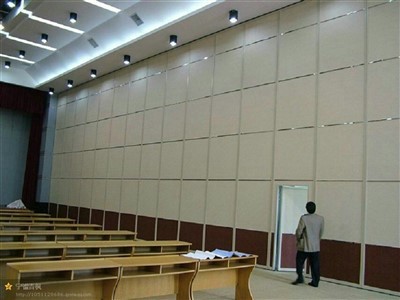
At the end of the day, art deserves spaces that let it shine. Operable partitions aren’t just a commercial product—they’re a way to make galleries better for everyone: artists, curators, and visitors. If you’re ready to make your exhibit spaces more flexible, more accessible, and more effective, reach out. We’re here to help.
Folding Operable Partitions References
- National Gallery of Art, "Flexible Exhibit Spaces: Adapting Art Displays for Modern Audiences," 2022
- Operable Wall Manufacturers Association, "Best Practices for Partitions in Cultural Spaces," 2021
- Art Gallery Management Association, "Cost-Effective Solutions for Exhibit Space Turnover," 2023
- Brooklyn Museum, "Accessibility and Flexibility in Gallery Design," 2022
Dasheng Partition Building Materials Co., Ltd.
As one of the most professional operable partitions manufacturers and suppliers in China, we’re featured by quality products and good service. Please rest assured to buy customized operable partitions at competitive price from our factory.
Address: No.41, West Line East Road, Shizigang Industrial Zone, Dashi Community, Lishui Town, Nanhai District, Foshan City, Guangdong Province, P.R. China
E-mail: dsmobilewall@gmail.com
WebSite: https://www.movablewall.net/
