If you’ve spent any time around power lines, substation equipment, or transmission infrastructure, you’ve probably spotted the sleek, cylindrical composite insulators that have largely replaced older porcelain and glass models over the past 30 years. As someone who’s been supplying these components to utility companies and industrial facilities for nearly two decades, I get all kinds of questions from clients, but one comes up more than almost any other: “Do composite insulators even need to be cleaned?” Composite Insulator
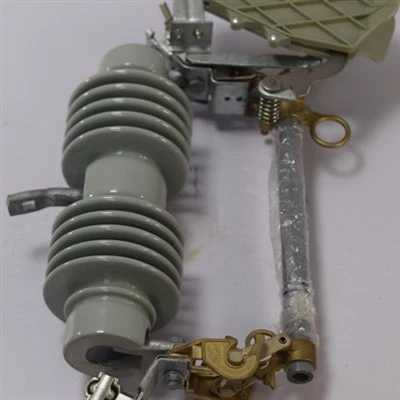
It’s a fair question, and one that’s grown more urgent as extreme weather, industrial pollution, and urban haze have put more stress on electrical grids around the world. Early composite insulators had a reputation for being low-maintenance compared to their ceramic predecessors, which was one of their biggest selling points. But over time, I’ve seen firsthand that “low-maintenance” doesn’t mean “no maintenance at all.” The answer isn’t a simple yes or no—it’s a nuanced one that depends on a handful of factors, and getting it right can mean the difference between a reliable grid and a costly outage.
Let me start with how composite insulators work, because that’s key to understanding why cleaning is even a consideration. Unlike porcelain, which is rigid and relies on a smooth, glazed surface to repel moisture, most modern composite insulators are made of a silicone rubber housing reinforced with a fiberglass core. The magic of silicone rubber lies in its hydrophobicity—it repels water, so rain or light dew beads up and rolls off instead of forming a continuous, conductive film across the insulator’s surface. That’s why composite insulators can handle more pollution and moisture than porcelain, at least in normal conditions.
But here’s the thing: silicone rubber isn’t invincible. Over months or years of exposure to the elements, that hydrophobic layer can break down. When it does, contaminants start to stick. I’ve seen insulators running in coastal areas where salt spray has crusted onto the surface, in industrial zones where coal dust or chemical fumes have left a thick, greasy residue, and in agricultural regions where pollen, fertilizer dust, and bird droppings have built up over time. In moderate amounts, that residue might not cause a problem. But when it builds up enough to create a conductive layer, combined with moisture, it can trigger what’s known as “surface flashover”—a discharge that arcs across the insulator, cutting off power or even damaging the unit itself.
So when does cleaning make sense? For most of the standard, low-pollution environments I supply insulators to—suburbs, rural areas with light industrial activity, places with regular rainfall that naturally washes contaminants away—cleaning is rarely required. My team and I recommend periodic visual inspections (twice a year, usually) to check for excessive buildup, cracks in the silicone housing, or fading that could signal hydrophobicity loss. If those inspections show minimal residue, you’re good to keep running.
But in high-contamination zones, that’s a different story. Last year, I worked with a utility in the Midwestern US that runs lines near a large coal-fired power plant. For the first 10 years after installing our composite insulators, they only performed visual checks, and they didn’t have any issues. Then a stretch of dry, hot weather in the summer slowed the natural cleaning effect of rain. The coal dust on the insulators baked into a hard, conductive layer. Within a few months, they had three flashover events that knocked out power for over 10,000 customers. After that, they started a routine of high-pressure water washing for those insulators every two years, and they haven’t had a related issue since.
Coastal areas face a similar risk. Salt spray is highly conductive, and it doesn’t wash away easily in humid conditions, when moisture just sits on the surface instead of running off. I supply a lot of insulators to facilities along the Gulf Coast and Atlantic Seaboard, and for those clients, we usually recommend a more aggressive maintenance plan: either high-pressure washing every three to four years, or even applying a fresh silicone coating to restore hydrophobicity if the original layer has degraded significantly.
Another scenario where cleaning might be necessary is after a major event. Wildfires, for example, leave a fine, chalky ash that coats everything in its path. That ash is extremely conductive when it gets wet. I’ve had clients call me in the days after a wildfire, panicking about insulators on transmission lines that span fire zones. In those cases, we advise emergency cleaning if there’s a risk of flashover, because the ash layer won’t go away on its own, and waiting for rain could lead to an outage. The same goes for after a heavy ice storm or a period of industrial spillage, like a chemical leak that leaves residue on infrastructure.
But here’s the part I always emphasize to clients: not all cleaning methods are created equal, and using the wrong one can actually damage your composite insulators. Porcelain insulators can handle harsh chemicals or high pressure, but silicone rubber is more delicate. I’ve heard horror stories of utilities using industrial-grade detergents that strip away the silicone’s hydrophobic properties, leaving the insulator more vulnerable than before. Or using high-pressure water at too steep an angle, which can etch or tear the rubber housing, creating tiny cracks that let moisture and contaminants get into the fiberglass core—something that’s nearly impossible to repair and can lead to catastrophic insulator failure.
That’s why I always recommend that if you do decide to clean your composite insulators, you work with a team that has experience with rubber housings, not just porcelain. The right method for most cases is low-pressure, neutral-pH water, usually at pressures under 500 PSI, applied at a 45-degree angle to the insulator surface to avoid damaging the housing. For more stubborn residue, like salt crust or baked-on dust, a mild, silicone-safe detergent can be used, but it has to be rinsed off completely to avoid leaving a film that attracts more contaminants. In some cases, especially for hard-to-reach insulators on transmission lines, we also offer remote cleaning services that use pressurized water from helicopters or specialized trucks, so you don’t have to shut down power to perform maintenance.
I also want to address a common myth I hear all the time: that composite insulators don’t need any maintenance at all, ever, because they’re “better” than porcelain. While it’s true that composite insulators have a longer average lifespan (usually 20 to 30 years, compared to 15 to 20 for porcelain) and hold up better in many conditions, they’re not maintenance-free. I’ve seen insulators that were installed in the 1990s that are still working perfectly in rural areas, with no cleaning needed. But I’ve also seen insulators from the same generation, installed just a few miles away in an industrial park, that had to be replaced early because of unaddressed contamination buildup. The difference isn’t the quality of the insulator—it’s the environment they’re running in, and the attention paid to their condition.
Another factor that changes the maintenance equation is the voltage level of the insulators. Higher-voltage lines—like the 220kV and 500kV transmission lines that move power hundreds of miles—have a much lower tolerance for flashover than lower-voltage distribution lines that run to individual neighborhoods. For those high-voltage lines, even a small layer of contamination can be enough to trigger a discharge, so regular inspections are even more important. I work with several large transmission utilities that use thermal imaging and UV cameras to check for partial discharges on composite insulators, which can signal that contamination or hydrophobicity loss is starting to cause problems, long before a full flashover happens. That way, they can plan cleaning or maintenance during scheduled outages, instead of dealing with unplanned, costly blackouts.
So where does that leave us? The short answer is: composite insulators don’t need to be cleaned on a one-size-fits-all schedule, but they do need to be monitored. If you’re running insulators in a low-pollution, rural or suburban area with regular rainfall, a visual inspection every year or two is enough—cleaning is almost never required. If you’re in a high-contamination zone, like a coastal area, industrial park, or near farmland with heavy dust or fertilizer use, a routine of inspections every six months, with cleaning as needed every three to four years, is a good rule of thumb. And if you’ve had a recent extreme event, like a wildfire, storm, or spill, a post-event inspection is critical to determine if emergency cleaning is needed.
I’ve spent my career supplying insulators, and I’ve learned that the best maintenance strategy is proactive, not reactive. Waiting until you see a flashover or a broken insulator is way more expensive than scheduling regular inspections and cleaning when needed. It’s also important to work with a supplier you trust—someone who can assess your specific environment, recommend the right maintenance plan, and offer cleaning services that won’t damage your insulators.
At the end of the day, composite insulators are designed to be low-maintenance, but that doesn’t mean you can set them and forget them. The grid is more stressed than ever, from extreme weather to growing demand for electricity, and every component matters. Taking the time to monitor your composite insulators and clean them when necessary isn’t just a good practice—it’s how you keep the lights on for the people who rely on your power.

If you’re not sure what maintenance plan is right for your insulators, or if you need support with inspections or cleaning, we’re here to help. We work with utilities, industrial facilities, and infrastructure teams around the world to provide tailored solutions for composite insulator care. Contact our team to discuss your needs and find a plan that keeps your equipment running reliably for years to come.
Vacuum Recloser References
- International Council on Large Electric Systems (CIGRE). “Performance of Composite Insulators in Service.” CIGRE Technical Brochure 403, 2010.
- IEEE Power & Energy Society. “Guide for the Application and Maintenance of Composite Insulators for Overhead Transmission Lines.” IEEE Standard 1528, 2013.
- Mortazavi, S., et al. “Effect of Contamination Accumulation on the Hydrophobicity of Silicone Rubber Insulators.” IEEE Transactions on Dielectrics and Electrical Insulation, vol. 22, no. 3, 2015, pp. 1567–1574.
- Arabian, P., et al. “Emergency Cleaning of Composite Insulators After Wildfire Contamination.” Proceedings of the 2020 International Symposium on High Voltage Engineering, 2020, pp. 1–5.
- Schutte, C., et al. “Maintenance Strategies for Composite Insulators in Coastal Environments.” Proceedings of the 2018 Transmission and Distribution Conference and Exposition, 2018, pp. 1–5.
EC Insulator Jiangxi Co., Ltd.
EC Insulator Jiangxi Co., Ltd. is one of the most experienced composite insulator manufacturers and suppliers in China, also supports custom service. Please feel free to wholesale advanced composite insulator made in China here from our factory. Contact us for more details.
Address: Yuanyang Road, Wuyuan County, Shangrao City, Jiangxi Province China
E-mail: info@ec-insulators.com
WebSite: https://www.eci-elecglobal.com/
