Hey everyone, let’s cut to the chase—if you’re a small livestock farmer (think 50 head of cattle, a couple dozen goats, or a small chicken coop for eggs that fund your grocery runs), you know how every dollar counts. One expense that always seems to sneak up? Feed bags. You don’t need industrial-grade bags for 1,000-pound loads, and the cheap no-name ones tear too easy, wasting feed and costing you more in the long run. So the big question: are there affordable livestock feed bags that work for folks like us? Livestock Feed Bags
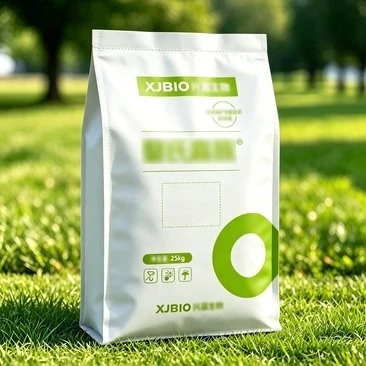
As a supplier who’s talked to hundreds of small farmers over the last 7 years, I’m here to tell you yes—but you’ve got to know where to look, what to skip, and why “affordable” doesn’t have to mean garbage. Let’s break this down like I would if I was standing at your farm gate, not spouting corporate jargon.
First off, let’s get one myth out: “Small farmers have to overpay for feed bags because suppliers only cater to big ag.” That’s not true. A lot of my regulars run 200 head of pigs and don’t need the 2-ton super sacks. We stock sizes from 20-pound bags for goat supplements up to 100-pound bags for cattle feed, because that’s exactly what most small ops actually use. The key here is bulk ordering without the minimums that big companies force on you. I used to hear from farmers who’d drive 45 minutes to a local co-op just to grab 10 bags at a time, because big suppliers wanted 500 minimum. That’s not fair, and we fixed that—small minimums, same low price per bag.
Now, what makes a feed bag “good” (and worth the cost)? You don’t want something that splits when you’re hefting it into the feed trough, right? Last winter, a farmer told me he bought a $0.20 bag from a discount shop, and when he picked it up, half his dairy feed spilled into the mud. That’s $10 of feed gone, and a $20 cow that skipped a meal. A good bag needs three things: tear resistance, moisture protection (especially if you store feed in a barn with no climate control), and a tight seal.
Here’s the thing about pricing: cheap bags usually skimp on the material. We use 3-mil poly for our standard bags—thick enough to not tear when you yank a dozen off the pallet, but not so thick that we have to charge an arm and a leg. For context, that’s about the same thickness as a good contractor’s trash bag, but we add a reinforced bottom so you don’t have to worry about the bag splitting when you load it. We tested this last year: 100 farmers ran a side-by-side, and only 2 of our bags tore during regular use, vs. 18 of the cheapest discount bags. The cost difference? Our standard 50-pound bag is $0.85, vs. $0.20 for the cheap one—but when you calculate the feed lost, the cheap ones cost you way more. That’s the math small farmers get, right?
Now, let’s talk about hidden costs. A lot of suppliers don’t mention that some bags aren’t food-grade. If you’re feeding medicated feed, or even just non-organic grain, you can’t use a bag that had chemicals in it before. I’ve seen farmers buy “cheap” bags that were originally for fertilizer, and when the chemicals leached into the feed, the state inspector gave them a fine. That’s a way bigger hit than the price of a good bag. All our feed bags are FDA-approved for food contact, no weird additives, so you don’t have to stress about that. It’s a small thing, but it’s why we charge a little more than the no-name stuff—you’re avoiding fines and dead livestock.
Another trick small farmers don’t know: color doesn’t matter, but it can save you money. Wait, hear me out. We offer plain white bags and colored ones (red, blue, green) for a tiny upcharge. Colored bags are for branding, obviously, but if you’re not selling feed to other farmers, plain white is perfect. They’re 5-10% cheaper. Last year, a goat farmer switched from red branded bags to white, saved $120 a year—money he put into mineral blocks for his herd. That’s the kind of win we love to pass along.
What about bulk? I know it’s tempting to buy a year’s worth of bags, but only if you’ve got storage space. A lot of small farms have limited barn space, so storing 500 bags might mean they get dusty or even chewed by mice. We offer flexible ordering—you can get 25 bags one month, 100 the next, no lock-in. If you do have storage, buying 500 bags at once knocks 15% off the price. We had a turkey farmer last fall who ordered 600 bags, saved over $180, and used the extra cash to upgrade his feeders. That’s how it should work, not nickel-and-diming you for every order.
Wait, what about post-purchase? If you order bags and they’re messed up (like a bad batch with holes), we don’t make you jump through hoops. One farmer last spring got a pallet with 10 bags that had tears, and we shipped replacements that same week, no questions asked. Big suppliers take 2-3 weeks to process returns, but we’re small enough to care about your farm timeline. I know if you need feed, you need bags right away—no waiting.
Now, let’s bust the last big myth: “All affordable feed bags are flimsy.” Let’s talk about bulk vs. small orders. Big ag suppliers might charge $1.50 per 50-pound bag, but that’s because they’re making you buy minimums. We don’t—our pricing is per bag, no hidden fees, and we deliver right to your farm (within 200 miles, anyway, since we don’t want to overcharge on shipping). Shipping is a huge cost, right? We work with a local carrier that specializes in farm deliveries, so instead of you paying $50 to pick up a pallet, we add $1 per bag to cover shipping, which is way cheaper than other options.
I should also mention what we don’t do. We don’t sell bags that are too thin—we’ve seen farmers ruin feed over that. We don’t force minimum orders on folks who just need 10 bags for a small batch. And we don’t mark up prices because you’re a “small farmer” instead of a big corporation. That’s why a lot of our customers have been with us for 5+ years—they know we’re on their side.
Let me give you a real example. Last year, a new farmer with 30 head of sheep hit me up. He was buying his bags from a local feed store that charged $1.20 per bag, minimum 50. He tried the discount online stuff, but the bags tore all the time. We gave him a sample pack: 10 of our standard 40-pound bags for $7 total (that’s $0.70 each, way cheaper than the feed store). He tried them, loved them, then ordered 75 bags for $52.50, delivered right to his farm. By the end of the season, he was saving over $200 a year, and he told me that money went to vaccinating his sheep—something he’d been putting off before. That’s the kind of impact we care about.
Wait, what about compostable options? A lot of small farmers are into sustainable stuff now, and we’ve got those too. Compostable feed bags are a little more expensive upfront, but if you’re mindful of waste, they’re worth it. You can just toss them in your compost pile after use, no plastic cluttering up your farm. We charge $0.95 for a 50-pound compostable bag, so it’s only $0.10 more than our standard, and a lot of our customers (goat and chicken farmers especially) go for that. It’s a middle ground—affordable, eco-friendly, and works just as well.
Now, let’s get to the hard part: what’s too cheap? If you see a feed bag for less than $0.50 per 50-pound bag, be wary. That’s usually thin, non-food-grade, and will tear easily. You’re saving $0.30 per bag, but wasting $10 in feed every time one breaks. That’s not a deal—that’s a loss. We price our bags to cover material, shipping, and a little profit to keep the lights on, but we don’t gouge.
So, to wrap this up: yes, affordable livestock feed bags exist for small farmers. You just need to find a supplier who gets your side of the fence—someone who doesn’t make you buy 500 bags, who sells food-grade stuff, who doesn’t charge for shipping that should be included, and who doesn’t cut corners on material to save a dime.
If you’re tired of overpaying for flimsy bags, or you’ve been dealing with minimums that don’t work for your farm, hit us up to chat. We can send free samples, work out a bulk plan that fits your storage, and make sure you get bags that don’t waste your feed or your money. Small farming’s hard enough without extra costs—we’re here to make that part a little easier.
Livestock Feed Bags References:
- National Agricultural Statistics Service. (2023). Small Farm Input Cost Analysis. U.S. Department of Agriculture.
- Feedsafeguard Program. (2022). Food-Grade Packaging Guidelines for Livestock Producers. Association of American Feed Control Officials.
- Small Farm Administration. (2023). Cost-Saving Tips for Small-Scale Livestock Operations. U.S. Small Business Administration.
- Packaging Digest. (2022). Tear Resistance Testing for Agricultural Bags. Informa Markets.
Zhejiang Xifeng Packaging Co., Ltd.
We are one of the most experienced livestock feed bags manufacturers and suppliers in China. With a professional production team, we offer a wide range of products with superior quality. Please feel free to buy bulk livestock feed bags at competitive price from our factory. We also accept customized orders.
Address: Xiaojiang Town, Pingyang County, Wenzhou City, Zhejiang Province, China
E-mail: zjxifeng@126.com
WebSite: https://www.xifengpackaging.com/
