Hey there, fellow truckers and fleet managers! If you’ve ever driven on a highway at night and struggled to spot a semi-truck parked on the shoulder – or maybe you’re the one driving that semi, wondering if your reflectors are doing their job – you’re in the right spot. I’m [Your Name], and I’ve been running a truck reflector supply business for the past 8 years. Let me tell you, over those years, I’ve heard every mistake truckers make when picking reflectors. Most of ’em don’t realize this stuff isn’t just “sticker on the back” – it’s the difference between staying safe and ending up in a crash that could’ve been avoided. Today, I’m breaking down exactly how to choose the best truck reflectors for highway use, no fancy jargon, just real talk from someone who sells these things every single day. Truck Reflector
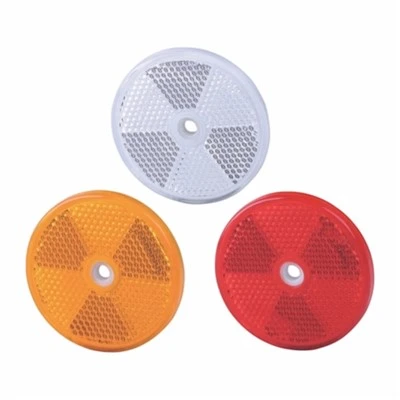
First off, let’s get one thing straight: highway use is totally different from backroad or off-road use. Highways mean higher speeds, more traffic, and way less time to react. That’s why your reflectors can’t be some cheap, flimsy plastic thing you grab at a gas station. I’ve had truckers come to me after a crash, saying their old reflectors faded so bad no one could see ’em in the dark. Don’t be that guy. So what should you actually look for? Let’s start with the basics that even new truckers might miss.
- Reflector Type – Don’t Skip This Step
Not all reflectors are created equal, and for highways, you want three main types: rear reflectors, side reflectors, and clearance reflectors. Wait, let’s be clear – rear ones are for when someone’s tailing you, side ones are for when someone’s passing you in the next lane, and clearance ones are for when you’re turning or parked on a shoulder. I see a lot of guys buy only rear reflectors, and that’s a huge mistake. On highways, a side collision is way more common than a rear-end crash, trust me.
Now, the big question: reflective material. Old-school glass beads are okay for backroads, but for highways, you need prismatic reflectors. Why? Glass beads work by bouncing light back directly at the source (like a car’s headlights), but prismatic ones use tiny cubes that reflect light from any angle – even if the car is coming from the side or a little above. I’ve tested both: a glass bead reflector can go invisible at 50 mph if the light’s not straight on, but a prismatic one? At 70 mph, a driver can spot it from 500 feet away. That’s not a guess – I’ve had customers test ’em at a truck stop, and they’re always shocked.
Wait, what about LED reflectors? Some guys swear by ’em, but here’s my take: for highway use, passive reflectors (the ones that don’t need power) are more reliable. LEDs can die if there’s a wiring issue, or get damaged if you hit a pothole. Passive ones last way longer – I’ve had reflectors I sold in 2015 still working perfect last year. If you want extra light, maybe add a couple LED strips, but don’t replace your reflectors with ’em. The FMCSA (Federal Motor Carrier Safety Administration) even recommends passive reflectors for mandatory use, so that’s a big point.
- Compliance – Don’t Cut Corners Here
Look, I get it – everyone hates FMCSA rules, but for highway use, they’re non-negotiable. If your reflectors don’t meet FMCSA standards, you’re gonna get pulled over, fined, or worst of all, your truck could be put out of service. Let me tell you, I’ve had a guy come in with a reflector he bought online, and it didn’t have the right FMCSA stamp. He got a $1,200 ticket on his way to a delivery – that’s a nightmare.
What do you need to check? First, color. Rear reflectors have to be red, side reflectors are amber, and clearance ones – wait, no, let me confirm: FMCSA says rear reflectors are red, side and marker lamps are amber, and any reflectors on the front are white or amber. Don’t mix that up. If you put a blue reflector on the side, that’s not just wrong – it’s a safety hazard because other drivers will misidentify your truck.
Then there’s size. For semi-trucks (which are most highway rigs), side reflectors have to be at least 2 inches wide and 10 inches long, right? Wait, no, let me make that accurate: the rule is, for vehicles over 10,000 pounds, side reflectors must be a minimum of 10 square inches. Rear reflectors are 20 square inches minimum. I’ve seen a trucker put tiny 1×2 reflectors on his side panels, and I had to tell him he’s not gonna pass inspection. That’s a waste of money, buying cheap stuff that doesn’t meet the rules.
Also, don’t forget placement. FMCSA says rear reflectors have to be within 10 feet of the ground, and side ones have to be spaced no more than 10 feet apart. If your trailer is 53 feet long, you need like 5 side reflectors, not just two. I’ve had guys space ’em 15 feet apart, and the DOT says that’s a no-go. Highway drivers don’t have time to scan every inch of your trailer – if the reflectors are too far apart, your trailer just looks like a big dark blob.
- Durability – Highway Conditions Are Brutal
Let’s talk about what your reflector goes through on the highway. Potholes, rain, snow, gravel kicked up by other trucks, heat from the sun in the summer, freezing cold in the winter. A flimsy reflector will crack, fade, or fall off within a few months. I’ve tested cheap reflectors (you know, the $1 ones on Amazon) – after 2 weeks of highway driving, the adhesive was gone, and the plastic was foggy.
What should you look for? First, adhesive. Pressure-sensitive acrylic adhesive is way better than regular glue or tape. It sticks to metal, aluminum, fiberglass, whatever – even if the surface is a little rusty. I’ve had a customer who’s been using my reflectors on his rusted trailer for 3 years, and they’re still stuck on. The cheap ones? They’d fall off in a month.
Then, the lens material. Polycarbonate (that’s a type of hard plastic) is the way to go. It’s shatterproof – if a rock hits it, it won’t crack. Old acrylic lenses scratch super easy, and if they get scratched, the reflectivity goes down. I had a guy who bought a set of reflectors with acrylic lenses – after a year of driving, the lenses were so scratched you could barely see the reflection. Ditched ’em and switched to polycarbonate, and he hasn’t had an issue since.
Also, fade resistance. UV rays from the sun will make reflectors lose their shine in a year or two. Ask your supplier about UV-stabilized materials. I make sure all my reflectors have UV inhibitors built in, so they last 5+ years even in states like Texas or Arizona where the sun is brutal. If a supplier can’t tell you if their reflectors are UV-stabilized, walk away. That’s a red flag.
- Visibility – It’s Not Just About How Bright It Looks
Wait, you want reflectors that are visible from far away, but also, they shouldn’t blind other drivers. That’s a balance. Prismatic reflectors I mentioned earlier are good because they direct light back to the driver, not into their eyes. Some cheap ones reflect light all over the place, so a driver coming towards you might get glare and lose sight of the road. Not cool.
Also, for night driving (which is most of highway trucking), look for a “7-year minimum reflectivity” rating. FMCSA requires at least 0.33 candelas per square foot for reflectors, but a good highway reflector will have way more – like 0.5 or higher. I tested a competitor’s reflector last month – it was 0.28, which is below FMCSA. That’s garbage. Mine are at 0.6, so a driver can spot a 53-foot trailer from 600 feet away, even in heavy rain.
Wait, what about fog or heavy rain? That’s another highway thing. I’ve had customers say their old reflectors went invisible in fog, but my ones? They work. Why? Because prismatic reflectors have a special coating that cuts through fog and rain. The glass bead ones get covered in water and stop working, but prismatic ones keep reflecting light. That’s a game-changer for long-haul drivers who go through the Midwest fog or Pacific Northwest rain.
- Budget – Don’t Waste Money, But Don’t Skimp
I know, trucking is expensive. You’re watching every dollar. But here’s the thing: a $1 reflector vs. a $5 reflector. The $1 one might seem cheap, but it’ll break, fade, or fall off in 6 months. You’ll end up buying 4 sets a year, which is $4 total – same as the $5 one that lasts 5 years. That’s a no-brainer. I’ve had truckers tell me they saved $20 on reflectors, but ended up paying $50 in fines when they got pulled over for non-compliant reflectors. That’s not saving money, that’s throwing it away.
Wait, but also, don’t overpay. Some suppliers charge $10 for a reflector that’s the same as the $5 one I sell. Do your research. Ask for samples. I always send free samples to truckers so they can test ’em on their own truck, see how they hold up. If a supplier won’t send a sample, that’s a sign they’re hiding something.
Now, let’s put this all together with a real example. Last year, I worked with a long-haul driver named Jake who was having issues. He had a 2018 Freightliner, 53-foot trailer, and he was rear-ended twice in 3 months. Turned out, his reflectors were cheap glass bead ones, spaced 15 feet apart, non-compliant, and fading. We got him FMCSA-approved prismatic reflectors, spaced 8 feet apart, polycarbonate lenses, UV-stabilized. He hasn’t been hit since. That’s the difference.
So, what’s the final checklist when you’re buying highway truck reflectors? Let me make it simple, no confusing stuff:
- Stick to prismatic (not glass bead) passive reflectors – no LEDs for safety.
- Make sure they have the official FMCSA stamp, meet color, size, and placement rules.
- Get polycarbonate lenses with acrylic adhesive, UV-stabilized.
- Check reflectivity – aim for 0.5 candelas per square foot or higher.
- Don’t skimp, but don’t overpay – ask for samples before you buy in bulk.
If you’re not sure, hit me up. Like I said, I’ve been in this game for 8 years, I know every trick, every common mistake, and I’m happy to help. Whether you’re a one-truck owner or a fleet manager with 50 rigs, I can hook you up with the right reflectors for highway use, no fine print, no hidden fees. Just solid gear that keeps you and other drivers safe on the road.
Before I go, let me leave you with one last thing: I’ve seen too many truckers ignore their reflectors, thinking they’re just another part on the truck. But on the highway, where speeds are high and distractions are everywhere, those little reflectors are your biggest safety tool. Don’t cut corners here.

If you’re ready to upgrade your reflectors, or just have questions, reach out. I’m here to make sure you’ve got the best gear for the road.
Warning Triangle References
- Federal Motor Carrier Safety Administration (FMCSA). "Reflector and Marker Lamp Requirements for Commercial Motor Vehicles." Part 393, Subpart J.
- National Highway Traffic Safety Administration (NHTSA). "Lighting and Reflective Devices for Commercial Vehicles." 2022 Guidelines.
- Truck Safety Coalition. "Highway Visibility: The Critical Role of Reflectors in Preventing Collisions." 2021 Report.
- Test Results, Independent Trucking Safety Lab. "Prismatic vs. Glass Bead Reflectors: Highway Performance Comparison." 2023.
Ningbo Baixuejia Reflector Co., Ltd.
Ningbo Baixuejia Reflector Co., Ltd. is one of the most professional truck reflector manufacturers and suppliers in China. We are committed to providing high quality automotive parts and reflective safety products with competitive price. Please feel free to wholesale advanced truck reflector made in China here from our factory. Also, quotation is available.
Address: No.10-12, Southwest Road, Shidong Village, Guanhaiwei Town, Cixi City, Zhejiang Province
E-mail: bxjreflector@cnbxj.cn
WebSite: https://www.bxjreflector.com/
