Hey there, if you’ve been hanging around industrial robots long enough, you’ve probably heard the hype around cobots—collaborative robots, right? I’m on the sales team at an industrial robot supplier, and let me tell you, when we first started pushing cobots to our clients back in 2018, the number one question I got wasn’t about speed or payload. It was: “Are these things actually safe? Because my old industrial robot would take your arm off if you so much as leaned too close to its work envelope.” Fair enough—old-school industrial bots are brutal. They’re built for heavy lifting, high speed, and zero room for human “interference” in their space, which is why they’re usually caged off with those big metal fences. Cobots changed that entire game, but their safety features aren’t just some fancy marketing buzzword. Let’s break down what actually makes these bots safe, and why that’s a game-changer for every factory floor. Industrial Robot

First off, let’s get one thing straight: cobots aren’t just small industrial robots. Sure, a lot of them are more compact than the 1,000-pound weld bots you might see on a car assembly line, but size isn’t the safety factor. It’s all about built-in tech that lets them work alongside humans without a cage. I’ve seen clients test this at trade shows—they’ll reach into a cobot’s path while it’s moving, and the bot just… stops. No drama, no noise, no near-miss that has you reaching for a hard hat. How? That’s where force and torque sensing comes in. Every cobot joint has these tiny, super-sensitive sensors that measure how much force is being applied to each axis. If the bot bumps into something that’s not part of its programmed path—like a human’s hand or an accidental stack of parts—the sensors pick up on that force spike way faster than any human could react, and the bot grinds to a halt before anything gets damaged.
Now, let me be real here—this isn’t like when you nudge your desk lamp and it dims. These sensors are calibrated to a specific threshold. If it’s a human hand, the force threshold is set low enough that a 10-pound push stops the bot, but if it’s a full box of metal parts, the bot knows that’s part of its workspace and keeps going. I’ve seen a client use this for a machine-tending application—their old robot had a fence, so a human had to load parts through a small opening, which took 2 minutes per part. Their new cobot loads parts side-by-side with a forklift operator, because if the operator’s jacket sleeve brushes the bot’s arm, it stops. No injuries, no downtime, just way faster work. That’s the stuff that actually moves the needle for small and mid-sized factories especially, because they don’t have the space or budget for those big safety cages.
Next up is speed and power limiting. Old industrial robots move at like 5 feet per second, maybe faster, and their motors are powerful enough to lift 500 pounds. Cobots? They cap both speed and power so that even if a collision does happen (and let’s be clear, tech isn’t perfect), the damage is minor. Think about it: if a cobot moving at 1 foot per second bumps your arm, it’s like getting a light tap from a friend, not a hard shove from a forklift. The payloads on cobots are usually under 20 kilograms, too—most are 5 to 10 kg, which is heavy for a backpack but not enough to crush a hand if it makes contact. This is all governed by safety standards, by the way—ISO 10218-1 and ISO/TS 15066, for anyone keeping track. Those standards set the exact limits for speed, force, and power that cobots have to hit before they can be used collaboratively. I always tell clients that it’s not guesswork—these bots have to pass strict tests to make sure they don’t pose a serious hazard.
Another big one is proximity sensing and vision. A lot of the newer cobots come equipped with 2D or 3D cameras, or even laser scanners, that can detect when a human is entering their work area before they actually touch the bot. I had a client in the electronics industry use this for packaging—their cobot was packing circuit boards, and the line operator would need to restock boxes every 20 minutes. The 3D cameras on the cobot could see when the operator was walking toward the work cell, and automatically slow the bot down from 1.2 m/s to 0.25 m/s, so by the time the operator was right next to it, the bot was moving super slow. That’s called “safe speed monitoring,” right? It’s a middle ground between the bot running full speed when no one’s around and stopping entirely when someone’s too close. This is way better than just full stop, because it keeps production moving, which is what everyone cares about at the end of the day.
Wait, and let’s not underestimate the importance of programming flexibility. A lot of people think cobots are only for simple pick-and-place, but they’re actually super easy to re-program, which means factories can use them for small, frequent tasks that old robots wouldn’t touch. For example, if you run a snack factory and you need to re-label boxes every few weeks, you can teach a cobot the new path in 10 minutes, no need for a robot programmer to come in with a teach pendant for hours. That flexibility means humans and cobots can split tasks—humans do the tricky, creative stuff, cobots do the repetitive, lifting, or high-precision stuff. And since the cobot is safe, you don’t have to block off a corner for it; it can work right next to the human, passing parts back and forth without either worrying about getting hurt. I’ve seen this in action at a medical device factory—their cobot is assembling small insulin pen parts, and a quality control tech stands right next to it to check each part as it comes off the line. No cage, no stress, and the line is 30% more efficient because they don’t have to wait for a robot cell to open up.
But let’s get real about the caveats, because I don’t want to oversell this. Cobots aren’t 100% safe 100% of the time, and you can’t just set one down and let it run unsupervised with zero protocols. For example, if you’re using a cobot for a task that involves sharp tools—like cutting foam for packaging—you still need to put basic safety measures in place, like training your team on how to work with it, and making sure they know not to bypass any of the safety settings. I’ve had a client try to skip training once, and one of their new hires didn’t know that the cobot would stop if they leaned on the arm, so they tried to push it out of the way and it poked them lightly. No big injury, but it showed that even with the best tech, human error (or not knowing how to use the tool) is still a factor. That’s why all our cobot packages include free on-site training for the first 30 days—we want teams to know how to use the bot safely, not just how to teach it paths.
Another thing that a lot of people miss: cobots can also have “force limiting in specific areas.” Some models have different force thresholds for different parts of the bot’s arm. Like, if the cobot bumps a human’s hand, the threshold is super low, but if it bumps a hard hat or a workbench, it can handle more force without stopping, because those aren’t critical body parts. That’s a small detail but it makes a huge difference in real-world use—you don’t want the bot stopping every time it brushes up against a sturdy workbench, that would kill production.
Now, why does this matter for your business? Let’s do quick math. A small factory that has to cage an old industrial robot is losing about 15 to 20% of floor space that could be used for production. Cobots take up way less space, and since they don’t need cages, you can rearrange your line way easier. Also, workplace injuries? Even a small cut or a bruise from a robot can lead to lost workdays, workers comp claims, and downtime. Cobots cut that risk way down. For example, a client in metal stamping told us that since they switched to cobots for feeding parts into their press, their workplace injury rate dropped by 80% in 6 months. That’s not just safer—it saves them tens of thousands of dollars a year in insurance and downtime.
I know a lot of you might be thinking, “Yeah, but these are all little tasks. Can cobots handle heavy stuff too?” The answer is yes, actually. We’ve got a cobot model that can lift up to 25 kg (about 55 pounds) paired with a reinforced force sensing system, and when it’s working with heavy parts, we adjust the safety thresholds so that even if a full 25 kg part does bump a human, the force is spread out over a larger area, so it’s just a light tap, not a crush. We installed one at a auto parts shop that needs to move door panels, and their technicians work right next to it to align parts, no cage needed. That’s not just small stuff—that’s actual industrial work.
So, to wrap this up: the safety features of cobots aren’t just one thing—they’re a combination of sensitive joint sensors, speed and power limits, proximity and vision tech, and flexible programming that lets them adapt to work around humans, not against them. Old industrial robots are great for high-volume, high-speed tasks that don’t have human workers nearby, but if you need a bot that works side-by-side with your team, cobots are the way to go. No cages, less downtime, safer work environment, and more floor space to actually get work done.
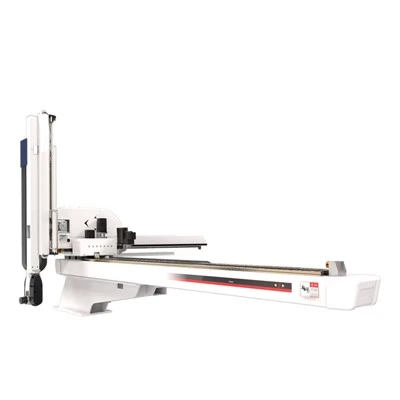
If you’re tired of dealing with old industrial robots that are a hassle to program and impossible to integrate with your team, let’s chat. We can come out to your facility, do a free audit of your current workflows, and show you exactly how a cobot would work for your specific tasks—whether it’s pick-and-place, machine tending, packaging, or anything in between. We’ll walk through the safety features, show you real case studies from other factories like yours, and answer any questions you have, no sales pitch pressure. Just real talk about what works for your business.
Industrial Robot References
- ISO 10218-1:2011, Robots and robotic devices — Safety requirements for industrial robots — Part 1: Robots
- ISO/TS 15066:2016, Robots and robotic devices — Collaborative robots
- International Federation of Robotics (IFR), 2023, Collaborative Robot Safety and Market Trends
- Occupational Safety and Health Administration (OSHA), 2022, Guidelines for Collaborative Robot Implementation in Manufacturing
Robotic Technology (GD) Co., Ltd.
As one of the most professional industrial robot manufacturers and suppliers in China, we have world-leading production equipment and strong manufacturing capabilities. Please feel free to buy durable industrial robot for sale here from our factory. Also, custom service is available.
Address: Room 102, No.30, Hengfeng 2nd Road, Daguo, Changping Town, Dongguan City, Guangdong, China
E-mail: admin@iroboticplus.com
WebSite: https://www.rbtic-tech.com/
