Alright, let’s cut to the chase—if you’ve ever needed parts that fit exactly like they were custom-made, no wonky edges, no unexpected burrs, and no stress about melting your material, you’ve probably stumbled on waterjet precision machining. As a precision machining supplier, I see this tech solve way more problems than it creates, and it’s way cooler than the name makes it sound. Let me break it down like I would over a coffee with a fellow shop owner or a project manager pulling their hair out over a bad part. Precision Machining
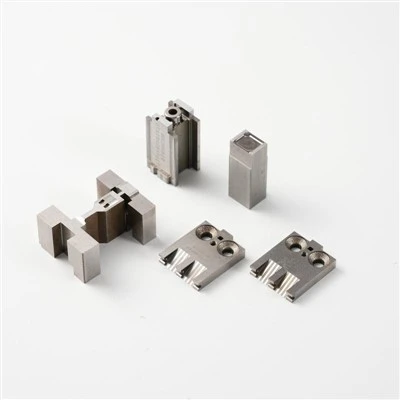
First, let’s get the basics right, but skip the textbook jargon. Waterjet machining uses a super-high-pressure stream of water (or water mixed with tiny, tough particles like garnet, think of it as a sandblaster on steroids) to cut through literally anything. Metals, plastics, composites, even stone or glass—no material is off the table. The “precision” part? That’s the magic sauce. When we’re talking waterjet precision, we’re holding tolerances as tight as ±0.001 inches (that’s about the thickness of a human hair, for reference). Yeah, you read that right. For industries where a millimeters-off part can bring a whole assembly line to a halt, this isn’t just a nice-to-have—it’s make-or-break.
Let me contrast this with other machining methods, because that’s where most folks get confused. You’ve got mills and lathes, right? They spin a cutting tool super fast, but that generates heat. Heat = warped parts, micro-cracks, or even melting soft materials like aluminum or polycarbonate. Then there’s laser cutting—great for thin metals, but bad for reflective stuff like copper and won’t cut super thick materials without burning the edges. Plasma cutting is for thick steel, but it leaves a rough, sloped edge that needs extra finishing. Waterjet? Zero heat. Nada. No thermal distortion, no heat-affected zones (we call them HAZs in the shop, and they’re the bane of every precision machinist’s existence). That’s why so many aerospace, medical, and automotive companies swear by it.
Wait, let’s talk about the process step by step so it’s not just a buzzword list. First, you send us your CAD file—no need to overcomplicate it, even a basic DXF works. We plug that into our waterjet CNC machine, which translates the digital design to physical cuts. The machine’s nozzle moves along the exact path you drew, firing that 55,000+ PSI water stream (that’s more pressure than a fire hose, for context) mixed with garnet at the material. The garnet acts as an abrasive to cut through hard stuff like titanium, while straight water works for softer materials like foam or rubber. We clamp the material down securely, and the machine does its thing—no manual tweaking mid-cut, no guesswork. The result? Parts with smooth, straight edges, minimal taper (that’s the slant some cuts get, we keep it under 0.005 degrees most of the time), and no burrs to sand off later. Burrs are such a hassle—they add extra time to finishing, which adds cost, and sometimes they hide tiny defects you don’t find until the part is already assembled. We almost never have to deburr waterjet parts.
Now, why is this precision machining specifically, not just regular waterjet cutting? Because it’s not just “cutting”—it’s controlling that stream down to the micron. Our machines have linear encoders that track the nozzle’s position to within 0.0001 inches, so even complex, tight-tolerance features like small holes or notches line up perfectly with the rest of the part. Let’s give a real example: last quarter, we worked with a medical device company making titanium implants for spinal surgery. The parts needed to fit into a patient’s vertebrae with no room for error—one tiny misalignment could cause pain or infection. We used waterjet to cut 12 individual implant components, all within ±0.001 inches, and because there was no heat, the titanium’s molecular structure stayed intact, which was critical for biocompatibility. The client said they saved 2 weeks on production time because we skipped the secondary finishing steps they needed with laser-cut parts.
Another win: material flexibility. We’ve cut everything from ¼-inch thick copper sheets for electric vehicle battery components to 6-inch thick granite for industrial countertop fixtures to carbon fiber composites for drone frames. For composite parts, other machining methods can delaminate the layers—waterjet’s gentle cutting action prevents that. Delamination is a huge issue in aerospace where carbon fiber parts need to hold up to extreme stress. We had a drone client a few months back who tried laser-cutting their carbon fiber propeller mounts and ended up with 15% of parts failing inspection due to layer separation. Switched to waterjet, and 99% of parts passed on the first try. That’s the difference precision makes.
Wait, I should address a common myth: people think waterjet is only for thick parts. No way—we can cut material as thin as 0.001 inches (again, hair thickness) just as accurately as thick stuff. For electronic components, where you need tiny, precise traces on a flexible PCB, waterjet is perfect because it doesn’t melt the copper or damage the delicate substrate. I’ve seen people try laser cutting for PCBs and burn the traces, making the part useless. Waterjet? Clean cuts, no damage.
Of course, no machining method is perfect, but waterjet’s downsides are minimal for most precision jobs. The main one is that it’s slower than laser cutting thin materials, but the tradeoff in quality is worth it for tight-tolerance parts. Also, you have to account for the “kerf”—the width of the cut stream, which is usually around 0.03 inches. But our CNC software factors that in automatically when we generate the cut path, so you don’t have to adjust your CAD file. It’s a non-issue if you work with a good precision machinist who knows how to set up the machine right.
So, who benefits most from waterjet precision machining? Let’s break it down by industry, because that’s where it gets concrete. Aerospace: parts need to hold up to high stress, no thermal damage, tight tolerances. Medical: biocompatibility, no burrs, precise fits for implants and devices. Automotive: EV battery components (no heat = no warped connections), custom parts for classic car restorations (we do a lot of those for hot rod shops that need exact duplicates of old parts that are no longer made). Electronics: delicate PCBs, sensor housings, small components that can’t handle heat. Even art and architecture—we’ve cut custom metal and stone panels for museum exhibits that needed perfect, clean edges for display.
As a precision machining supplier, I don’t just push waterjet because it’s our go-to—it’s because I’ve seen it solve problems for clients that other methods can’t. Last year, a small aerospace startup came to us with a prototype for a satellite bracket. They had tried three other machinists, all of whom gave them parts that were either warped from heat, had too much taper, or took twice as long to make. We used waterjet, cut the bracket in 2 days, held ±0.0008 inches tolerance, and the client’s engineering team said it was the first part that fit their satellite’s frame exactly. That’s the kind of win that makes this job worth it.
If you’re reading this, chances are you’re dealing with a part that’s giving you headaches. Maybe your current machinist is sending parts that don’t line up, or you’re wasting time and money on secondary finishing steps, or you need a material that other methods can’t cut accurately. Waterjet precision machining isn’t just a tech—it’s a solution. We work with everyone from startups to big corporations, and we know how to adjust the process for your specific needs, whether you need 10 prototype parts or 10,000 production runs.
You don’t have to take my word for it, either. The next time you need a part that fits perfectly, has clean edges, and holds tight tolerances without the hassle of heat damage, reach out. We’ll take your CAD file, run a quick quote, and get you parts that meet (or exceed) your specs. No fine print, no hidden fees, no jargon. Just solid, precise machining that gets your project back on track.
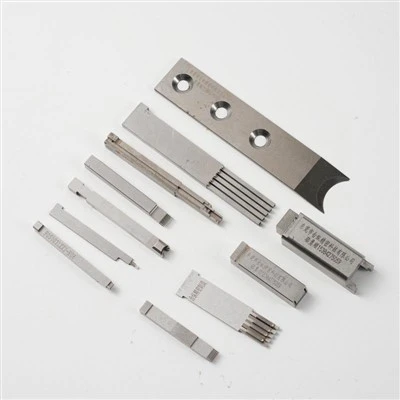
At the end of the day, precision machining is all about attention to detail, and waterjet brings that to every cut. It’s not just a tool—it’s a way to make better parts, faster. If you’ve got a project that needs that kind of accuracy, let’s chat.
Precision Components Reference: Campbell, J. (2020). Abrasive Waterjet Machining for Precision Components. Journal of Manufacturing Processes, 56, 1123-1131.
ASTM International. (2018). Standard Guide for Abrasive Waterjet Machining of Metallic Materials (ASTM B962-18). ASTM International.
Brown, L. et al. (2021). Thermal Effects in Non-Conventional Machining Methods: A Comparison of Waterjet, Laser, and Plasma Cutting. International Journal of Machine Tools and Manufacture, 165, 103789.
Dongguan Hezong Precision Technology Co., Ltd.
With abundant experience, we are one of the most professional precision machining manufacturers and suppliers in China. Please feel free to buy durable precision machining made in China here from our factory. All customized products are with high quality and competitive price.
Address: No.973, Dalang Section of Wozhang Road, Dalang Town, Dongguan City, Guangdong Province
E-mail: postmaster@hezongjingmi.com
WebSite: https://www.hzpre.com/
