If you’ve ever dug into a stubborn wiring issue in your car—say, a flickering dashboard light, a dead sensor mid-road trip, or a radio that cuts out for no reason—chances are corrosion is the culprit. As someone who’s spent 12 years as an auto wire connector supplier, I’ve seen this problem turn routine repairs into weeks of headaches for both DIY mechanics and professional techs. What most people don’t realize is that corrosion isn’t just “grime on a wire”—it’s a gradual breakdown of the tiny metal contacts that make every electrical signal in your car run, and if left untreated, it can lead to costly, avoidable failures. Auto Wire Connector

I get questions about this all the time from customers. “Can I just wipe it off with a rag?” they’ll ask, or “Is WD-40 enough?” The short answer is: not always. Corrosion on auto wire connectors comes in three main forms—white powdery residue from lead or copper oxidation, green crust from copper reacting with moisture and road grime, and brown, flaky rust when steel or iron parts are exposed. Each needs a specific approach, and rushing the job can do more damage than good. Today, I’m breaking down the step-by-step process I teach our clients, along with pro tips I’ve picked up working on thousands of connector assemblies.
First, before you touch a single connector, you need to prep safely—and that means disconnecting your battery. I know, it’s a hassle, but it’s non-negotiable. Even if you’re just working on a tail light wire, stray current from the car’s internal battery can spark, or worse, fry sensitive modules like your ECU (engine control unit) that cost hundreds to replace. Disconnect the negative terminal first, and make sure the cable is tucked away so it doesn’t accidentally brush back against the terminal while you work. That’s one mistake I saw a new tech make 10 years ago; he skipped disconnecting the battery, jostled a connector, and shorted a fuel pump module. Billable repair? Over $1,200. Don’t be that guy.
Next, identify which connector has corrosion. Corroded connectors are almost always in hard-to-see, moisture-exposed areas: under the dashboard near the firewall, in the wheel well behind the headlight, or tucked near the battery tray. If you’re having a specific issue, check the connectors linked to that system—for a bad fuel gauge, go straight to the sending unit connector; for a dead battery terminal, that’s obviously the first spot. Once you’ve found it, gently pull the connector apart. Most are locked, so use a small flathead screwdriver to release the tab on the side—don’t yank the wires themselves, or you’ll pull them loose from the connector pins.
Now, the cleaning part. Let’s start with the supplies you actually need, because most people overbuy. Skip the harsh abrasives like steel wool—they leave tiny metal shavings that cause new corrosion. I recommend three tools: an electrical contact cleaner (look for one that’s not petroleum-based, like DeoxIT; WD-40 is a lubricant, not a cleaner, and it traps moisture later), a plastic bristle brush (not metal, not stiff toothbrushes—stiff bristles can scratch contact surfaces), and a can of compressed air (the kind for cleaning keyboards works, but use the low-power setting so you don’t bend pins).
For light corrosion—like a faint white powder on the connector terminals—start by using the plastic brush to gently scrub the residue off. Hold the connector over a trash can or towel while you do this, so the dislodged gunk doesn’t fall into the car’s interior. Once you’ve brushed off the loose stuff, spray the contact cleaner directly onto the terminals and into the connector housing, then let it sit for 30 seconds. Wipe away excess with a lint-free microfiber cloth (no paper towels—they leave fuzz that causes shorts) and blow out any leftover cleaner or debris with compressed air. That works for most minor cases.
For heavy corrosion—think green crust that’s built up over months, or rust on steel pins—you’ll need a little extra care. If the pins are bent, straighten them gently with the flathead screwdriver before cleaning; bent pins are a top cause of intermittent connections. Then, instead of just scrubbing, take a cotton swab dipped in contact cleaner and work it into the crevices of the crusted metal. The cleaner will dissolve the corrosion, so you don’t have to scrub hard. If the corrosion is really thick, you can use a very fine grit sandpaper (2000 grit or higher) wrapped around a toothpick to gently buff the pins—just be careful not to remove too much metal from the pins, which can make the connection loose later.
Wait, what about corrosion on the outside of the connector housing? That’s easy to miss, but mold or grime on the plastic casing can seep into the connector over time, so give the whole housing a quick wipe with a damp cloth and mild soap before you reconnect it.
Once you’re done cleaning, don’t just snap the connector back together and go—test it. Reconnect your battery (only the negative terminal this time, wait a minute before turning the key), and turn on the system you were working on. If it works, great. If not, double-check for loose pins, leftover debris, or missed corrosion. Another pro tip from our engineering team: once the connector is clean, apply a thin layer of dielectric grease to the pins before snapping it back together. Dielectric grease doesn’t conduct electricity, but it repels moisture and prevents new corrosion from forming. It’s a small step that adds years of life to a connector, and it’s why we recommend it to every OEM (original equipment manufacturer) client we work with.
I’ve seen countless customers skip that grease step, only to have the same corrosion come back three months later. That’s not a failure of the cleaning job—it’s a failure of protection. Corrosion is almost always caused by moisture getting into the connector, whether from rain, condensation, or road salt. The dielectric grease creates a barrier that stops that moisture from reaching the metal pins.
Now, a few things you should never do. First, don’t use vinegar or other household cleaners. Vinegar is acidic, and it will eat away at the metal pins over time, leading to worse problems down the line. Second, don’t use a wire brush or steel wool on the pins—they scratch the surface, creating tiny pits where moisture can get trapped, which actually accelerates corrosion. Third, don’t over-tighten the connector when you snap it back. Tightening too much can bend pins or crack the housing, which lets moisture in anyway.
At our auto wire connector company, we test every assembly for corrosion resistance in our lab—we expose them to salt spray for 1,000 hours to simulate 10 years of road conditions—and we’re always surprised by how many avoidable failures come from improper cleaning. A $5 connector, cleaned right, can save you hundreds in repair bills.
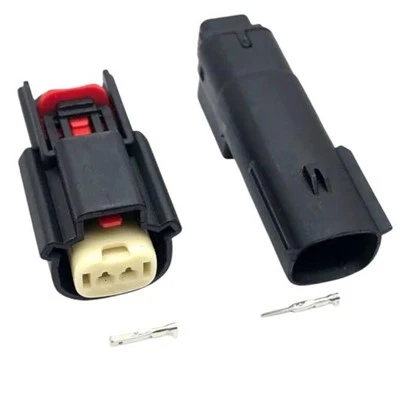
If you’re a professional mechanic or a shop owner looking to stock reliable, corrosion-resistant connectors for your jobs, or a DIYer who’s tried cleaning and still has issues, our team is here to help. We work with all types of vehicles, from passenger cars to heavy-duty trucks, and we can help you pick the right connectors for your specific needs. Reach out to our sales team to discuss your requirements, whether you need replacement connectors for a specific model, bulk supplies for your shop, or advice on which products will work best for your corrosion prevention.
Car Connector References:
- Society of Automotive Engineers (SAE) J1563: Electrical Connector Durability Requirements for Automotive Applications
- Automotive Electronics Council (AEC-Q200): Stress Tests for Passive Components, including Corrosion Resistance Protocols
- National Highway Traffic Safety Administration (NHTSA): Vehicle Electrical System Failure Analysis, 2022
JDE Automotive Technology Co., Ltd.
JDE Automotive Technology Co., Ltd. is one of the most professional auto wire connector manufacturers and suppliers in China. As we have world-leading production equipment and strong manufacturing capabilities, we warmly welcome you to buy customized auto wire connector from our factory. Contact us for more discount information.
Address: No.38 Jiufei’e Road, Dalingshan Town, Dongguan City, China
E-mail: Kellyzhong@jdeauto.com
WebSite: https://www.jdecontact.com/
