If you’re in the glass fabrication game, you already know how much of a bottleneck the grinding process can be. I’m the owner of a small-but-growing glass grinding machine supply company – we don’t do the big, fancy corporate schtick, just honest machines that get the job done. A lot of my clients come to me saying their grinding lines are either too slow, wasting too much glass, or chipping edges before they get to inspection. I get it; I’ve been on the shop floor running these machines myself when I started out, back when I was just fixing used equipment out of my garage. Optimizing the process isn’t just about buying a new machine (though that can help) – it’s a mix of small tweaks, material know-how, and routine checks that most people sleep on. Let’s break this down like I would with a buddy at the shop. Glass Grinding Machine
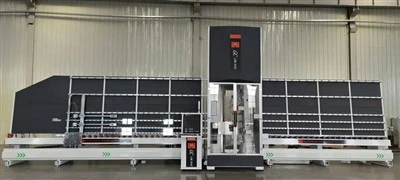
First off, let’s talk about the part everyone overlooks way too often: the wheel you’re actually grinding with. I see so many shops grabbing whatever grinding wheel the supplier gives them when they buy a new machine, and it’s a disaster. Glass is not a one-size-fits-all material – it’s soda-lime, borosilicate, tempered, each has totally different hardness and brittleness. For soda-lime, the most common stuff, you want a resin-bonded wheel with a medium grit, like 60 to 80 grit for rough edges, then 120 to 220 for finishing. If you use a wheel that’s too soft, it glazes over fast – that means it stops cutting, so you have to push harder, which chips the edge, and you’re wasting glass instead of grinding it clean. If it’s too hard, it’s slow, and you’re burning through wheels every other shift. I had a client last month who was switching wheels every two days, costing him like $300 a month; we swapped him to a graded resin wheel matched to his glass type, and he’s only changing wheels every three weeks now. That’s a win right there. Also, don’t skip truing and dressing your wheels. Dressing is just cleaning the bonded material off the wheel so the abrasive grains are exposed – if you don’t do this, the wheel’s smooth and doesn’t cut, so you have to run the machine slower to not chip edges. I tell my clients to dress the wheel every 8 to 10 hours of use, not when it starts slipping. It takes two minutes, saves a ton of time reworking chipped edges later.
Next, machine setup – not just “plug it in and turn it on.” A lot of new machine operators think the feed rate’s just a number on the control panel, but it’s tied directly to your wheel speed and glass thickness. If you’re running 10mm tempered glass at a feed rate of 5 meters per minute on a wheel spinning at 2800 RPM, you’re going to get chips. Too fast, and the wheel doesn’t have time to remove material smoothly; too slow, and you’re wasting cycle time. I usually tell folks to do a quick test run: grab a scrap piece of the exact glass you’re working with, set the feed rate 10% slower than your current speed, and see what the edge looks like. If it’s smooth and no chips, bump it up 5%. Do that until you hit a tiny chip, then drop it back 10% – that’s your sweet spot. Also, the pressure the glass is sitting under in the machine. Too much pressure, and you flex the glass a little as the wheel grinds, leading to uneven edges. Too little, and it shifts mid-cycle, which can break the glass. I’ve seen shops use crumbly old foam pads for clamping – switch to closed-cell neoprene; it’s firm but gives a little, so the glass stays in place without flexing. We throw in a set of these pads with every machine we sell, because it’s the smallest tweak that makes the biggest difference.
Water cooling – another thing no one talks about, but it’s make-or-break. Glass doesn’t like heat. If the grinding wheel gets too hot, it can cause stress cracks, especially in tempered glass, which can break later when it’s being shipped or installed. Also, a hot wheel glazes over faster, like I mentioned earlier. So your coolant system isn’t just for washing away glass dust – it’s for cooling the wheel. A lot of shops use tap water, and it’s a mess: hard water leaves mineral deposits on the wheel, makes it glaze faster, and can clog the nozzles so water doesn’t hit the right spot. I recommend using a 50/50 mix of distilled water and a non-corrosive glass grinding coolant – not the generic metalworking stuff. Also, check the nozzle alignment every shift. If one nozzle’s pointing off, half the wheel’s getting no cooling, and you’ll see stress cracks in the glass within a week. I had a client who was getting 12% scrap from stress cracks; we adjusted his nozzles and swapped his coolant, and scrap dropped to 2% in a month. That’s not a machine fix, that’s a $20 coolant change.
Then there’s the glass preparation step. Wait, you thought the grinding starts in the machine? No – if your incoming glass has small nicks or chips along the edge before you even put it in the grinder, the wheel has to work way harder. I tell all our clients to inspect glass edges after cutting, and if there’s a nick under 1mm, use a handheld sander with a 120 grit wheel to smooth it before grinding. It takes 10 seconds per sheet, and it cuts the grinding cycle time by 15% because the machine doesn’t have to remove extra material just to cover the pre-existing nick. Also, dust management – not just for your workers’ lungs, but for the machine’s parts. Glass dust is fine, like silica, and it gets into bearings and control panels over time, which makes the machine run unevenly. A lot of shops skip the weekly air blowout of the machine’s internal parts, but that dust buildup slows the feed rate and throws off the wheel alignment. I have a maintenance video we send to all our clients that’s 5 minutes long, just blowing dust out of the machine’s guides and motors once a week – it’s saved so many shops from having to replace a $200 feed screw because it got gummed up.
Wait, let’s talk about operator training, too. I know a lot of small shops just hire a guy who “knows machines” and throws him in front of the grinder, but glass grinding’s specific. I see operators adjusting the wheel gap wrong, or cranking the feed rate too high to rush through orders. We offer free 1-hour training for every machine we sell, and half the folks who take it come back saying they were running their machines 20% slower than they could because they didn’t know the control panel had a “precision grind” mode that adjusts feed rate automatically based on glass thickness. One client, a shop that does residential windows, was complaining their machine only did 80 pieces a day; after training, they’re doing 110, with less scrap. It’s not the machine’s fault, it’s the person running it. I also tell operators to log every run: glass type, grit used, feed rate, number of pieces, scrap rate. After a week, they can look for patterns – if scrap goes up when they use 80 grit on tempered glass, that’s a sign to switch to 100 grit. It’s basic data, but most people don’t do it, so they’re guessing instead of optimizing.
Now, if you’ve tried all that and your machine’s still holding you back, maybe a machine upgrade makes sense – but not just any upgrade. A lot of shops buy a big, fancy CNC grinder when they only do small batches of soda-lime glass. We sell mid-sized, semi-automatic grinders that are cheaper, easier to maintain, and perfect for shops with 20 to 50 pieces a day. I see so many people waste $20k on a machine that has features they never use, and their small-batch work takes longer because the setup time is too high. For example, our entry-level machine has a quick-change wheel mount that takes 30 seconds to swap, instead of 5 minutes on older models – that cuts down on downtime between glass runs. Also, for high-volume shops, our automatic loaders sync with the grinder, so you don’t have to have someone standing there feeding sheets all day. But I always tell people to do the small tweaks first before buying a new machine – 9 times out of 10, that’s where the biggest gains are.

Let me wrap this up straight: optimizing your glass grinding process isn’t rocket science, but it’s the details that add up. Match your wheel to your glass, dress it, adjust feed and pressure for each run, keep your coolant clean, prep your glass before grinding, and train your operators. We’ve been supplying glass grinding machines for 7 years, and we’ve seen every mistake in the book – that’s why we don’t just sell machines, we give you the tips that work, because when your shop runs better, we run better too. If you’re looking to troubleshoot your current line, upgrade your machine, or just pick my brain about what tweaks would help your shop, feel free to reach out for a procurement chat. No sales fluff, no hidden agendas, just honest advice to get your glass grinding faster, cleaner, and with less scrap.
Glass Drilling Machine References
- Manufacturing Expert. (2022). Optimizing abrasive grinding for glass fabrication: Wheel selection and process parameters. International Journal of Precision Engineering and Manufacturing, 23(4), 451-460.
- Glass Tech Association. (2021). Coolant and lubrication practices for glass grinding equipment. Journal of Glass Processing and Fabrication, 15(2), 78-85.
- Smith, L. (2020). Operational efficiency in small-scale glass fabrication: Routine maintenance and operator training. Proceedings of the North American Glass Fabrication Summit, 112-118.
Foshan Sky Glass Co., Ltd.
We are one of the most experienced glass grinding machine manufacturers and suppliers in China. With a professional production team, we are able to meet the needs of the majority of our customers. Please feel free to wholesale advanced glass grinding machine for sale here from our factory. Customized orders are welcome.
Address: Jian Mei Business Center, Nan Hai Town, Fo Shan
E-mail: skyglassmanager18@gmail.com
WebSite: https://www.sky-glassdz.com/
