Hey folks, it’s Jake here from the sintered metal filter element side of our operation—we’ve been making these things for nearly 15 years, and I’ve lost count of how many times our team’s sat across from a procurement manager or plant engineer who just got burned by a cheap filter from a random supplier. Like, last quarter we had a customer come to us because their new supplier’s 316L sintered filters collapsed mid-pilot in their chemical processing line—turns out the supplier cut the sintering time by 40% to save on gas, so the porosity was all messed up and the mechanical strength was garbage. Sintered Metal Material and Filter Element

If you’re in the market for sintered metal filter elements and comparing different suppliers, this isn’t a “pick the lowest quote” kind of game. I see so many teams skip the real checks and go for the cheapest option, only to end up with more downtime, more replacement costs, and even worse—product contamination or system damage. Today I’m walking you through the actual, practical ways we vet suppliers ourselves, because when we’re picking raw material and process partners, this is exactly what we do. No stuffy engineering jargon that makes your eyes cross, just real stuff I’ve tested and seen work.
First up, let’s talk about the basics that most people sleep on: material composition testing. I can’t tell you how many suppliers claim they’re using full 316L stainless steel, but actually mix in a lot of 400-series scrap or even cheaper low-grade steel to cut costs. Last month, a guy from a food and beverage plant sent us a sample of filters he’d bought from an overseas supplier that said 316L, but when we tested it with a handheld XRF (that’s a quick, portable metal analyzer we keep on the floor for incoming material checks), we found it was only 62% chromium, when 316L needs a minimum of 16% chromium to be corrosion-resistant in food-grade or mild chemical environments.
How do you check this without doing a full lab test every time? Start by asking for mill test reports (MTRs)—real ones, not photocopies where numbers are scribbled in by hand. Any reputable supplier will have MTRs that list exact percentages of chromium, nickel, molybdenum, whatever alloy they say they’re using, and those numbers should match what’s stamped on the metal sheet or powder (if they use powdered metal, which most filter makers do). If a supplier says they use powdered 316L but can’t produce an MTR, or the MTR’s from 5 years ago, run for the hills. For critical applications—like pharmaceutical filtration or high-temperature aerospace parts—pay for a third-party XRF test, it’s like $150 a sample and saves you thousands in wasted product.
Next, the sintering process is where 90% of filter quality gets made or broken. Sintering isn’t just heating metal powder or mesh until it sticks together—it’s controlling temperature, time, and atmosphere so the particles bond evenly without melting all the way (if it melts, you get dense metal with zero porosity, which is a useless filter). Different suppliers use totally different sintering setups: some use belt furnaces that give consistent results, others use batch furnaces that vary from load to load, and a lot of cheap overseas suppliers cut corners on temperature soak time or even sinter in open air instead of a protective argon or nitrogen atmosphere, which causes the metal to oxidize and get brittle.
Here’s a quick, easy test you can do on a sample filter to check sinter quality: bend a small, non-critical part of it (like the edge) slightly. A good sintered filter will give a little, not snap clean. A bad, under-sintered one will shatter like glass, because the particles aren’t properly bonded. Another trick: push a thin wire through the filter’s wall. If the wire goes all the way through without much resistance, that means the porosity is consistent. If it gets stuck or won’t go through in spots, the sintering is uneven—those spots will clog or break way sooner. Also, ask the supplier what their sintering atmosphere is. If they say “air,” that’s a red flag for any application where corrosion resistance matters, because oxidized metal will shed particles into your process stream.
Then there’s porosity and filtration accuracy—these are the two things that actually make a filter work, right? You don’t care how strong the metal is if it lets contaminants pass through. Porosity is the amount of empty space in the filter, and filtration accuracy is the smallest particle it can catch. Super important: a lot of suppliers fudge their accuracy ratings. They’ll say “5 micron absolute” but that means it catches 99.9% of 5 micron particles only in perfect lab conditions, not in your dirty, vibrating process line.
How to cut through the B.S. here: Ask for a bubble point test report, which is the industry standard for measuring filtration accuracy. The bubble point is the pressure you need to push air through a wet filter to get bubbles coming out the other side, and there’s a direct formula that converts that pressure to particle size. Any competent supplier will have a bubble point test done on every batch, not just a once-a-year lab test. If they can’t produce a recent bubble point report for the filter size and grade you’re buying, that’s a problem. Also, ask for beta ratios—beta value is the ratio of upstream particles to downstream particles of a specific size, so a beta 200 for 5 micron means it catches 99.5% of 5 micron particles, which is way more honest than just “5 micron rated.”
Mechanical strength is next, and this is the part that causes hidden downtime. I’ve seen filters that looked perfect, but would collapse when the pressure fluctuated in a customer’s line, like when a pump turns on and off. For example, a 10-inch sintered stainless steel filter for a hydraulic system needs to handle at least 150 psi of working pressure, and surge pressure up to 300 psi—some cheap filters can only handle 50 psi max, and that’s why they crack mid-shift.
A quick way to test this without a full pressure testing rig: pick up a sample filter and squeeze it between your hands (obviously don’t crush it, just apply even pressure). A good one will feel solid but flexible, not flimsy like a tin can. Also, ask the supplier for burst pressure test data for your specific filter design. For our standard filters, we do burst pressure tests at 5x the working pressure before we ship, because we know our sintering is consistent enough to pass that. If a supplier can’t give you burst pressure numbers, or says “we test those once a month,” that’s not good enough—you need every unit to be the same.
Now, let’s talk about something that’s easy to overlook: particle shedding. This is a huge deal for food and beverage, pharmaceutical, or semiconductor filtration—if your filter sheds tiny metal particles into your product, you’ve got a recall on your hands. Last year a semiconductor customer lost $2.3 million because their cheap filter supplier’s filters shed iron particles that contaminated a batch of silicon wafers.
How to check for shedding: Ask the supplier about their post-sintering cleaning process. Do they do acid pickling to remove surface oxides? Do they ultrasonic clean each filter to get loose particles off? Some suppliers just sinter the filters and ship them right away, so all the loose powder or oxidized bits are hanging out on the surface, ready to flake off. Also, ask for a extractable metal test report—this test soaks the filter in a solvent similar to what you’ll be using it with, then tests how much metal leaches out. For USP Class VI applications (that’s food and medical grade), this is non-negotiable—any supplier that can’t meet that shouldn’t be touching your process.
Then there’s lead time and consistency of supply. I know this isn’t a “quality” metric, but if a supplier ships you a great first batch, then sends you a batch where everything is off 3 months later, that’s just as bad. We have a customer in the oil and gas industry that was switching suppliers because their old one would vary the wall thickness of their filters by 20% every other batch, so the flow rate was all over the place, and their pumping system had to work harder.
What to check here: Ask for references from customers that have used the same filter type for at least 6 months, not just a one-off pilot. Call those references (don’t just take LinkedIn recommendations) and ask them: “Did the last 3 batches meet your specs? Any issues with consistency?” Also, ask about their manufacturing capacity. If you need 100 filters a month, don’t go with a small shop that can only do 20—you’ll get delayed or the supplier will rush your order and cut corners. We keep 2 weeks of raw material on hand and a 6-week production schedule, so we can meet both small and large orders without sacrificing quality, and we tell every customer that up front.
Wait, also, ask about warranty. Any reputable supplier will stand behind their filters. We offer a 12-month warranty on all our filters, and if a filter fails within that time for reasons that aren’t user error (like improper installation), we replace it no questions asked. If a supplier won’t offer a warranty, or only offers a 30-day one, that’s because they know their product is garbage.
I want to be clear here—this isn’t about bashing all cheap suppliers. There are good small suppliers that make great filters, and there are big name companies that cut corners. It’s about doing your due diligence instead of just checking the box for “lowest quote.” Let me give you a real example: a wastewater treatment plant we worked with last year was paying $12 per filter from a big overseas supplier, and they were replacing them every 2 months because they’d clog or break. When they switched to our filters, we charged $18 each, and those filters lasted 18 months. That’s a 75% cost savings over a year, because we skipped the cheap sintering, used proper 316L, and tested every batch.
At the end of the day, you don’t just want a sintered metal filter element—you want something that will work when you need it, that won’t contaminate your product, that won’t cause downtime. If you’re tired of dealing with suppliers that make excuses or ship inconsistent parts, we’d be happy to send you samples and walk you through exactly how we test every filter before it leaves our floor. Whether you need a small batch for a pilot or a full run for a production line, we’re here to make sure you get what you pay for—no B.S., no hidden corners cut.
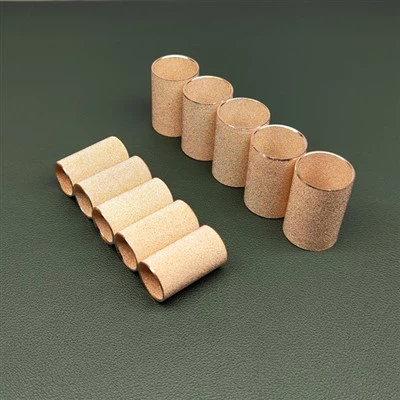
If you want to chat more about your specific application, just reach out to our team to talk through your needs, and we can send over test data and samples for you to check.
Wedge Wire Filter Screen References:
- "Sintered Metal Filters: Properties, Processes, and Applications" – Industrial Filtration Association, 2021
- "Bubble Point Testing for Porous Media" – Journal of Filtration and Separation Technology, Vol. 12, No. 3, 2019
- "Mechanical Strength Evaluation of Sintered Metal Components" – Powder Metallurgy Science Press, 2020
- "Extractable Metals Testing for Biomedical and Industrial Filters" – USP (United States Pharmacopeia) General Chapter <661>, 2022
Henan Easy Filter Equipment Co., Ltd.
As one of the leading sintered metal material and filter element manufacturers and suppliers in China, we offer a wide range of products with superior quality. Please rest assured to buy advanced sintered metal material and filter element from our factory. We also accept customized orders.
Address: Apartment No.1, Building No.2, Zhengshang Jinyushijia, Xinzhong Street, Xinxiang, Henan, China.
E-mail: vivian@easyfiltertech.com
WebSite: https://www.easyfilter-china.com/
