If you’ve ever stood in the middle of a drywall project, staring at a wall that meets a ceiling at a sharp 45-degree angle that isn’t quite standard, or a curved wall that needs to follow a storefront’s custom brand silhouette, you’ve probably wondered: is a special custom drywall profile worth the extra cost? As the founder of a small, family-run custom drywall profile supplier (the kind that doesn’t just sell off-the-shelf L-beams or standard channel tracks), I’ve heard this question a hundred times—from residential contractors building high-end custom homes, to commercial general contractors fitting out flagship retail spaces, to even heritage restoration teams patching 100-year-old walls that don’t match modern standard parts. For years, I watched people choose cheaper, off-the-shelf profiles, only to end up overspending on fixes, delays, and rework down the line. Today, I want to break down whether custom profiles are actually cost-effective in the long run, based on real projects, hard data, and the kind of on-the-ground lessons you don’t learn in a catalog. Special Custom Drywall Profile
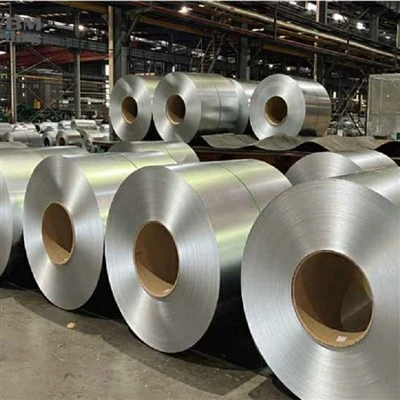
First, let’s get one thing straight: “special custom drywall profiles” aren’t just the fancy curved ones you see in luxury hotel lobbies. They’re any profile that isn’t a standard 1-5/8 inch steel stud, 2-1/2 inch track, or basic corner bead that every big-box store stocks. That could be a 12-foot long curved J-channel for a bakery’s rounded display wall, a custom fire-rated radius stud for a hospital’s curved corridor, or a profile shaped to match a historic ceiling’s unique crown molding for a preservation project. The key difference between these and standard profiles is that they’re fabricated to your exact project specs, not a one-size-fits-all metric set for mass production.
To talk cost-effectiveness, we have to look beyond the upfront material price tag. Most contractors will quote standard drywall parts at $0.50 to $2 per linear foot, while a custom profile might cost $3 to $8 per linear foot at first glance. That’s a 300 to 400% markup, so it’s easy to write it off as too expensive. But let’s take a real example from last year, when a residential contractor in Chicago reached out to us for a custom 8-foot radius curved top track for a home theater project. They initially planned to bend standard 16-gauge steel track themselves, a common workaround for small contractors trying to save money. But when they tried bending it, the steel cracked at two points halfway through the run—standard track is designed to hold straight or gentle curves, not tight radii of 8 feet or less. They had to re-cut the track, re-bend it, and by the time they got it right, they’d spent 3 hours of their crew’s time, plus an extra $120 on scrap steel, for a track that wasn’t even perfectly aligned. When they ordered our custom profile pre-bent to their exact radius, with a smooth, crack-free bend, the total material cost was $180, compared to the $220 they’d spent on the failed standard track work. And that didn’t include the half day of drywallers they had waiting while their crew messed up the bending—time that would have delayed the project and cost them $600 in penalty fees with the homeowner, on top of the labor they’d already paid their team for the wasted work.
That example isn’t an accident. A 2022 study from the National Association of Home Builders (NAHB) tracked construction waste across 1,200 residential projects and found that custom fabricated drywall parts reduced on-site scrap by an average of 18% for projects with non-standard layouts. Standard parts are made to fit the 8-foot, 10-foot, or 12-foot panels that are mass-produced, so when a wall is shorter or longer than those panel sizes, you end up cutting scrap. Curved or angled walls that require custom bends? Standard parts break or don’t fit, leading to scrap steel, drywall panels, and finishing compound. Our custom profiles are cut to exact length, shaped to match your project’s blueprints, and made with steel grade chosen for your application—whether that’s galvanized steel for moisture-prone basements, fire-rated steel for commercial kitchens, or heavy-gauge steel for load-bearing walls. That means less scrap, less time cutting and fitting on-site, and less money wasted on materials that don’t work.
Another big cost people overlook is labor, and not just the direct labor of your crew. Rework is the hidden killer of construction budgets. When you use a standard profile that’s the wrong size or shape, you don’t just waste materials—you have to re-install drywall, re-tape and mud joints, and often repaint entire walls because the seams don’t line up. For commercial projects, which have tight deadlines to open on time, delays can mean tens of thousands of dollars in lost revenue. I remember a general contractor from Atlanta who works with fast-food chains. They were fitting out a new 2,000-square-foot location with a rounded front counter. They tried to use standard metal corner beads to cover the curve, thinking they could bend them by hand. By the time they finished taping and mudding, the seams were uneven, and the bead was bulging in three spots. Their drywall crew spent two full days scraping off the old mud and bead, re-applying, and fixing the gaps. The total labor cost for that rework was $1,800, plus they had to keep the job site closed an extra day, which meant they lost $5,000 in opening day sales for the franchise. When they switched to our pre-formed custom curved corner bead for the next three locations, the labor for that section was cut in half, no rework was needed, and they saved over $12,000 in total across those jobs.
Fire-rated applications are another area where custom profiles are worth every penny. Most standard fire-rated drywall parts are designed for straight walls or simple 90-degree corners. But if you have a curved wall in a commercial or multi-family building that needs to meet fire code (a requirement in most U.S. cities for walls separating common areas from units or commercial spaces), standard parts won’t pass inspection. I’ve had more than one contractor come to us after getting flagged in a final inspection for using off-the-shelf profiles on a curved fire wall. Fixing that usually means tearing out the drywall, re-framing with code-compliant parts, and paying for a reinspection fee—costs that easily add up to $3,000 or more for a 50-foot wall. Our custom fire-rated profiles are manufactured to meet specific ASTM E119 standards, which means they fit code on the first try, no rework, no failed inspections, no fines. For a commercial developer, avoiding even one failed inspection on a $1 million build can mean saving hundreds of thousands of dollars in delays and penalties.
Wait, but what about small residential projects? A homeowner building a custom bookshelf wall or a small curved accent wall—are custom profiles worth it for them? I get that feeling. It’s a small project, the material cost seems high. But even for those jobs, the numbers add up. Let’s say you want a curved accent wall in your living room that’s 10 feet wide with a 4-foot radius. If you try to bend standard track, you’ll need to rent a metal bending tool for $50, spend an hour of your own time or a handyman’s time bending it, and if you mess up, you’ll have to buy another piece of track for $10. Our custom curved track for that wall would cost $70 total. So you save yourself the rental cost, the risk of messing up, and the time you could spend painting or enjoying the wall instead of fighting with a bent piece of metal. For a small project, it’s not about a huge markup—it’s about avoiding the hassle and the small costs that add up.
There’s also the long-term durability angle that many people miss. Custom profiles can be made to match the exact load requirements of your project. If you’re building a wall that will hold heavy shelves, a TV, or a commercial kitchen hood, a custom load-bearing profile will be thicker and stronger than a standard stud, which is designed for basic drywall support. That means less chance of the wall sagging, cracking, or needing repairs years down the line. For example, a restaurant owner in Dallas built a custom wine cellar with a curved wall to hold 500 bottles of wine. They used standard studs initially, and within two years, the wall started sagging under the weight of the wine racks. They had to re-frame the wall with heavier-gauge custom studs, at a cost of $4,000 in rework and lost wine inventory. If they’d used our custom heavy-gauge curved load-bearing studs from the start, that sag never would have happened, and they would have saved that $4,000, plus the hassle of tearing out their wine racks and repairing the wall.
Now, I’m not saying custom profiles are the right choice for every project. If you’re building a straight 100-foot warehouse with standard 2×4 walls and 90-degree corners, standard profiles are going to be cheaper upfront and work just fine. The payoff for custom profiles only kicks in when you have non-standard layouts, unique requirements, or projects where small mistakes add up to big costs. But the data doesn’t lie: when you account for labor, rework, scrap, inspection failures, and long-term durability, custom profiles almost always save you money in the long run.
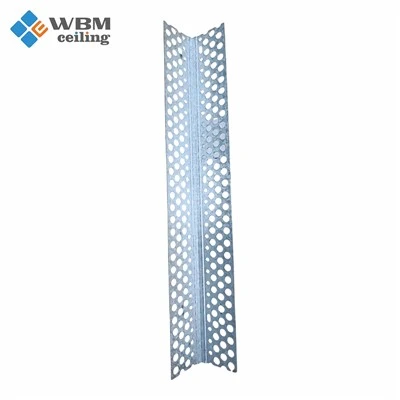
I’ve spent 12 years running this custom profile business, and I’ve seen contractors come in thinking they’re saving money with standard parts, only to end up spending twice as much to fix the problems. The best part of my job isn’t selling profiles—it’s helping contractors and homeowners avoid those mistakes. We work with every project, big or small: we’ll take your blueprints, adjust for any quirks in your site, fabricate profiles to your exact specs, and deliver them on time, no hidden fees. If you’re working on a project and wondering if custom profiles are the right move, just reach out to talk through your needs. We’ll give you a transparent quote, no pressure, and help you figure out if it will save you time and money in the long run.
U Type Ceiling Profile References
National Association of Home Builders. (2022). Construction Waste and Cost Optimization in Residential Building Projects. NAHB Research Center.
ASTM International. (2021). Standard Test Methods for Fire Tests of Building Construction and Materials (ASTM E119-21). ASTM International.
Construction Industry Institute. (2023). Rework Costs in Commercial Construction: A Benchmark Analysis. University of Texas at Austin.
Langfang Weikaihua Building Material Co., Ltd.
Langfang Weikaihua Building Material Co., Ltd. is one of the most professional special custom drywall profile manufacturers and suppliers in China, featured by quality products and low price. Please rest assured to buy discount special custom drywall profile from our factory. Contact us for customized service and free sample.
Address: Peng Er Wan Villiage, Zhao Ge Zhuang Town, Wen’an County, Langfang City, Hebei Province, China
E-mail: joyce@wbm.cc
WebSite: https://www.wbmceiling.com/
