If you’ve ever stood next to a wind turbine blade as it spins slowly on a mount, or held a polished metal fitting that connects an offshore oil platform’s pipeline sections, you haven’t just seen a piece of energy infrastructure—you’ve seen the end result of tooling and die development work. As a tooling and die development supplier that’s spent the last 18 years focused exclusively on the energy sector, I’ve learned that our work isn’t just about making metal molds or cutting tools. It’s about meeting exacting standards that keep power grids running, crews safe, and energy production consistent in some of the harshest environments on Earth. Over the years, I’ve seen too many projects derail because teams cut corners on tooling standards, so today I want to walk you through the core standards that shape every part of our development process in this industry. Tooling and Die Development
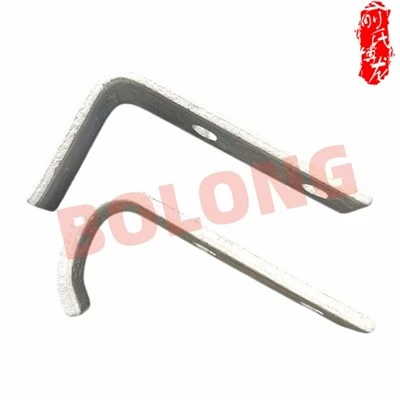
First, and most non-negotiable, is material performance tailored to extreme operating conditions. The energy sector doesn’t operate in a temperature-controlled shop floor. Onshore wind farms in the Great Plains face -30°F winters and 100°F summers that expand and contract steel at inconsistent rates. Offshore oil and gas equipment deals with saltwater corrosion, pressure spikes at 10,000 feet below sea level, and constant vibration from wave action. Even utility-scale solar panel components face UV radiation and 24/7 outdoor exposure. For our team, this means every die we machine and every custom tool we build has to use materials tested to resist these exact stressors. For example, a compression mold we make for wind turbine blade root inserts uses a heat-treated H13 tool steel that has passed 1,200 hours of salt spray testing and thermal cycling between -40°F and 500°F—tests that mimic the 20-year lifespan these blades require. We don’t use off-the-shelf tooling for this work; we spec proprietary alloys and surface coatings that are validated by third-party labs, because a tool failing mid-project doesn’t just delay production—it can cost a wind farm operator millions in lost power generation revenue every day.
Next, dimensional precision isn’t a “nice to have” in energy tooling—it’s a legal and safety requirement. Let’s talk about pipeline components for a second. A single weld seam on a natural gas pipeline can’t be off by even a few thousandths of an inch, because that misalignment can create a weak point that ruptures under pipeline pressure. The same goes for the aluminum extrusion dies we make for solar tracker frames: if a frame part is even 0.002 inches too narrow, it won’t line up with the adjacent panel’s mount, throwing the entire array’s alignment off by enough to cut energy output by 5% or more. For us, precision is measured in microns, not millimeters, and every tool we build goes through three layers of inspection: in-process checks with coordinate measuring machines (CMMs), final dimensional audits against client blueprints, and pressure testing for tools that form high-pressure components. Early in my career, we missed a dimensional mark on a die for a nuclear plant control rod housing, and the client had to scrap 200 preformed parts because they wouldn’t fit. That mistake cost us a three-year contract, and it taught me that precision isn’t something we can compromise on—especially when a tiny error impacts a facility that powers a city of 2 million people.
The third standard that defines our work is compliance with industry-specific regulatory codes, which vary wildly by energy subsector. Let’s break this down, because it’s where a lot of generalist tooling suppliers fall short. For nuclear energy, every tool that touches reactor components has to meet NRC (Nuclear Regulatory Commission) guidelines: that means no residual porosity in tool steel, full traceability of every raw material batch, and tools that can withstand radiation exposure without deforming or releasing contaminants. For oil and gas, we adhere to API (American Petroleum Institute) standards for pressure-containing tooling, which require documentation of every machining step and non-destructive testing (NDT) for cracks or flaws that could cause leaks. Even for renewable energy, there are standards: the IEC (International Electrotechnical Commission) sets rules for tooling used to manufacture solar panels and battery storage components, mandating that tools can’t introduce impurities that would reduce a battery’s cycle life. A few years ago, a large solar installer reached out to us for a quote, and their previous tooling supplier had used unvetted steel that left residual metal in the solar cells, cutting their module efficiency by 3%. That’s when I realized that many energy project teams don’t know that general tooling suppliers don’t understand these regulatory nuances—and that’s the gap we fill.
Another critical standard is durability and cycle life, which ties directly to the cost-effectiveness of energy production. Energy projects often run 24/7 for decades, so the tooling that makes their components has to last long enough to avoid mid-production replacements. For example, a die used to stamp 1,000 wind turbine hub parts in six months is useless if it wears out after 500 cycles. We test each tool’s cycle life in our in-house lab, running 10,000 simulated production cycles to measure wear rates, and adjust material hardness and surface finishes (like diamond-like carbon coatings) to extend that life. We recently built a stamping die for a utility-scale battery maker’s cell casings, and it’s now completed 120,000 cycles with less than 0.005 inches of wear—well beyond the 80,000 cycle requirement the client set for their 10-year battery production plan. Choosing a tool with a shorter cycle life might save a client 5% on upfront costs, but it would mean shutting down a production line every six months to replace the die, costing them hundreds of thousands in lost output. We focus on total lifecycle value, not just initial price.
Finally, adaptability to evolving energy technologies is a standard that’s become more important in the last five years, as the sector shifts toward renewables and cleaner energy. Ten years ago, most of our work was focused on oil and gas; today, 70% of our projects are for wind, solar, and battery storage. That means our tooling and die development process has to keep up with new materials: we’ve had to design dies for carbon fiber wind turbine blades, which are stiffer and more abrasive than fiberglass, and extrusion tools for thin-film solar panels that require ultra-smooth surfaces to avoid damaging delicate photovoltaic cells. We also work closely with clients early in their design phase, before they finalize a part, to help them adjust their specifications to be manufacturable with the most cost-effective tooling. For example, a startup making next-gen offshore wind blades came to us with a design that required a custom mold with internal cooling channels that would have been impossible to machine with standard methods. We suggested a 3D-printed core mold that integrates the cooling channels directly, cutting the mold’s production time by 40% and improving blade quality by reducing thermal warping during the curing process. That kind of collaborative adaptability isn’t in the rulebooks, but it’s a standard we’ve set for ourselves because the energy sector doesn’t stand still—and our tooling can’t either.
I’ve spent the last 18 years meeting these standards, and I’ve seen what happens when they’re skipped. A coal plant retrofit project that used a low-quality die for its boiler components experienced a part failure that shut down the unit for three weeks; a solar farm that worked with a general tooling supplier had to rework 5,000 panels because their tracker frames were misaligned. These aren’t just cost problems—they’re setbacks that slow the global transition to cleaner energy, which is why we take every standard so seriously.
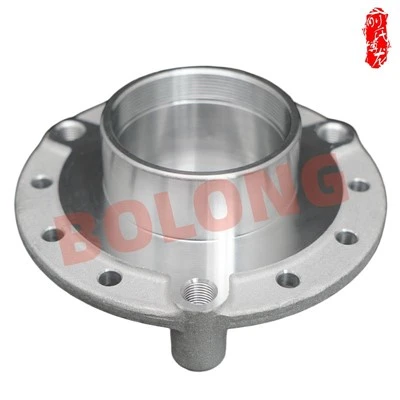
If you’re working on an energy project and need a tooling and die development partner that understands the specific demands of your sector, whether that’s nuclear, oil and gas, wind, solar, or battery storage, we can help you navigate material specs, regulatory compliance, and lifecycle costs to deliver parts that keep your project on track. Reach out to our team to start a conversation about your next project.
Clutch Parts References
API Spec 7-1, Specification for Design, Manufacturing, and Testing of Drilling Tools, American Petroleum Institute, 2022
NRC Regulatory Guide 1.20, Fabrication and Examination of Components for Light-Water Reactors, U.S. Nuclear Regulatory Commission, 2021
IEC 61215-1:2021, Terrestrial Photovoltaic (PV) Modules – Design Qualification and Type Approval – Part 1: Requirements, International Electrotechnical Commission, 2021
ASME B4.2, Preferred Metric Limits and Fits, American Society of Mechanical Engineers, 2018
Ningbo Fenghua Bolong Machinery Manufacturing Co., Ltd.
Ningbo Fenghua Bolong Machinery Manufacturing Co., Ltd. is one of the most professional tooling and die development manufacturers and suppliers in China, also supports high quality customized service. With abundant experience, we warmly welcome you to buy durable tooling and die development made in China here from our factory.
Address: No. 27 Hehai Road, Binhai New Area, Fenghua Economic Development Zone, Ningbo City, Zhejiang Province
E-mail: seven@nbbolongmachinery.com
WebSite: https://www.nbbolongmachinery.com/
