As a supplier of medical titanium bars, I’ve often been asked about the yield strength of these essential materials. Yield strength is a critical property in the medical field, where the reliability and performance of titanium bars can have a direct impact on patient health and safety. In this blog, I’ll delve into what yield strength means, why it’s important for medical titanium bars, and how it affects their use in various medical applications. Medical Titanium Bars
Understanding Yield Strength
Yield strength is defined as the stress at which a material begins to deform plastically. In simpler terms, it’s the point at which a material stops behaving elastically (returning to its original shape after being stressed) and starts to undergo permanent deformation. When a medical titanium bar is subjected to a load, it will first deform elastically up to its yield strength. Once the yield strength is exceeded, the bar will start to stretch and change shape permanently.
This property is crucial because in medical applications, titanium bars need to withstand certain forces without deforming. For example, in orthopedic implants such as bone plates and screws, the yield strength ensures that the implant can support the body’s weight and movement without bending or breaking. If the yield strength is too low, the implant may fail prematurely, leading to complications for the patient.
Factors Affecting the Yield Strength of Medical Titanium Bars
Several factors can influence the yield strength of medical titanium bars. One of the most significant factors is the alloy composition. Titanium can be alloyed with other elements such as aluminum, vanadium, and tin to enhance its mechanical properties. For instance, Ti-6Al-4V, one of the most commonly used titanium alloys in the medical field, has a higher yield strength compared to pure titanium. The addition of aluminum and vanadium strengthens the titanium matrix, making the alloy more resistant to deformation.
The manufacturing process also plays a crucial role in determining the yield strength. Processes such as hot rolling, cold drawing, and heat treatment can significantly affect the microstructure of the titanium bar, which in turn influences its mechanical properties. For example, heat treatment can be used to relieve internal stresses and improve the yield strength of the bar. By carefully controlling the heating and cooling rates, the grain size and structure of the titanium can be optimized, resulting in a stronger and more ductile material.
Another factor is the purity of the titanium. High-purity titanium generally has better mechanical properties, including higher yield strength. Impurities such as iron, carbon, and oxygen can reduce the strength and ductility of the titanium bar. Therefore, strict quality control measures are essential during the production process to ensure that the titanium bars meet the required purity standards.
Measuring Yield Strength
The yield strength of medical titanium bars is typically measured using a tensile test. In this test, a sample of the titanium bar is placed in a testing machine and subjected to a gradually increasing tensile force until it begins to deform plastically. The stress at which this occurs is recorded as the yield strength.
There are two main methods for determining the yield strength: the offset method and the proportional limit method. The offset method is the most commonly used approach. In this method, a small offset (usually 0.2%) is applied to the stress-strain curve, and the stress at the intersection of the offset line and the curve is taken as the yield strength. The proportional limit method, on the other hand, determines the yield strength as the stress at which the stress-strain relationship deviates from linearity.
Importance of Yield Strength in Medical Applications
In the medical field, the yield strength of titanium bars is of utmost importance. In orthopedic surgery, titanium implants are used to replace or support damaged bones. These implants need to have sufficient yield strength to withstand the forces exerted on them during normal activities such as walking, running, and lifting. For example, a hip implant needs to be able to support the weight of the body and the forces generated during movement without deforming or breaking.
In dental applications, titanium bars are used to make dental implants. The yield strength of these bars ensures that the implants can withstand the forces of chewing and biting without fracturing. A dental implant with low yield strength may fail prematurely, leading to the need for replacement surgery.
In addition to orthopedic and dental applications, medical titanium bars are also used in cardiovascular devices such as stents. The yield strength of the titanium bars used in stents is critical to ensure that the stents can maintain their shape and function within the blood vessels. A stent with insufficient yield strength may collapse or deform, leading to blockages and other complications.
Our Commitment as a Supplier
As a supplier of medical titanium bars, we understand the importance of yield strength in medical applications. We are committed to providing high-quality titanium bars with consistent and reliable yield strength. Our manufacturing process is carefully controlled to ensure that each bar meets the strictest quality standards.
We use advanced alloying techniques to optimize the composition of our titanium bars, enhancing their yield strength and other mechanical properties. Our state-of-the-art manufacturing facilities are equipped with the latest equipment and technology, allowing us to produce titanium bars with precise dimensions and excellent surface finish.
We also conduct rigorous quality control tests on all our products to ensure that they meet the required yield strength and other specifications. Our quality control team uses advanced testing equipment and techniques to measure the yield strength and other mechanical properties of our titanium bars. Only products that pass our strict quality control tests are released for sale.
Contact Us for Your Medical Titanium Bar Needs
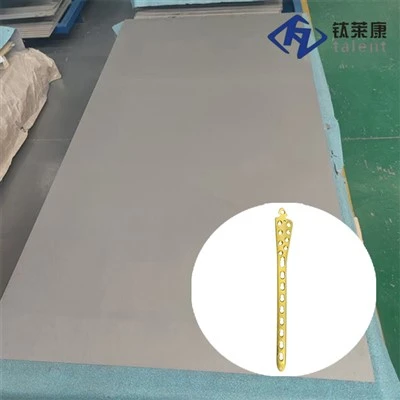
If you are in the market for high-quality medical titanium bars, we would be delighted to discuss your requirements. Our team of experts is available to provide you with detailed information about our products, including their yield strength and other mechanical properties. We can also offer customized solutions to meet your specific needs.
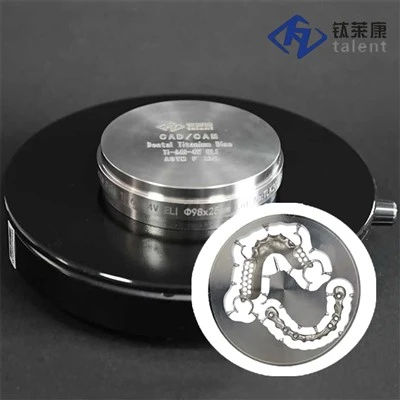
Dental Titanium Round Discs Whether you are a medical device manufacturer, a surgeon, or a researcher, we have the expertise and resources to provide you with the best medical titanium bars. Contact us today to start a conversation about how we can help you with your medical titanium bar needs.
References
- ASM Handbook Volume 2: Properties and Selection: Nonferrous Alloys and Special-Purpose Materials.
- ASTM F136-13 Standard Specification for Wrought Titanium-6Aluminum-4Vanadium ELI Alloy for Surgical Implant Applications (UNS R56401).
- Callister, W. D., & Rethwisch, D. G. (2018). Materials Science and Engineering: An Introduction. Wiley.
Baoji Tailaikang High-Tech Metal Materials Co., Ltd.
With abundant experience, we are one of the most professional medical titanium bars manufacturers and suppliers in China. Please feel free to buy medical titanium bars for sale here and get pricelist from our factory. For price consultation, contact us.
Address: No. 1, Southeast Cross of Gaoxin Avenue and Fenghuang 3rd Road, High-tech Development Zone, Baoji City, Shaanxi Province, China
E-mail: sale@tlkjs.com
WebSite: https://www.tlkmetal.com/
