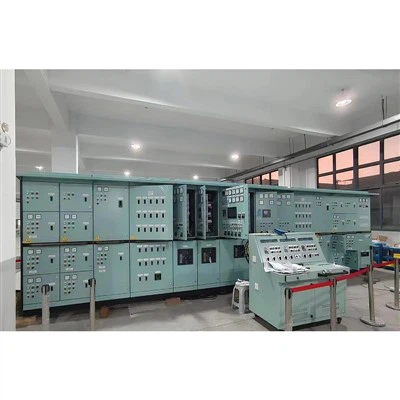
Hey there! I’m a supplier of switchgear, and I’ve been in this game for quite a while. I’ve seen firsthand how crucial switchgear is in a solar power system. So, I thought I’d share with you what the requirements for switchgear in a solar power system are. Switchgear
1. Electrical Ratings
First off, let’s talk about electrical ratings. In a solar power system, the switchgear needs to handle the specific voltage and current levels. Solar panels generate DC power, and this power has to be converted to AC for most grid – connected or off – grid applications. The switchgear must be rated to handle the DC voltage coming from the solar panels. This means it has to be able to withstand the maximum open – circuit voltage (Voc) of the solar array.
For example, if you have a large solar farm with high – voltage solar panels, the switchgear has to be designed to handle those high DC voltages without breaking down. On the AC side, after the inverter converts the DC to AC, the switchgear also needs to be rated for the appropriate AC voltage and current. This includes considering the peak power output of the solar system. If the system is designed to produce a certain amount of kilowatts, the switchgear should be sized to handle the corresponding current at the given voltage.
2. Safety Features
Safety is a huge deal in solar power systems, and the switchgear plays a vital role here. It should have built – in over – current protection. This means that if there’s a sudden surge in current, maybe due to a short – circuit or some other fault in the system, the switchgear can quickly cut off the power. This protects not only the equipment in the solar system but also the people working around it.
Another important safety feature is arc flash protection. An arc flash can be extremely dangerous, releasing a large amount of energy in a very short time. The switchgear should be designed to prevent arc flashes or at least minimize their impact. This might involve using special materials and designs that can contain and dissipate the energy from an arc flash.
Also, the switchgear should have proper grounding. Grounding helps to protect against electrical shocks and provides a safe path for electrical current in case of a fault. It ensures that any stray electrical currents are safely directed to the ground.
3. Environmental Adaptability
Solar power systems are often installed in a variety of environments. Some are in sunny deserts, while others are in coastal areas or cold climates. The switchgear needs to be able to adapt to these different conditions.
In hot and dry environments, the switchgear should be able to withstand high temperatures without overheating. It should have good ventilation and heat dissipation mechanisms. On the other hand, in cold climates, the switchgear needs to be able to operate properly even in freezing temperatures. This might involve using materials that don’t become brittle in the cold and having heating elements to prevent freezing of components.
In coastal areas, the switchgear has to be resistant to corrosion. Saltwater in the air can cause rust and damage to the switchgear over time. So, it should be made of materials that are corrosion – resistant, like stainless steel or have protective coatings.
4. Compatibility with Solar System Components
The switchgear needs to be compatible with other components in the solar power system. This includes the solar panels, inverters, and batteries (if it’s a battery – based system).
It has to work well with the inverters. The switchgear should be able to handle the power flow from the inverters and ensure smooth operation. For example, it should be able to switch between different inverter modes, like grid – connected and off – grid modes.
If there are batteries in the system, the switchgear should be able to manage the charging and discharging of the batteries. It needs to protect the batteries from over – charging and over – discharging, which can reduce their lifespan.
5. Monitoring and Control Capabilities
In modern solar power systems, it’s essential for the switchgear to have monitoring and control capabilities. This allows operators to keep an eye on the performance of the system. They can monitor things like voltage, current, and power output.
With monitoring, it’s easier to detect any issues in the system early on. For example, if the voltage is dropping or the current is too high, the monitoring system can send an alert to the operator.
Control capabilities are also important. The switchgear should be able to be controlled remotely. This is especially useful for large – scale solar farms where it might not be practical to physically go to each switchgear unit. Operators can use a central control system to turn the switchgear on or off, or adjust its settings.
6. Reliability and Durability
Solar power systems are expected to operate for a long time, often for 20 to 30 years. So, the switchgear needs to be reliable and durable. It should be able to withstand normal wear and tear over this long period.
This means using high – quality materials and components in the switchgear. The contacts should be made of materials that have good conductivity and are resistant to erosion. The enclosures should be strong enough to protect the internal components from physical damage.
Reliability also means having a low failure rate. A single failure in the switchgear can disrupt the entire solar power system. So, it’s important to have redundant systems or backup options in case of a failure.
7. Ease of Installation and Maintenance
The switchgear should be easy to install. This reduces the installation time and cost. It should come with clear installation instructions and be designed in a way that it can be easily integrated into the solar power system.
Maintenance is also an important factor. The switchgear should be designed for easy access to its internal components. This makes it easier to perform routine maintenance tasks like cleaning, checking connections, and replacing parts if necessary.
Why Choose Our Switchgear?
As a switchgear supplier, we understand all these requirements inside out. Our switchgear is designed to meet and exceed these standards. We use high – quality materials to ensure durability and reliability. Our products have advanced safety features to protect your solar power system and the people working around it.

We also offer excellent monitoring and control capabilities. You can easily keep track of your system’s performance and make adjustments as needed. And our switchgear is easy to install and maintain, which saves you time and money in the long run.
Plc Cabinet If you’re in the market for switchgear for your solar power system, we’d love to have a chat with you. Whether you’re building a small residential solar system or a large – scale solar farm, we have the right switchgear for you. Just reach out, and we can discuss your specific needs and how our products can fit into your project.
References
- IEEE Standards Association. "IEEE Standards for Electrical Switchgear."
- International Electrotechnical Commission (IEC). "IEC Standards on Switchgear for Renewable Energy Systems."
- Solar Energy Industries Association (SEIA). "Best Practices for Switchgear in Solar Power Systems."
Yuanzhuo Electrical Equipment (Jiangsu) Co., Ltd.
We’re well-known as one of the leading switchgear manufacturers and suppliers in China. We warmly welcome you to wholesale high quality switchgear at competitive price from our factory. If you have any enquiry about cooperation, please feel free to email us.
Address: Group 8, Chengdong Village, Fucheng Sub-district Office, Funing County
E-mail: markcheng1358@126.com
WebSite: https://www.yzdlchina.com/
