If you’ve ever priced exterior wall fiberglass mesh for a construction project, you know it’s not a one-size-fits-all number. As a supplier who’s worked with residential builders, commercial contractors, and small-scale renovation teams over the past eight years, I’ve fielded dozens of questions about per-roll costs—and more than a few frustrated texts from people who assumed all mesh costs the same. Let’s break down what actually goes into that price tag, because skimming the surface will leave you making the wrong call for your budget and your project. Exterior Wall Fiberglass Mesh
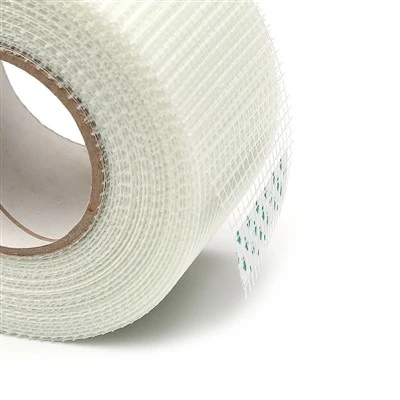
First, let’s get one thing straight: a “roll” of fiberglass mesh isn’t standardized. I’ve seen rolls as small as 5 square meters and as large as 100 square meters, so comparing a $10 small roll to a $80 large roll is like comparing a 12-oz soda to a 2-liter bottle—they’re the same product, just different quantities. For the sake of this discussion, I’ll stick to the industry standard: a 1m wide roll, which is the most common size for exterior wall applications, with lengths ranging from 50m (for light residential jobs) to 100m (for mid-sized commercial builds). That’s the baseline you’ll see quoted on most supplier sites, and it’s the one I use when working with clients.
Now, the biggest driver of cost: the mesh itself. Exterior wall fiberglass mesh isn’t just woven glass fibers—it’s coated, and that coating makes all the difference. Uncoated mesh, sometimes called “dry weave,” is cheap, but it’s useless for exterior walls. It absorbs water, frays within a year, and doesn’t bond properly to plaster or stucco. We and most reputable suppliers use two coatings: latex-acrylic for standard residential jobs, and alkali-resistant (AR) polymer for projects in high-moisture or high-pH environments, like coastal areas or new concrete walls. AR-coated mesh costs 15 to 20% more per roll than latex-acrylic, and that’s not a markup—it’s because the polymer we use to coat the strands is 30% more expensive than regular acrylic, and the application process requires an extra production step to ensure uniform coverage.
The weight of the mesh is another factor you’ll want to pay attention to. Mesh is measured in grams per square meter (g/m²), and exterior applications demand a minimum of 125g/m² for most jobs. Anything lighter than that will tear when the wall shifts (which it will, no matter how solid it looks) or won’t provide enough support to prevent cracking around window frames or foundation joints. Standard 125g/m² mesh is the entry-level roll you’ll see, but many contractors opt for 145g/m² for high-traffic areas or regions with extreme temperature swings. A 50m roll of 125g/m² mesh typically runs between $25 and $35, while the same size in 145g/m² is $35 to $45. The difference is in the number of fibers woven into the mesh: denser fibers mean more raw material, more labor for the loom, and a sturdier product that doesn’t need replacing in two or three years.
Raw material costs are the most volatile part of the equation. Fiberglass is made from silica sand, and prices for silica have jumped 22% since 2021 due to supply chain delays and increased demand from the wind energy sector, which also uses large amounts of fiberglass. When I first started in this business, a 50m roll of standard mesh cost $18; today, that same roll is $28, and I’ve passed only half that increase on to my clients—we absorb the rest to keep our repeat business. Smaller suppliers that don’t have long-term contracts with glass manufacturers often charge more, because they can’t lock in lower bulk rates. That’s a tip: if a supplier’s per-roll price is 20% lower than the average, they’re probably using lower-quality silica or cutting corners on coating to keep costs down.
Then there are the factors that are less visible but still add to the final price. Roll size plays a big role: a 100m roll isn’t twice the cost of a 50m roll, but it’s close. The extra 50m requires more fiber, more coating, and more packaging, so the price per meter is about 10 to 15% lower for larger rolls. That’s why I often tell contractors buying for multiple jobs to order the biggest rolls their equipment can handle—they’ll save money in the long run. Packaging and shipping also matter. If you’re a client picking up a roll from our warehouse, we don’t charge extra, but if we’re delivering to a job site that’s 50 miles away, we add a small fee that depends on how many rolls you’re buying. For residential clients ordering one roll to their home, shipping might add $10 to $15 to the total cost, so it’s worth checking if a supplier offers free delivery for bulk orders.
Quality control is another hidden cost that separates reliable suppliers from fly-by-night operations. Every roll we ship gets checked for uniform coating, correct weight, and no loose strands that could fray during installation. We test 5% of every batch to make sure the mesh will hold up to 100 hours of alkali exposure (a standard test for exterior applications). Some smaller suppliers skip this step to cut costs, which means you might get a roll where half the coating is missing, and it fails a year after installation. I once had a contractor come to me with a $15 low-quality roll that had torn mid-install; he ended up having to buy two more rolls, plus pay for a day of labor to redo the work. That $15 “bargain” cost him $300 in the end—something he still brings up when he refers clients to me.
Let’s talk about outliers, too. Specialty rolls, like fire-resistant fiberglass mesh for commercial buildings or self-adhesive mesh for quick patch jobs, cost more than standard rolls. Fire-resistant mesh has a treated coating that adds fire retardant properties, so a 50m roll can run $50 to $70. Self-adhesive mesh has a glue backing that lets you apply it without additional adhesive, which saves time for small jobs but adds 25% to the cost. These are niche products, though, so most residential and small commercial projects won’t need them.
Now, let’s put this all into a real-world example. Last month, a residential builder came to me for 20 rolls of mesh for a new subdivision of 10 homes. Each home needs 50m of 125g/m² alkali-resistant mesh for the exterior walls, so that’s 10 rolls total, or 500m. We quoted him $30 per roll, so total cost was $300. He asked if there was a cheaper option, so we showed him a 120g/m² non-AR mesh for $22 per roll. But we warned him that in the area, winter temperatures drop below freezing, and the wall shifts could cause cracking with a lower-quality mesh. He went with the $30 roll, and last week he texted me to say none of the walls have cracked after the first cold snap. That’s the cost of exterior wall fiberglass mesh: it’s not just the number on the quote, it’s what that number will do for your project.
I’ve also seen clients get confused by bulk pricing. Some suppliers offer 10% off for 10 rolls, which is standard, but others mark up individual rolls to make up for bulk discounts. Our bulk pricing is transparent: the more rolls you order, the lower the per-roll cost. For 50 rolls or more, the price drops to $25 per 50m roll, because we can pass on more savings from bulk raw material purchases. That’s why it’s always worth asking for a quote for the total quantity you need, not just a single roll.
One thing I make sure to tell every new client: if a quote seems too good to be true, it probably is. I’ve heard stories of contractors who bought rolls from overseas suppliers for $10 each, only to find that the mesh was only 80g/m², had no coating, and started falling apart after six months. That’s a false economy. Exterior wall fiberglass mesh isn’t a material you want to skimp on—it’s the foundation that prevents cracks, protects the wall from moisture, and extends the life of the entire structure.
If you’re a contractor, a builder, or a homeowner planning a renovation, and you’re ready to get a transparent quote for exterior wall fiberglass mesh rolls, don’t hesitate to reach out to discuss your project specifications and needs.
Interior Wall Fiberglass Mesh References
- American Society for Testing and Materials (ASTM). Standard Specification for Alkali-Resistant Glass Fiber Mesh for Cementitious Reinforcement. ASTM C1572-19, 2019.
- Freedonia Group. World Industrial Fiberglass Demand. 2023 Report.
- Construction Industry Institute (CII). Best Practices for Exterior Wall Reinforcement. CII Publication 370-22, 2022.
- National Association of Home Builders (NAHB). Residential Exterior Wall Material Cost Guide. 2024 Edition.
Danyang Yonggu Building Materials Co., Ltd.
Danyang Yonggu Building Materials Co., Ltd. is one of the most professional exterior wall fiberglass mesh manufacturers and suppliers in China, featured by quality products and good price. Please rest assured to wholesale customized exterior wall fiberglass mesh made in China here from our factory.
Address: Danyang City, Jiangsu Province, P.R. China
E-mail: sales02@cnyongu.com
WebSite: https://www.ygfiberglass.com/
