Hey there, I’m Jake, the guy who runs a small but growing loading and unloading robot supply business. Most days, I’m either troubleshooting a robot arm in our workshop, chatting with warehouse managers, or fielding questions that go way beyond just “does this thing move boxes?” Lately, one question’s been popping up nonstop: “Can a loading and unloading robot actually work in a pharmaceutical warehouse?” And honestly? It’s a way better question than people think. Let’s break this down without the stuffy industry jargon you’d find in a white paper—no “pharmacological cold chain logistics optimization” garbage, just real talk from someone who’s built these robots for the last six years. Loading and Unloading Robot
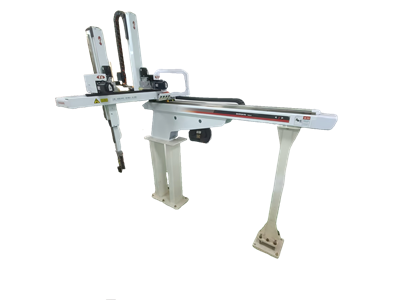
First off, let’s set the scene: pharma warehouses aren’t like your average Amazon fulfillment center. Yeah, both move pallets of stuff, but pharma’s got rules. We’re talking about FDA compliance, temperature-controlled zones (some meds can’t handle 70 degrees, let alone a forklift bump), and ultra-sensitive products—think vaccines, biologics, or even sterile meds that can get contaminated if a human touches ‘em wrong. That’s the first big hurdle we had to solve when building our robots, not just “can it lift a 50-pound pallet?” but “can it lift a 50-pound pallet of insulin without breaking the vials and not drag its metal arm through a sterile corridor?”
Spoiler: It can. But only if you build it right. Early on, when we first tested our robots in a tiny pharma warehouse outside Pittsburgh, we messed up. Our first model used standard grippers that clamped too tight—smashed a whole pallet of epinephrine auto-injectors. Oops. That’s when we switched to adaptive, soft-touch grippers. These aren’t the kind you’d use for moving wood; they’re made of food-grade, medical-grade silicone that conforms to whatever’s on the pallet—whether it’s a glass vial, a plastic blister pack, or a sealed cardboard box. We calibrate each robot to the specific product a customer’s storing, so it doesn’t squeeze too hard or fumble a pallet mid-load. That’s non-negotiable for pharma, and it’s the biggest difference between our robots and the ones you see in a regular retail warehouse.
Next, the temperature thing. A lot of pharma goods need to stay between 2 and 8 degrees Celsius—cold chain, right? If a human takes 10 minutes to walk from the loading dock to the cold storage aisle, that’s 10 minutes the meds are outside their safe temp. A robot? We programmed ours to map the warehouse in minutes, take the shortest, most direct path, and never linger. Plus, all our robot components are rated for cold environments—no cheap motors that seize up at 4 degrees. We had a client in Chicago last year whose old loading crew would drag their feet during winter because the docks are freezing; the robots cut their transfer time for cold pallets by 70%. That’s not just faster—that’s keeping meds viable, which is huge when a vaccine dose costs, like, $50 a pop.
Then there’s compliance. The FDA doesn’t mess around with warehouse logs, and human workers can fudge timestamps or miss a pallet scan. Our robots log every single move—when a pallet was picked, what temp it was, who (or what) handled it, even if the robot paused for a maintenance check. Those logs are tamper-proof, too—we use cloud storage that’s compliant with 21 CFR Part 11, which is the FDA rule for electronic records. That means if an auditor shows up, you don’t have to sort through a messy Excel sheet of handwritten notes. You just pull up the robot’s log, and boom, it’s all there. A client in New Jersey told us that before our robots, their audit prep took 8 hours a week; now it takes 20 minutes. Insane, right?
But wait—people still have this big worry: robots will replace workers, and pharma teams can’t afford that. Here’s the secret no one talks about: in pharma warehouses, the hard, repetitive loading/unloading jobs are the ones with the highest turnover. A lot of crews quit because they’re hauling heavy pallets all day, or they have to work overnight shifts in cold zones. Our robots don’t take jobs—they take the garbage jobs that no one wants, so human workers can do the stuff that actually matters: inspecting products, troubleshooting, or handling high-sensitivity loads that still need a second set of eyes. We had a client in Texas who used to have 3 people quit a month in their loading dock team; since we installed 2 robots, they’ve had zero turnover in that area. The workers are way happier now, and the warehouse runs smoother. That’s a win for everyone, not just bottom lines.
Now, let’s talk about the other stuff that makes pharma unique: contamination risks. Pharma warehouses have sterile zones where you can’t wear anything that sheds lint, right? Humans have to put on gowns and hairnets before going in. Our robots? We designed them to work in those zones without shedding anything. All their parts are smooth, easy to sanitize—you just wipe ‘em down with a medical-grade disinfectant, no crevices for mold or bacteria to grow. We even tested ‘em in a clean room that required ISO 14644-1 class 8 standards, and they passed with flying colors. No human worker can stay in that zone for more than an hour without a break; our robots can run 8-hour shifts straight, sanitize themselves between cycles, and never get fatigued. That’s a game-changer for products that can’t tolerate any contamination.
I know what you’re thinking: “This sounds too good, what’s the catch?” Fair question. The main catch is that you can’t just plop one of our robots into a random warehouse. Every pharma warehouse has different layouts, different products, different compliance rules. So we don’t do one-size-fits-all. We send a team out to map your space, test a small batch of your products with a prototype, and adjust the robot before we even install it. For example, a warehouse that stores only small vials needs a different gripper than one that stores large IV bags. A warehouse with narrow aisles needs a smaller robot base than one with wide, open docks. We’ve had clients who thought a standard robot would work, but after our assessment, we tweaked it to fit their space, and it ended up being way more efficient than they expected.
Another thing: reliability. Pharma warehouses can’t shut down, especially during peak season—say, when flu vaccines are shipping out en masse. Our robots have a 99.8% uptime rate, which is way higher than human workers who call out sick or take vacation. We also have 24/7 tech support, so if a robot does hiccup (which is super rare), we can fix it remotely in minutes, no need for a service truck to drive across the country. Last year, a client in Florida had a robot pause because a pallet got stuck; our team logged in, adjusted the gripper pressure, and had it running again in 2 minutes. No downtime, no lost shipments.
Let’s wrap this up with a real example, because numbers mean more than sales pitches. A mid-sized pharma warehouse in Ohio was struggling with their loading dock: they had 5 loading bays, 12 workers, and 20% of their daily shipments had minor handling issues—like dented boxes or broken vials—because humans were rushing to keep up. They installed 3 of our robots 18 months ago. Now, their handling issues are down to 1%, their labor costs for loading/unloading are cut by 35%, and their workers report 40% less fatigue, per their internal surveys. That’s not just “using robots”—that’s making the warehouse better, safer, and more compliant.
At the end of the day, the question isn’t “can a loading and unloading robot work in a pharma warehouse?” It’s “can you afford not to have one?” Wait, no, that’s a sales line—let’s be real: it’s “can you afford to keep relying on humans to do a job that’s high-risk, low-turnover, and critical to keeping meds safe?” For most pharma warehouses, the answer is no.
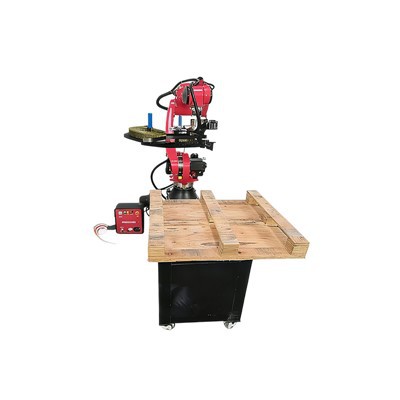
If you’re a warehouse manager, operations lead, or anyone in pharma who’s tired of the same old loading/unloading headaches—let’s chat. We can send a team over to walk your space, test your products, and show you exactly how our robots would work for you, no sales pitch, just straight talk.
Palletizing/Depalletizing Robot References:
- U.S. Food and Drug Administration. (21 CFR Part 11) Electronic Records; Electronic Signatures.
- International Organization for Standardization. (ISO 14644-1) Cleanrooms and Associated Controlled Environments — Part 1: Classification of cleanliness by airborne particulate concentration.
- Cold Chain Association. (2022) Cold Chain Logistics Performance Metrics for Temperature-Sensitive Pharmaceuticals.
- Occupational Safety and Health Administration. (2021) Warehouse Ergonomics and Repetitive Motion Injury Prevention.
Dongguan Chuanglida Intelligent Equipments Co., Ltd.
As one of the most professional loading and unloading robot manufacturers and suppliers in China, we also support customized service. Please feel free to buy discount loading and unloading robot in stock here from our factory. For price consultation, contact us.
Address: Room 201, Building 2, No. 61, Shachang 1st Road, Dalang Town, Dongguan City, Guangdong Province
E-mail: haoguangli001@outlook.com
WebSite: https://www.boruntestech.com/
