If you’ve ever stared at a shelf of coffee beans, granola, or even small plastic pellets in the grocery store and wondered how those uniform, sealed pouches show up exactly like that, odds are a granule packaging machine was at work behind the scenes. As a supplier of these machines, I’ve spent the last 12 years talking to small-batch roasters, mid-sized snack manufacturers, and industrial part makers, and I’ve learned most people outside the packaging space don’t realize these machines aren’t just “bag stuffers”—they’re the quiet workhorses that turn raw granular materials into the products we reach for every day. Let me break down what these machines actually are, how they work, and why they matter for every business that handles granules. Granule Packaging Machine
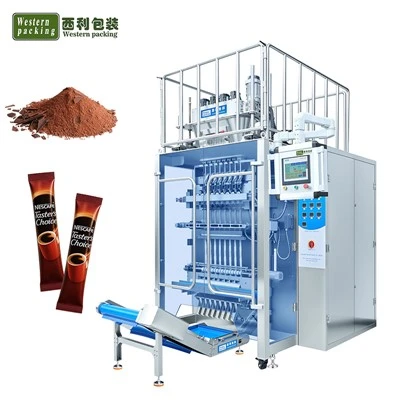
First, let’s define the core term clearly: a granule packaging machine is an automated industrial system designed to handle, measure, fill, seal, and label products made up of small, solid particles—what the packaging industry calls “granules.” That covers an enormous range, from 0.1mm fine sugar to 10mm whole coffee beans, from fertilizer pellets to pet food, and even things like plastic resin used to make toys. What makes this category unique (and different from, say, liquid packaging machines or large-particle bagging equipment) is that granules have specific handling quirks: they can clump, flow unevenly, generate static, or get contaminated if not sealed properly. A good granule packaging machine is built to address all those issues.
I often get asked what makes a granule packaging machine different from just pouring granules into a bag by hand. For small businesses making 50 bags a day, hand-filling works—but once you hit 500, or 5,000 bags, that system falls apart. Hand-filling has human error baked in: you’ll get bags with 18 grams of granola one time and 22 the next, or bags that are under-sealed and leak on the shelf, or even cross-contamination if you switch between products and don’t sanitize tools perfectly. A granule packaging machine fixes almost all of that, and does it at a speed that keeps up with demand without sacrificing consistency.
Let’s walk through how a typical mid-range granule packaging machine works, because that’s what most of my customers use, not the huge industrial behemoths for 24/7 manufacturing. It starts with the hopper: that’s the large, funnel-shaped top container that holds your bulk granule material. Granules flow from the hopper into a measuring system, and this is where the precision happens. Most small to mid-sized granule packaging machines use either volumetric measuring or gravimetric measuring. Volumetric uses a chamber of a fixed size—say, 100 grams—so every time granules fill that chamber, you get a consistent amount. It’s fast, perfect for products like rice or sugar where a small 1-2 gram variation is irrelevant, and it’s the workhorse of most snack and grain manufacturers. Gravimetric measuring is more precise: it uses a scale to weigh the exact amount of granules going into each bag, so variation is usually under 0.5 grams. That’s critical for brands that want to label exact net weights, like specialty coffee roasters selling 12oz bags, or fertilizer makers with strict regulatory weight requirements.
After measuring comes the filling step. The machine has a spout that lowers into the open bag or flexible pouch, and dispenses the granules evenly. This part isn’t as simple as it sounds: fine granules like cocoa powder can create static electricity, making them stick to the sides of the spout or even float into the air, leading to waste or inaccurate fills. Good granule packaging machines have anti-static components, or even gentle vibration on the spout to help granules flow smoothly without clumping. For products that are prone to clumping, like rolled oats, some machines also have a gentle agitation system in the hopper to break up clumps before they reach the measuring chamber.
Once the bag is filled, the next step is sealing. This is another key part of a granule packaging machine, because granules—especially things like pet food or rice—need to be protected from moisture, air, and light. Most machines use heat sealing, where two heated bars press the top of the bag to create an air-tight, sterile seal. The temperature and pressure of the seal are adjustable, which matters because different materials (like plastic laminated film vs. paper bags) need different settings. For brands that want tamper-evident seals, you can program the machine to add a tear strip or a pressure-sensitive seal that breaks if the bag is opened, which is required for many food safety regulations. Some machines also add a gas flushing step: if you’re packaging coffee, for example, you’ll flush out air from the bag with nitrogen before sealing it, to keep the beans fresh for longer. This is a common add-on for granule packaging machines that handle food products, and it’s one of the features that sets a good machine apart from a basic one.
Finally, most granule packaging machines include a labeling or coding step. They can print expiration dates, lot numbers, or brand labels directly onto the bag as it moves through the line, so you don’t have to do that as a separate step. For businesses that need to package multiple sizes or types of granules, many of these machines are modular, meaning you can swap out parts to switch between 50g and 1kg bags, or between different granule types, in under 15 minutes. That flexibility is a big selling point for small to mid-sized brands that don’t want to buy a whole new machine as they grow.
Now, I know what a lot of potential customers ask me: “Do I need a granule packaging machine, or can I just get a generic packaging machine?” The short answer is: generic machines can handle some granules, but they will not work well for most granular products. Let me give you an example. A while back, I worked with a small craft granola brand that was using a generic pouch filler. They kept having issues: granola would get stuck in the machine’s fill tube, their fill weights were off by up to 10 grams, and seal failures were at 8% because the generic machine didn’t account for the irregular shape of granola pieces. When they switched to a granule packaging machine designed for irregular, fragile granules, their error rate dropped below 1% and their speed went from 20 bags a minute to 60. That’s the difference: a granule-specific machine is engineered for the unique physical properties of small particles, not just general packaging.
Another common question is about industrial vs. smaller, tabletop granule packaging machines. Tabletop models are perfect for startups or small batches—they fit on a counter, handle up to 100 bags an hour, and are easy to operate for a small team. Mid-range standalone machines handle 100 to 500 bags an hour, which is ideal for growing businesses that are moving from farmers markets to local grocery stores. For large manufacturers making tens of thousands of bags a day, you’d use a full integration line, where the granule packaging machine is connected to conveyors, palletizers, and quality control systems. The right fit depends entirely on your production volume and product type.
I also want to talk about the less obvious benefits of a granule packaging machine that most people don’t mention. For one thing, food safety. When you’re packaging food, cross-contamination is a big risk. A good granule packaging machine has easy-to-clean parts, often made of stainless steel, which is required for food grade equipment, and many have changeover protocols that make it simple to switch between products without harsh chemical cleaning between runs. For non-food granules, like fertilizer or plastic pellets, these machines also help reduce dust and waste, which is better for your team’s health and lowers material costs. I’ve had customers tell me they cut granule waste by 15% just by switching from hand-filling to a proper granule packaging machine, which pays for the machine in under a year.
Of course, no machine is one-size-fits-all, and there are factors to consider when choosing a granule packaging machine. First, know your granule type: is it fine, like flour, or coarse, like pet food? Does it clump? Is it fragile, like coffee beans that can break if handled too roughly? All of these will affect which machine you need. Second, your production volume: how many bags do you need to fill per hour? Third, your packaging type: do you use stand-up pouches, flat bags, gusseted bags, or something else? A good supplier will ask you all these questions before recommending a machine, not just try to sell you the most expensive one.
Over the years, I’ve seen a lot of misconceptions about granule packaging machines. Some people think they’re too expensive for small businesses, but I’ve worked with startup brands that invested in a used tabletop machine and grew their revenue enough in 18 months to upgrade to a mid-range model. Others think they’re too complicated, but modern granule packaging machines have touchscreen interfaces that are as easy to use as a smartphone, so you don’t need a team of engineers to operate them. The key is working with a supplier that offers training and support, not just the machine itself.
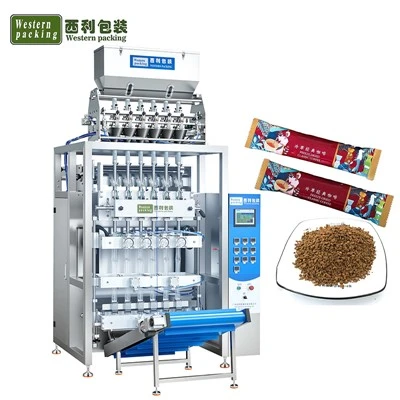
At the end of the day, granule packaging machines are about more than just filling bags. They’re what let a small coffee roaster in Portland scale from selling at farmers markets to national grocery stores, what let a pet food maker keep their product consistent for every customer, and what let food manufacturers meet strict weight and safety regulations without slowing down production. If you’re a business that handles granules, whether you’re just starting out or looking to upgrade your line, a granule packaging machine isn’t just an expense—it’s an investment in consistency, efficiency, and growth.
Powder Packaging Machine If you’re ready to learn what a granule packaging machine can do for your specific operation, I’m here to help. Whether you need a tabletop model for small batches, a mid-range machine for growing demand, or an integrated line for high-volume production, we’ll work with you to find the right solution for your products, budget, and goals. Just reach out to us to discuss your needs and get a tailored consultation.
References
- Davis, R. (2022). The Complete Guide to Granule Handling and Packaging. Industrial Packaging Press.
- Thompson, L. (2021). Precision Measuring Technologies for Food and Agricultural Products. Journal of Packaging Engineering, 45(3), 112-128.
- Global Packaging Machinery Association. (2023). Market Report on Granule Packaging Equipment: Trends, Applications, and Key Considerations. GPMA Publications.
- Miller, S. (2020). Food Safety in Packaging Operations: Mitigating Cross-Contamination Risks. Food and Drug Administration Office of Food Safety Technical Bulletin.
Guangzhou Western Packing Co., Limited
Guangzhou Western Packing Co., Limited is one of the most professional granule packaging machine manufacturers and suppliers in China, also supports custom service. With abundant experience, we warmly welcome you to wholesale durable granule packaging machine at competitive price from our factory.
Address: No.3, Yilong street, Wulonggang, Zhongluotan Twon, Baiyun District, Guangzhou
E-mail: david@westernpacking.com
WebSite: https://www.westernpackingusa.com/
