Let me take you back to a rainy Tuesday afternoon in our warehouse, where I was unpacking a shipment of twisted pair cable that had just rolled off our production line. A new client, a network engineer with a faded backpack slung over one shoulder, was standing nearby, watching me untangle a length of cable. “I keep hearing about crosstalk,” he said, gesturing to the cables stacked along the wall, “but no one’s ever explained it in a way that makes sense for what I actually do.” That conversation stuck with me, because it’s the same question we get every single week here—from small business owners upgrading their office networks, to data center managers designing their next server floor. Today, I want to break down what crosstalk in a twisted pair cable really is, why it matters, and how we as your twisted pair cable supplier work to minimize it for every project we touch. Twisted Pair Cable

First, let’s start with the basics. If you’ve ever held two regular phone wires next to each other and heard a stranger’s conversation cutting through your own, that’s crosstalk in its most simple, everyday form. In twisted pair cables, it’s exactly that same kind of interference, but on a much smaller, more precise scale. Twisted pair cables are made of pairs of insulated copper wires, twisted around each other at a specific rate per foot—think 1 twist per inch, or 2 twists per inch, depending on the cable category. Why the twist? That’s the core of how we reduce crosstalk before it even becomes a problem.
Here’s the science bit, and I’ll keep it as un-jargon-heavy as possible: each electrical signal that travels through a copper wire creates a small electromagnetic field around that wire. If you have two wires running parallel to each other, their electromagnetic fields can overlap, and the signal from one wire can bleed into the other. That bleed is crosstalk. In twisted pair cables, each pair is twisted so that the position of each wire relative to the other flips constantly along the length of the cable. If wire A is next to wire B in one spot, it’s next to the space between wire B and wire C in the next spot. This flipping averages out the electromagnetic interference, so instead of having a strong, constant signal bleed, you get a weak, dispersed signal that’s almost negligible.
But not all crosstalk is the same, and not all twisted pair cables handle it equally. There are two main types that matter most for our customers: near-end crosstalk (NEXT) and far-end crosstalk (FEXT). Let’s walk through these, because knowing the difference helps when you’re choosing the right cable for your setup.
Near-end crosstalk is the most common, and the easiest to test for. That’s when the interference from one pair’s signal bleeds into another pair near the same end of the cable—think of it as the “local” interference. For example, if you have a cable that runs from a switch in your office to a wall outlet 100 feet away, the signal coming from the switch end (the near end) of one pair can bleed into another pair at that same near end. NEXT is a bigger problem in shorter cables, because the signal strength doesn’t drop off much over short distances, so the interference is stronger. That’s why for small office networks with runs under 100 feet, we still recommend our Category 6A twisted pair cables, which are designed with tighter twists and better insulation to keep NEXT below the threshold that would cause errors.
Far-end crosstalk is the one that catches people off guard, especially for longer runs. FEXT is when the signal bleed happens at the opposite end of the cable from where the signal is being sent. So, going back to that 100-foot cable run: the signal starting at the switch (near end) travels 100 feet to the wall outlet (far end), and along the way, a small amount of that signal bleeds into an adjacent pair. When that bleed reaches the far end, it’s still strong enough to cause problems, even though the original signal has traveled the full length of the cable. FEXT becomes more of an issue for runs over 100 feet, like those in multi-story office buildings or campus networks. That’s why our high-density twisted pair cables for backbone runs use additional shielding—foil or braided shielding around each pair, or overall shielding around the entire cable bundle—to block FEXT from spreading.
Here’s the thing we see as a supplier all the time: a lot of customers think “more twists = better cable,” and that’s partially true, but it’s not the only factor. If you have a twisted pair cable with twists that are too tight, you can introduce another issue—signal attenuation, which is the weakening of the original signal as it travels. Balance is everything. Our engineering team spends months testing every new cable run, adjusting twist rates, insulation material (we use high-density polyethylene, or HDPE, because it’s less porous than lower-quality plastics, so it blocks more electromagnetic interference), and copper gauge (23 AWG is standard for most applications, while 22 AWG is better for longer runs because it carries signal farther without dropping strength) to get that balance just right.
I want to share a quick story from a client who learned this the hard way. Last year, we worked with a small marketing agency that decided to buy a cheap, off-brand twisted pair cable from a big-box store to save money on their new 50-workstation network. They installed it themselves, and for the first week, everything seemed fine—until they started running video conferencing and large file transfers. Suddenly, calls were dropping, files were corrupting mid-transfer, and their IT team was spending every night troubleshooting. They thought it was their router, or their servers, until they tested the cables. The issue was crosstalk: the cheap cable had inconsistent twist rates, some pairs only twisted once every 3 feet, so the electromagnetic fields from each pair were overlapping constantly, causing signal bleed. By the time they called us, they’d already wasted 3 days of downtime and $1,200 in the wrong router. We supplied them with our Category 6A twisted pair cables, and after a single afternoon of re-installation, their network ran perfectly. That’s the difference between standard, mass-produced cable and cable that’s engineered to minimize crosstalk for real-world use.
Another thing that impacts crosstalk that people don’t always think about is how cables are routed. Even the best twisted pair cable in the world will have issues if it’s run next to power cables, or in a tight bundle with other cables. That’s why we always include installation guidelines with every order: keep horizontal cable runs separate from power lines, don’t bundle more than 12 twisted pair cables together in a single bundle, and use cable ties that aren’t too tight (over-tightening can crush the pairs and ruin their twist, which introduces crosstalk). As your twisted pair cable supplier, we don’t just sell you cable—we share that practical knowledge, because we know installation mistakes can undo even the best cable design.
Let’s talk about how we test for crosstalk in our own facilities, because that’s what ensures every cable that leaves our warehouse is up to spec. We use a device called a time-domain reflectometer (TDR) and an auto-leveling crosstalk tester. For every batch of cable, we pull 10 random samples, run a 100-foot test length, and measure both NEXT and FEXT at multiple points along the cable. Our quality control team will reject any batch that has NEXT higher than -55 dB (for Category 6A) or FEXT higher than -60 dB. For context, dB is a logarithmic scale, so a 5 dB difference means interference is twice as strong—so keeping those numbers low is critical for reliable performance. We also test for alien crosstalk (AXT), which is crosstalk between adjacent cables in a bundle, not just within a single cable pair. Alien crosstalk is a big problem in data centers, where hundreds of cables are bundled together, so our data center-grade twisted pair cables use individual shielding for each pair plus overall cable shielding to block AXT.
Now, let’s address a common question: is crosstalk a problem for new technologies like 10Gbps or 25Gbps networks? The short answer is yes, but only if you use the wrong cable. Traditional Category 5e cable is only rated for up to 1Gbps, and it has minimal shielding, so it can’t handle the higher signal frequencies needed for faster networks without significant crosstalk. That’s why we recommend Category 6A or Category 7A twisted pair cables for any network running 10Gbps or faster. Those cables are engineered with tighter twists, better insulation, and shielding that can handle the higher frequencies, keeping crosstalk low enough to support faster, more reliable data transfer. We worked with a university last year that was upgrading their campus network to 25Gbps for their research labs, and they initially tried to re-use their old Category 5e cables—they ended up with so much crosstalk that their lab equipment was getting false data readings. Switching to our Category 6A shielded twisted pair cables fixed the issue entirely, and they were able to hit their 25Gbps target without any additional costly retrofits.
What about for residential use? A lot of homeowners installing gigabit internet don’t think about crosstalk, but it matters there too. If you have a whole-home network with multiple streaming devices, smart thermostats, and gaming consoles, crosstalk in the twisted pair cables running to each room can cause buffering or lag. Our residential-grade Category 6 twisted pair cables are designed to handle gigabit speeds, with crosstalk levels low enough for everyday home use, and they’re priced to be affordable for DIY installations. We have a lot of customers who order these to replace the loose wires that come with pre-built home networks, and the difference in performance is noticeable immediately.
At the end of the day, crosstalk isn’t just a technical term—it’s the difference between a network that works reliably, and one that’s a constant source of frustration. As a twisted pair cable supplier, our job isn’t just to send you a spool of wire; it’s to make sure that wire is designed, tested, and manufactured to minimize crosstalk so your network can perform as it should. We’ve spent years refining our processes, listening to our customers’ challenges, and engineering every cable to stand up to real-world use, whether that’s a small office, a data center, or a home.
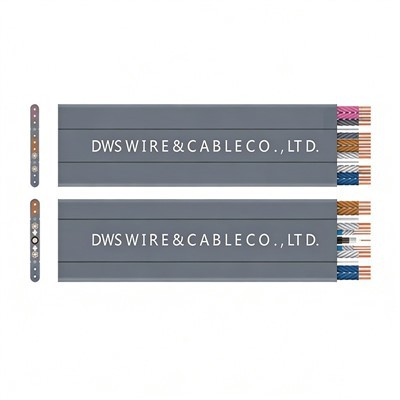
If you’re upgrading your network, troubleshooting persistent signal issues, or just not sure which twisted pair cable is right for your project, we’re here to help. Our team has decades of experience working with network engineers, IT managers, and DIY installers, and we can walk you through the best options for your specific needs, share installation tips, and answer any questions about crosstalk or cable performance. Don’t let hidden interference hold your network back—reach out to us to discuss your twisted pair cable needs today.
Load Bank Cables References
- TIA/EIA-568-C.2, Commercial Building Telecommunications Cabling Standard
- American National Standards Institute (ANSI), Testing and Performance Specifications for Balanced Twisted-Pair Telecommunications Cabling Components
- Federal Communications Commission (FCC), Electromagnetic Compatibility Regulations for Telecommunications Equipment
Cixi Davos Wire & Cable Co., Ltd.
As one of the most professional twisted pair cable manufacturers and suppliers in China, we also support customized service. Please feel free to buy bulk high quality twisted pair cable in stock here from our factory. For price consultation, contact us.
Address: No.3, Lane 91, Ruan Ding Road, Linxi Village, Xiaolin Town, Cixi City
E-mail: roy798@163.com
WebSite: https://www.cj-supplychain.com/
