Hey there, if you’ve ever run a lamination machine for wrapping important documents like a kid’s school project, your small business’s marketing flyers, or even a family photo you don’t want creased, you’ve definitely used thermal lamination film. But have you ever stopped to wonder what’s actually in that stuff that makes it stick, clear up, and seal tight when heated? As someone who’s been supplying thermal lamination film for almost a decade (I still geek out over getting emails from regulars who say our film saved a client’s big presentation), I get questions about this all the time—usually from folks who just want to make sure they’re picking the right film, not some sketchy junk that bubbles or yellows. Let’s break it down simply, no boring lab jargon that’ll make your eyes glaze over. Thermal Lamination Film
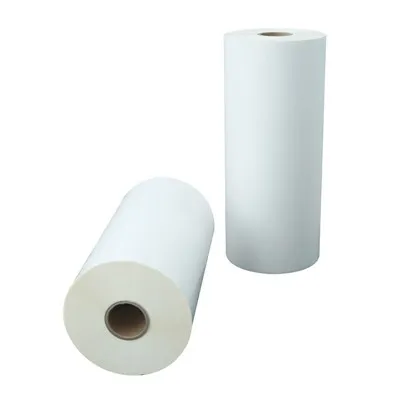
First, let’s get one thing straight: thermal lamination film isn’t a single material. It’s a 3-layer sandwich, basically, and every layer has a specific job. If you’ve ever peeled a roll of laminating film (the kind that’s not the pre-cut sheets), you noticed it’s got a shiny clear side and a duller side that sticks to itself when you unroll it. That dull side is probably your first guess, but nope—each layer plays a part in how the film works. Let’s start from the outside in, because that’s how heat hits it when you run it through a laminator.
The top layer, the shiny clear one, is what’s called a “substrate,” and 90% of the time it’s polyethylene terephthalate, or PET for short. I know, I know, another acronym. Why PET? It’s super clear, doesn’t yellow even after years of sitting in a drawer, strong enough to not tear if you yank it a little, and it’s resistant to UV light, which is huge if you’re laminating something that might be hung on a wall or displayed outdoors. You ever use a cheap laminating film that turns yellow after a year? That’s usually because they used a cheaper substrate like PVC, which breaks down in light and heat. PET is the gold standard here, and all the good suppliers (cough, cough, us) use it because it doesn’t leave that weird yellow gunk or get brittle. The thickness of this PET layer varies too—we carry everything from 1.5 mil for lightweight flyers to 5 mil for stuff you want to be super tough, like ID badges or construction blueprints. Thicker mil means a sturdier film, obviously.
Now the middle layer, and this is the magic one. That’s the adhesive layer—wait, no, hold on, not just any adhesive. Thermal lamination adhesive is a hot-melt adhesive, but not the kind you use for glue guns, which is super sticky at room temp. This stuff is solid at room temperature, so the film doesn’t gunk up your laminator or stick to itself when it’s rolled. It only melts when it hits a specific temperature, usually between 200°F and 300°F, depending on the film grade. What’s that adhesive made of? Most of the time, it’s a blend of ethylene-vinyl acetate, or EVA, and sometimes a little bit of acrylic if it’s for higher-heat laminators. EVA is perfect here because it’s flexible, sticks well to paper, cardstock, even thin card, and stays flexible once it cools down. You don’t want a laminator film that gets hard and brittle after sealing, right? EVA keeps it bendy, so you can fold a laminated flyer or bend a laminated card without it cracking. Some specialty films, like the ones used for laminating fabric or plastic, have different adhesive blends, but 99% of the standard film you buy for office or home use is EVA-based.
Wait, what about the back side of the film, the one that faces the laminator rollers? That’s actually a tiny, thin layer of something called a release agent, usually silicone. Because if the adhesive touched the hot laminator roller, it would melt all over the roller and make a huge mess. The release layer lets the film glide smoothly through the machine, no stickage, and keeps the adhesive where it’s supposed to be—on the document, not on your $50 laminator. That’s a big one—bad release layer means you’re cleaning your roller every other day, which is a total pain.
Now, let’s talk about the stuff that’s added to these layers to make them work for specific jobs. Not all thermal lamination film is the same, right? We make film for different uses, so we add small amounts of “additives” (that’s the fancy lab term) to tweak properties. For example, if you want anti-glare film for presentations or textbooks, we add a matting agent to the top PET layer—tiny plastic particles that make the surface not shiny, so you don’t get that annoying glare when you’re using a projector. For UV-resistant film, we add UV stabilizers to the PET layer, so if you’re laminating outdoor signs or posters, they don’t fade in the sun. For food-safe film (yes, that’s a thing—people laminate menus for restaurants and food labels), we make sure all the materials are food-contact approved, no weird chemicals that can leach onto food. Oh, and there’s also scratch-resistant film, where we add a little hardener to the top layer so it doesn’t get scuffed up easily if you toss a laminated ID badge in your bag.
Wait, a common question I get is: what’s the difference between thermal film and pressure-sensitive film? Oh right, pressure-sensitive is the kind that sticks when you rub it with a hand, no heat needed. Thermal only works with heat, because the adhesive is solid until it melts. That’s why thermal is better for high-volume jobs, and pressure-sensitive is easier for at-home small jobs. But let’s get back to composition, because I know you’re here for that.
Let’s bust a myth I hear all the time: some people think thermal film has glue all over it. No, that’s not right. The adhesive is a thin layer—usually only 1 to 2 mils thick, so the total thickness of a standard 3 mil film is 1 mil PET, 1 mil adhesive, and 1 mil release layer? Wait, no, actually the math works out a little different, but the point is the adhesive is thin, so the film stays flexible and doesn’t get bulky. If it had a thick layer of glue, your laminated document would be all bumpy, which is bad for reports or books.
Another thing: environmental stuff. I know a lot of customers ask if thermal lamination film is recyclable. The short answer is, most standard PET-based thermal film is recyclable, but you have to drop it off at a plastic recycling center that takes #1 plastic (PET). Some cheaper films use PVC, which is not recyclable and actually can release fumes when heated, which is why we don’t carry PVC film at all—too many downsides. We also offer some films made with recycled PET, which is great for businesses that want to be more eco-friendly. That’s a big trend lately, and we’ve invested in that because we know a lot of our customers care about that.
Wait, let’s test this with an example. If you take a 5 mil glossy thermal lamination film that we sell for ID badges, here’s exactly what’s in it:
- Top layer: 4 mil PET (clear, UV-stabilized, scratch-resistant)
- Middle adhesive layer: 1 mil EVA blend (melts at 250°F, sticks to plastic and paper, flexible when cool)
- Bottom release layer: ultra-thin silicone, keeps the film from sticking to laminator rollers.
That’s it, no weird hidden chemicals, nothing that’ll mess up your machine or your document. Now, specialty films are a little different: for example, the film we use for laminating photos has an anti-static additive, so it doesn’t attract dust when you’re sealing photos, which is a huge plus because dust on a photo laminate is impossible to get out.
Why does this matter, by the way? Well, if you’re picking the wrong film for your job, you’ll run into problems. Use a cheap PVC film for a presentation poster, and it’ll yellow in 6 months. Use a thin 1 mil film for an ID badge, and it’ll tear after a week. Knowing what the film is made of helps you pick the right one. If you need something that’s super tough, you go for the thicker PET layer. If you need something that doesn’t glare, you go for the film with the matting agent.
I’ve seen so many bad experiences because people don’t pay attention to the composition. A customer once came to us super frustrated because their laminator was gunked up every time they ran film for their bakery’s menus. Turns out they were using pressure-sensitive film, not thermal, and the adhesive was melting on the rollers. Another customer tried to laminate a construction blueprint with a thin 1.5 mil film, and it tore when they folded it to put in a binder. That’s why knowing what’s in the film matters—it’s not just random plastic, every part has a purpose.
Now, let’s clear up a few more acronyms, just so you don’t have to Google them. PET = polyethylene terephthalate, EVA = ethylene-vinyl acetate, mil = thousandth of an inch (that’s how film thickness is measured—1 mil is super thin, 5 mil is thick enough for heavy duty). No more confusing terms, right?
What about the future of thermal lamination film? We’re working on films that are even more eco-friendly, maybe biodegradable ones that work the same way as standard film, but break down in a compost bin. A lot of customers have asked for that, so we’re testing different materials right now—still based on the same core layers, but made from plant-based polymers instead of petroleum. That’s the next big thing in our industry, and it’s exciting because it lets businesses do their lamination without feeling guilty about plastic waste.
Wait, I should also mention that not all suppliers are transparent about their film’s composition. Some will cut corners, use cheap adhesive that melts at too low a temperature, so it bubbles when you run it through the laminator. Or they’ll use a thin PET layer and make up for it with extra adhesive, which makes the film sticky and hard to unroll. That’s why it’s important to work with a supplier that actually knows their stuff—like us, who test every batch of film to make sure the layers are exactly what they say they are. We don’t sell junk that’ll ruin your documents or your laminator.
If you’re still wondering what kind of film you need for your next project—whether it’s a school project, a business presentation, ID badges, or whatever—hit us up to chat. We can walk you through the composition of different films, how thick you need, what additives work for your use case, and make sure you get the right product without wasting money on the wrong stuff. No sales pitch, just real advice from people who’ve been in the lamination game for years.
Before I wrap this up, let’s recap the key points so you don’t forget: thermal lamination film is a 3-layer structure, top is PET (clear, durable, UV-resistant), middle is EVA-based hot-melt adhesive (solid until heated, flexible when cooled), bottom is a silicone release layer (prevents sticking to rollers). Additives like matting agents, UV stabilizers, or anti-static are added for specific uses, and you can pick from different mil thicknesses based on how tough you need the film to be. Skip the PVC film, it’s old and bad. If you need help picking the right film, reach out—we’re here to help.
PET Thermal Lamination Film References
- Thermal Lamination Technology: A Guide to Film Composition and Performance. Lamination Industry Association, 2022.
- Polyethylene Terephthalate (PET) in Packaging and Laminates. Plastics Engineering Handbook, 7th Edition, 2021.
- Hot-Melt Adhesives for Thermal Lamination. Adhesive Technology Journal, Volume 48, Issue 2, 2020.
Yantai Hongqing Packing Material Co., Ltd.
Yantai Hongqing Packing Material Co., Ltd. is one of the most professional thermal lamination film manufacturers and suppliers in China, also supports customized service. Welcome to wholesale advanced thermal lamination film made in China here and get quotation from our factory. Quality products and reasonable price are available.
Address: Eastern Industrial Park, Taocun, Yantai, Shandong Province, China
E-mail: cindy@ythongguang.cn
WebSite: https://www.hqingnewmat.com/
