Hey there! As a supplier of turbine diaphragms, I’ve seen firsthand how crucial it is to optimize the structure of these components. A well – optimized turbine diaphragm can significantly enhance the performance, efficiency, and lifespan of a turbine. In this blog, I’m gonna share some tips on how to optimize the structure of a turbine diaphragm. Turbine Diaphragm
Understanding the Basics of Turbine Diaphragms
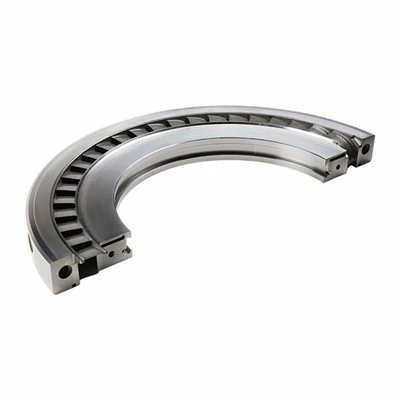
First off, let’s talk about what a turbine diaphragm is. It’s a key part in a steam or gas turbine. Its main job is to direct the flow of steam or gas onto the turbine blades. The diaphragm has stationary vanes that control the angle and velocity of the fluid, which in turn impacts how well the turbine converts thermal energy into mechanical energy.
Analyzing the Current Structure
Before you start making changes, you need to have a good look at the existing structure of the turbine diaphragm. Check for things like wear and tear, corrosion, and any signs of damage. Use non – destructive testing methods, such as ultrasonic testing or eddy – current testing, to get a clear picture of the internal condition. Also, measure the dimensions of the vanes, the spacing between them, and the overall shape of the diaphragm. This data will give you a baseline to work from.
Material Selection
The choice of material is super important when it comes to optimizing the structure. You want a material that can withstand high temperatures, pressures, and corrosive environments. For steam turbines, stainless steel is a popular choice because it’s resistant to corrosion and has good mechanical properties. In gas turbines, materials like nickel – based superalloys are often used due to their high – temperature strength.
When selecting a material, think about its cost, availability, and ease of manufacturing. You don’t want to choose a material that’s too expensive or hard to work with, as it could drive up the overall cost of the diaphragm.
Aerodynamic Design
The aerodynamics of the turbine diaphragm play a huge role in its performance. The vanes should be designed to minimize flow losses and maximize the transfer of energy to the turbine blades. You can use computational fluid dynamics (CFD) software to simulate the flow of steam or gas through the diaphragm. This will help you identify areas where the flow is turbulent or where there are pressure drops.
Based on the CFD results, you can make adjustments to the shape and angle of the vanes. For example, you might increase the curvature of the vanes to improve the flow direction or reduce the thickness to decrease drag. Small changes in the aerodynamic design can lead to big improvements in the turbine’s efficiency.
Structural Integrity
A turbine diaphragm needs to be strong enough to withstand the forces acting on it. During operation, it experiences high centrifugal forces, pressure differentials, and vibrations. To ensure structural integrity, you can use finite element analysis (FEA) software. This software allows you to model the diaphragm and analyze how it responds to different loads.
Based on the FEA results, you can reinforce weak areas of the diaphragm. This might involve adding ribs or changing the thickness of certain parts. You also need to consider the joint design between the vanes and the diaphragm body. A well – designed joint can prevent stress concentrations and improve the overall strength of the structure.
Manufacturing Processes
The manufacturing process can have a big impact on the quality and performance of the turbine diaphragm. Precision machining is essential to ensure that the vanes have the correct shape and dimensions. You can use advanced machining techniques, such as 5 – axis milling, to achieve high levels of accuracy.
Heat treatment is another important step. It can improve the mechanical properties of the material, such as hardness and toughness. After heat treatment, the diaphragm should be carefully inspected to make sure there are no cracks or other defects.
Maintenance and Monitoring
Once the turbine diaphragm is installed, regular maintenance and monitoring are crucial. You should have a maintenance schedule in place to check for wear and tear, and to perform any necessary repairs or replacements. Monitoring the performance of the turbine can also help you detect any issues with the diaphragm early on.
You can use sensors to measure parameters like temperature, pressure, and vibration. If any of these parameters deviate from the normal range, it could be a sign of a problem with the diaphragm. By addressing issues promptly, you can prevent more serious damage and extend the lifespan of the turbine.
Collaboration with Customers
As a turbine diaphragm supplier, I always work closely with my customers. I listen to their needs and requirements, and I provide them with customized solutions. For example, if a customer has a specific turbine design or operating conditions, I can design a diaphragm that’s tailored to their needs.
I also offer technical support to my customers. If they have any questions about the installation, operation, or maintenance of the diaphragm, I’m always there to help. By building strong relationships with my customers, I can ensure that they’re satisfied with the products and services I provide.
Why You Should Choose Our Turbine Diaphragms
Our turbine diaphragms are designed and manufactured with the latest technologies and highest quality standards. We use advanced materials and manufacturing processes to ensure that our diaphragms are durable, efficient, and reliable.
We also offer competitive pricing and fast delivery times. Whether you need a single diaphragm or a large quantity, we can meet your requirements. Our team of experts is always ready to provide you with technical support and advice.

If you’re in the market for a turbine diaphragm, I encourage you to get in touch with us. We can discuss your specific needs and provide you with a quote. Let’s work together to optimize the performance of your turbine!
References
- ASME Boiler and Pressure Vessel Code, Section I – Power Boilers
- ASTM International standards related to materials for turbine components
- "Steam Turbines: Design, Application, and Reconditioning" by A. S. Hall
Steam Turbine Seals So, that’s it for today’s blog. I hope you found these tips useful. If you have any questions or comments, feel free to leave them below. And don’t forget to reach out if you’re interested in our turbine diaphragms!
Hebei Guoyuan Electric Co., Ltd.
With abundant experience, we are one of the most professional turbine diaphragm manufacturers in China. We warmly welcome you to buy discount turbine diaphragm for sale here and get pricelist from our factory. Quality products and low price are available.
Address: No. 18 Tianshan Science and Technology Industrial Park, No. 319 Xiangjiang Road, Shijiazhuang High-tech Zone, Hebei Province, China
E-mail: turbine@goineep.com
WebSite: https://www.goineep.com/
