Hey there! As a supplier of industrial robots, I’ve been getting a lot of questions lately about how to measure the force and torque of these machines. It’s a crucial aspect, especially when it comes to ensuring the robots work efficiently and safely in various industrial applications. So, I thought I’d share some insights on this topic. Industrial Robot

Why Measuring Force and Torque Matters
First off, let’s talk about why measuring force and torque is so important. In industrial settings, robots are often used for tasks like assembly, material handling, and welding. The right amount of force and torque is essential for these operations.
If a robot applies too much force, it can damage the parts it’s working on. For example, in an assembly line, if a robot uses excessive force to insert a component, it might break the part or cause misalignment. On the other hand, if the force is too low, the task might not be completed properly.
Torque is also vital, especially in applications where rotation is involved. For instance, when a robot is tightening bolts, the correct torque ensures that the bolts are fastened securely without over – tightening, which could lead to thread damage.
Methods of Measuring Force
There are several ways to measure the force exerted by an industrial robot. One of the most common methods is using force sensors. These sensors can be placed at different points on the robot, such as the end – effector.
Strain Gauge Force Sensors
Strain gauge force sensors work based on the principle that when a force is applied to an object, it causes a deformation. The strain gauge is a device that measures this deformation. When the robot applies a force, the strain gauge changes its electrical resistance, and this change can be measured and converted into a force value.
These sensors are relatively inexpensive and can be quite accurate. They are widely used in industrial robots because they can be easily integrated into the robot’s structure. However, they do have some limitations. For example, they can be affected by temperature changes, which might cause errors in the force measurement.
Piezoelectric Force Sensors
Piezoelectric force sensors are another option. These sensors generate an electric charge when a force is applied to them. The amount of charge is proportional to the force, and this can be measured to determine the force value.
Piezoelectric sensors are very sensitive and can respond quickly to changes in force. They are often used in high – speed applications where rapid force measurements are required. However, they are more expensive than strain gauge sensors, and they require a special amplifier to convert the charge into a usable signal.
Measuring Torque
Measuring torque in industrial robots is a bit more complex than measuring force. There are a few different methods available.
Reaction Torque Sensors
Reaction torque sensors measure the torque by detecting the reaction force on the robot’s structure. When the robot’s motor applies a torque to rotate a joint, there is a reaction force on the frame of the robot. The reaction torque sensor measures this force and calculates the torque based on the distance from the axis of rotation.
These sensors are relatively simple to install and can provide accurate torque measurements. However, they are affected by external factors such as vibrations and the weight of the robot’s arm.
In – line Torque Sensors
In – line torque sensors are placed directly in the drive train of the robot. They measure the torque directly as it is transmitted through the shaft. This method provides very accurate torque measurements because it measures the actual torque being applied at the point of action.
In – line torque sensors are more expensive than reaction torque sensors, but they are often preferred in applications where high – precision torque control is required.
Calibration
Calibration is a crucial step in ensuring accurate force and torque measurements. Over time, the sensors can drift, which means that the measurements might not be as accurate as they should be. Regular calibration can help correct these errors.
Calibration involves comparing the readings of the sensors with a known standard. For example, in the case of a force sensor, a known weight can be applied to the sensor, and the reading can be compared with the actual weight. If there is a difference, the sensor can be adjusted to correct the reading.
Practical Considerations
When it comes to measuring force and torque in industrial robots, there are a few practical considerations.
Installation
The sensors need to be installed correctly to ensure accurate measurements. They should be placed in a location where they can accurately measure the force or torque being applied. For example, if a force sensor is being used to measure the force at the end – effector, it should be placed as close to the point of contact as possible.
Environmental Conditions
The environment in which the robot operates can also affect the force and torque measurements. For example, high temperatures, humidity, and dust can all have an impact on the performance of the sensors. It’s important to choose sensors that are suitable for the specific environmental conditions.
Compatibility
The sensors need to be compatible with the robot’s control system. The control system should be able to receive and process the data from the sensors. Some robots might require special software or hardware to interface with the sensors.
Conclusion
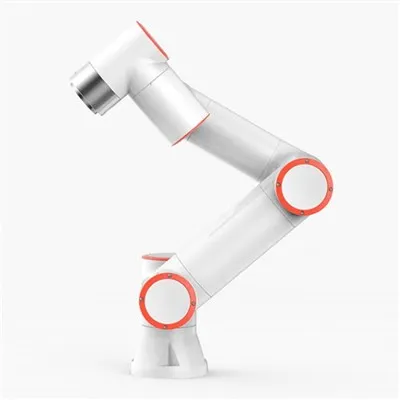
Measuring the force and torque of industrial robots is a critical aspect of ensuring their proper operation. By using the right sensors and calibration methods, you can ensure that your robots are working efficiently and safely.
Collaborative Welding Robot If you’re in the market for industrial robots and want to learn more about how we can help you with force and torque measurement, or if you have any other questions about our products, don’t hesitate to reach out. We’re here to help you find the best solutions for your industrial needs.
References
- "Industrial Robotics: Technology, Programming, and Applications" by Peter Corke
- "Robot Sensor Systems: Theory and Application" by Rainer Bischoff
Xinweilai Intelligent Technology (Shandong) Co., Ltd.
As one of the most professional industrial robot manufacturers and suppliers in China, we’re featured by quality products and good service. Please rest assured to wholesale bulk customized industrial robot from our factory. For pricelist and quotation, contact us now.
Address: Jinghua Road, Economic and Technical Development Zone, Dezhou City, Shandong Province
E-mail: liujiqing@xinweilaiznkj.com
WebSite: https://www.xinweilaiznkj.com/
